


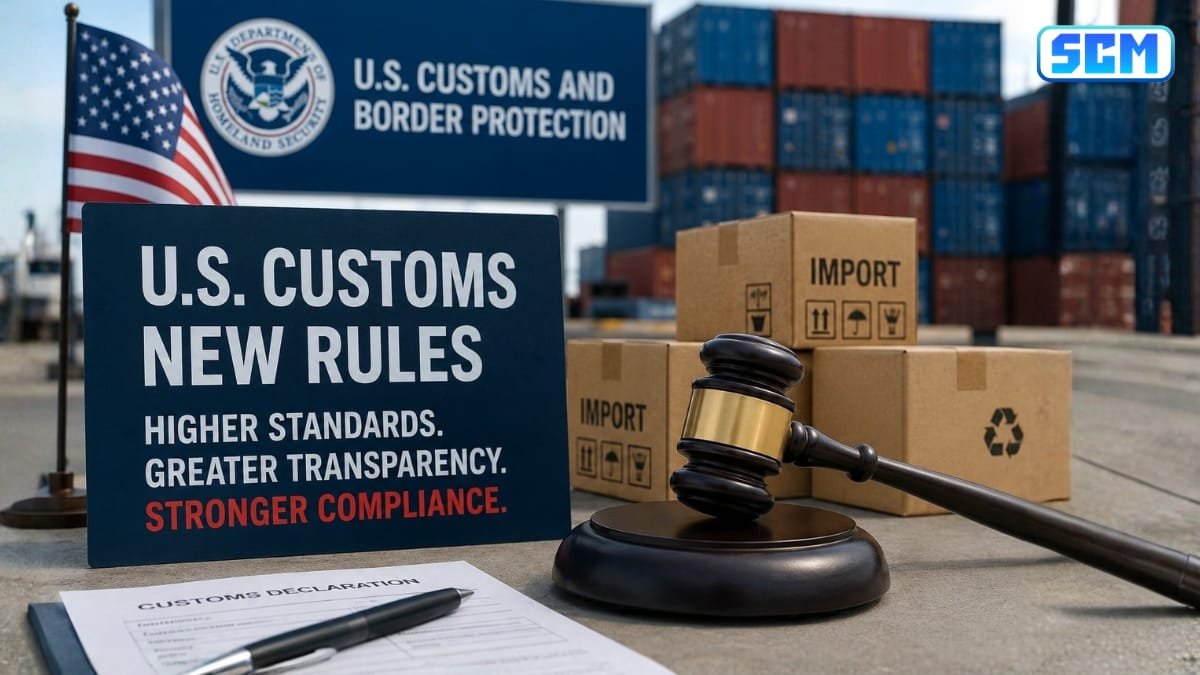
The U.S. government is preparing to implement sweeping customs enforcement measures that could significantly reshape international trade operations. Through a new executive order signed on June 3, President Donald Trump has introduced stricter requirements for foreign importers, enhanced supply chain transparency mandates, and tougher penalties for customs violations.
The upcoming changes are expected to impact importers, freight forwarders, customs brokers, e-commerce businesses, and logistics providers involved in shipping goods into the United States. Industry experts warn that businesses lacking visibility into their supply chains could face increased compliance risks once the new rules take effect.
Quick Summary
The Trump administration’s latest executive order strengthens customs enforcement by imposing stricter requirements on foreign Importers of Record (IORs), increasing penalties for non-compliance, and demanding greater supply chain transparency. Companies shipping goods into the United States will need to reassess importer structures, improve compliance programs, and ensure full traceability across their supply chains.
Key Highlights
- Foreign Importers of Record (IORs) will face stricter qualification requirements.
- Minimum U.S. asset and bonding requirements will be introduced.
- Type 11 informal entry privileges for foreign IORs will be eliminated.
- Customs brokers will be required to conduct greater due diligence.
- A minimum 50% penalty floor will increase the cost of customs violations.
- Importers will need enhanced supply chain visibility and traceability.
- New customs rules are expected to take effect within 180 days.
U.S. Customs Enforcement Enters a New Phase
The executive order is designed to strengthen enforcement against importers that fail to comply with U.S. trade regulations while increasing transparency throughout global supply chains.
According to U.S. Customs and Border Protection (CBP), the new measures will help authorities better identify trade violations, improve revenue collection, and reduce the use of shell companies and other structures designed to avoid accountability.
The policy reflects a broader effort to ensure that all importers operating in the U.S. market meet the same compliance standards regardless of where they are based.
“This Executive Order helps CBP better detect when bad trade actors try to break the rules. These are major advances in protecting our revenue and increasing supply chain transparency.”
Crackdown on Foreign Importers of Record
One of the most significant aspects of the executive order targets Foreign Importers of Record (IORs).
Under the new rules, all importers will be required to maintain a minimum level of tangible domestic assets, customs bonding, or both. The objective is to ensure that CBP can effectively enforce penalties against importers that violate trade laws.
The administration is particularly focused on preventing the use of:
- Shell companies
- Sham transactions
- Artificial corporate structures
- Non-transparent importer arrangements
To qualify as a U.S.-based importer, businesses will need to demonstrate:
- A principal place of business in the United States
- A physical operational presence
- Sufficient tangible U.S. assets
- Compliance with customs bonding requirements
These measures are expected to create additional challenges for overseas sellers and importers that rely on complex corporate structures.
End of Type 11 Informal Entry for Foreign Importers
Another major change involves the elimination of Type 11 informal entry privileges for foreign Importers of Record.
Traditionally, informal entry procedures have allowed low-value shipments to move through customs with fewer compliance requirements and simplified processing.
The new rules will prevent foreign IORs from using this pathway, requiring them to comply with more rigorous customs procedures.
This change is expected to have a significant impact on:
- Cross-border e-commerce sellers
- Direct-to-consumer shipping models
- Asia-based fulfillment networks
- International parcel carriers
Industry experts believe companies relying heavily on informal entry methods will need to reassess their customs strategies before the regulations take effect.
“Anyone that’s using this type of informal entry method or these carriers should ask some hard questions.”
Higher Penalties Raise Compliance Risks
The executive order also introduces stricter enforcement mechanisms for importers that fail to comply with customs regulations.
Within 180 days, all Importers of Record will be required to maintain “good standing” with CBP. Importers with significant compliance violations could face restrictions on their ability to conduct import activities in the United States.
In addition, CBP has been directed to establish a minimum penalty floor of at least 50% for customs violations.
This represents a significant increase compared to previous mitigation practices where penalties were often reduced substantially through negotiations.
“The ROI on compliance just doubled.”
— André Cruz, Senior Manager of Trade and Customs, KPMG US
For importers, the message is clear: customs compliance is becoming a strategic business priority rather than simply an operational requirement.
Supply Chain Traceability Becomes Essential
The executive order also expands import disclosure requirements.
Importers may be required to provide more detailed information regarding:
Ownership Structures
Businesses will need to disclose ownership information and corporate relationships more comprehensively.
Production Methods
Authorities are expected to require greater visibility into how imported goods are manufactured.
Supplier Networks
Importers will need stronger oversight of supplier relationships throughout the supply chain.
Product Traceability
End-to-end supply chain visibility will become increasingly important for demonstrating compliance.
As regulatory requirements continue to evolve globally, companies that invest in traceability technologies and supplier monitoring programs will be better positioned to adapt.
What Shippers Should Do Now
With implementation expected within 180 days, businesses should begin preparing immediately.
Review Importer Structures
Evaluate existing Importer of Record arrangements and identify potential compliance risks.
Assess Bonding and Asset Requirements
Determine whether current customs bonding and domestic asset levels meet anticipated standards.
Improve Supply Chain Visibility
Strengthen supplier mapping, documentation, and traceability programs.
Verify Compliance Documentation
Review ownership records, customs filings, and supply chain disclosures for accuracy.
Engage Customs Experts
Work closely with customs brokers, freight forwarders, and trade compliance specialists to prepare for the regulatory changes.
Industry Impact and Outlook
The executive order signals a broader trend toward stricter customs enforcement and greater accountability across global supply chains.
While the new rules may increase compliance costs and administrative requirements, they also encourage greater transparency and supply chain resilience.
For importers, logistics providers, and freight forwarders, the ability to demonstrate supply chain visibility and regulatory compliance will increasingly become a competitive advantage in international trade.
Conclusion
Trump’s latest customs executive order marks one of the most significant changes to U.S. import enforcement in recent years. By tightening requirements for foreign importers, eliminating informal entry privileges, increasing penalty floors, and demanding greater supply chain transparency, the administration is raising the compliance bar for global trade participants.
Companies that proactively strengthen customs compliance programs, invest in supply chain traceability, and review importer structures today will be best positioned to navigate the new regulatory environment and avoid costly disruptions in the future.
