


Quick Summary
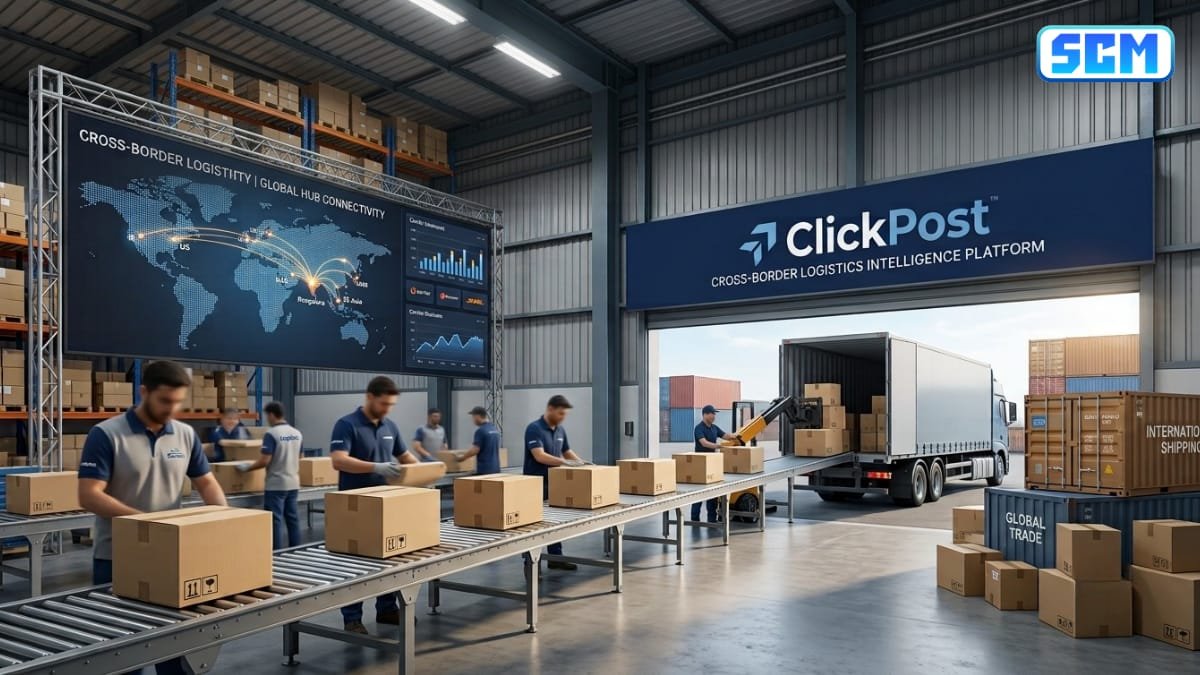
ClickPost, a Bengaluru-based logistics intelligence platform, has launched its Cross-Border Logistics Intelligence Platform — a unified interface designed to help Indian brands manage international shipping operations across multiple carriers, countries, and compliance frameworks from a single system. The launch comes as Indian D2C and e-commerce brands increasingly look beyond domestic markets, but consistently run into the operational complexity of cross-border logistics: fragmented carrier networks, inconsistent customs documentation, unpredictable duties calculations, and poor shipment visibility once cargo crosses a border. ClickPost’s new platform is a direct attempt to solve these problems at the software layer — without requiring brands to build their own international logistics operations infrastructure.
The Problem ClickPost Is Solving — And Why It’s Harder Than It Looks
Selling internationally is operationally far more complex than selling domestically, and the gap between the two is rarely obvious until a brand actually tries to scale cross-border volume.
A domestic shipment in India involves selecting a carrier, generating a label, tracking the delivery, and managing returns. A cross-border shipment involves all of that plus: selecting a carrier with the right international network for the specific destination country, calculating duties and taxes accurately at the point of sale (not just at customs), generating compliant shipping documentation for each country’s import regulations, managing customs clearance, dealing with shipment holds or seizures, handling international returns (which are operationally and cost-wise far more complex than domestic returns), and providing tracking visibility across handoff points between the origin carrier and the destination last-mile provider.
Most brands entering international markets manage this by stitching together multiple tools — a shipping aggregator for carrier access, a separate duties calculator, manual customs documentation, and whatever tracking the carrier provides. The result is fragmented data, manual reconciliation work, and blind spots in shipment visibility that are particularly damaging for customer experience in markets where buyers have high delivery expectation standards.
ClickPost’s cross-border platform targets this fragmentation directly — consolidating carrier access, compliance documentation, duties calculation, and shipment visibility into a single interface.
What the Platform Actually Offers
ClickPost already connects to 600+ carriers worldwide through a single API — one of the broadest carrier networks in the logistics software space. The cross-border platform builds on this foundation with capabilities specifically designed for international shipping complexity.
Compliant label generation across multiple carriers and countries — the platform automates the generation of shipping labels that meet regulatory standards for different destination markets, reducing the manual work and error risk involved in producing country-specific documentation at volume.
Real-time rate shopping across carriers — rather than committing to a single carrier for international shipments, the platform allows brands to compare rates across carriers at the time of order, optimising for cost, speed, or reliability depending on the shipment type. This directly addresses one of the most common sources of margin erosion in cross-border e-commerce: overpaying for shipping because carrier selection is manual and habitual rather than data-driven.
Accurate duties and taxes calculation — hidden costs at customs are one of the top reasons international customers abandon purchases or refuse deliveries. Accurate landed cost calculation at the point of sale, rather than after the fact, reduces both customer surprises and return rates on international orders.
Unified tracking across carrier handoffs — cross-border shipments typically pass through multiple carriers: the origin carrier, the customs handler, and the destination last-mile provider. Visibility often drops at the handoff points. ClickPost’s unified tracking dashboard normalises tracking events across carriers and surfaces exceptions before they become customer problems.
Why This Matters for Indian Brands Right Now
India’s cross-border e-commerce market has been growing rapidly, driven by categories where Indian brands have genuine competitive advantages globally — ethnic fashion and textiles, ayurvedic and wellness products, handicrafts and artisan goods, gems and jewellery, and increasingly, manufactured goods targeting diaspora markets in the US, UK, UAE, and Southeast Asia.
The government has actively supported this through frameworks like CBIC’s export facilitation measures and postal export channels, but the operational logistics infrastructure for small and mid-size Indian brands to actually execute international shipping at scale has lagged behind the policy intent.
ClickPost’s platform launch lands at a moment when this gap is particularly visible. Indian D2C brands that have successfully built domestic distribution are increasingly looking at international markets as the next growth lever — but the operational complexity of cross-border logistics has been a consistent barrier to moving beyond ad-hoc international sales toward systematic international commerce.
A unified platform that removes the need to manually manage multiple carrier relationships, compliance requirements, and tracking systems lowers that barrier meaningfully — particularly for brands in the 500-5,000 monthly international shipment range where the volume justifies international expansion but doesn’t yet support a dedicated logistics operations team.
ClickPost’s Broader Position — Context for This Launch
ClickPost was founded in 2015 and has built its reputation primarily in the domestic Indian logistics intelligence space, working with brands including Walmart, Puma, Nykaa, and Tata 1mg. The company has raised $7.1 million in funding and currently processes 50 million+ shipments monthly across its platform.
The cross-border launch is a logical extension of that domestic foundation. ClickPost already connects 600+ carriers globally — the infrastructure for international carrier access was already in place. What the new platform adds is the compliance, documentation, and duties layer that makes that carrier network usable for systematic cross-border shipping, not just occasional international orders.
This also positions ClickPost in direct competition with global cross-border logistics platforms like Easyship, Passport Shipping, and Zonos — all of which have been targeting similar MSME and D2C cross-border use cases, primarily built for Western markets. ClickPost’s advantage is its deep integration with the Indian carrier ecosystem and its existing relationships with Indian brands — making it a natural choice for Indian-origin international shippers in a way that platforms built for US or European brands typically are not.
What to Watch
The practical test of the platform will be in the details of execution: how accurately the duties calculations perform across different destination country tax regimes, how well the unified tracking holds up across diverse carrier handoffs in markets with variable last-mile infrastructure, and whether the rate shopping capability delivers meaningfully better carrier economics than brands can achieve through direct carrier relationships.
For Indian freight forwarders and customs brokers who currently handle international shipping documentation for MSME and D2C clients, ClickPost’s platform is worth monitoring. A platform that automates compliant label generation and duties calculation at the brand level reduces dependency on intermediaries for the documentation layer of cross-border shipping — though it does not eliminate the need for freight forwarding expertise on complex or high-value international shipments.
Bottom Line
ClickPost’s Cross-Border Logistics Intelligence Platform addresses a real and widely felt operational problem for Indian brands trying to scale international e-commerce — the fragmentation and complexity of managing cross-border shipping across multiple carriers, compliance regimes, and tracking systems. Whether the platform delivers on the promise of genuinely simplifying that complexity at scale will become clear as Indian brands test it against their actual international shipping lanes. For now, it represents the most comprehensive attempt yet by an Indian-origin logistics software company to build the infrastructure layer India’s cross-border e-commerce ambitions need.
Running cross-border e-commerce operations from India? Share your experience with international logistics challenges — we are tracking how Indian brands are building global supply chains.
