


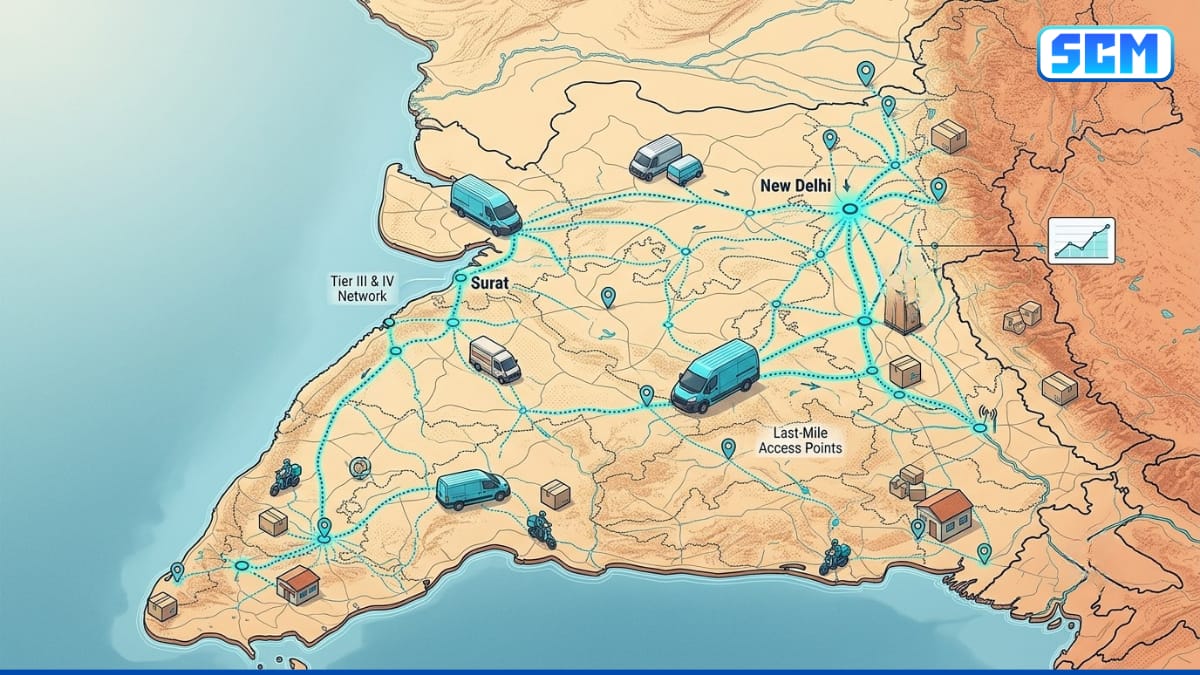
On World Post Day, October 9, Blue Dart Express signed an MoU with India Post in New Delhi. The agreement gives Blue Dart access to the Department of Posts’ network of 1.64 lakh post offices across India.
That number is worth pausing on. 1.64 lakh post offices. The world’s largest postal network. Overnight, Blue Dart gained last-mile reach into tier III and IV towns and remote locations that would have taken years and hundreds of crores to build independently.
Blue Dart shares gained 2% on October 12 after the announcement. The market understood the logic quickly.
What the Deal Actually Does
Blue Dart brings the express logistics capability. India Post brings the network.
Under the arrangement, Blue Dart will route parcels through India Post’s infrastructure to reach customers in areas that sit outside Blue Dart’s existing delivery footprint. The coverage includes both prepaid and cash-on-delivery parcels, with OTP authentication and real-time shipment tracking included.
The rollout will be phased rather than immediate. Blue Dart’s Managing Director Balfour Manuel described it plainly: as the economy expands and customer expectations evolve, this partnership has an important role to play in strengthening parcel delivery.
Harpreet Singh, Member (Operations) at the Department of Posts, noted that the partnership was announced on World Post Day deliberately. The department, he said, has strong last-mile connectivity and is committed to making this partnership work. He described it as the beginning of a broader and constantly evolving relationship.
Why Blue Dart Needed This
Blue Dart handles roughly 8% of India’s e-commerce shipments. That is a significant share of a large and fast-growing market. But Blue Dart’s traditional strength is in urban and semi-urban areas, premium express delivery, and time-sensitive B2B shipments.
The tier III and IV India market is where the next wave of e-commerce growth is coming from. We covered this dynamic in our analysis of Amazon’s logistics expansion, where Amazon added 20 fulfilment centres and 150 delivery stations while increasing storage capacity 50% specifically to reach non-metro markets. The same demand logic applies to Blue Dart.
But building independent last-mile infrastructure in thousands of smaller towns is capital-intensive and slow. A single post office in a remote district represents decades of established presence, community trust, and operational infrastructure that no private player can replicate cheaply or quickly.
By partnering with India Post rather than building parallel infrastructure, Blue Dart does what smart logistics companies increasingly do in low-density markets: use what already exists.
Why India Post Keeps Signing These Deals
This is not India Post’s first partnership of this kind in 2026. In January, India Post completed its first online delivery as a Logistics Service Provider on ONDC. In May, the department signed a last-mile delivery agreement with Flipkart, giving the e-commerce platform access to more than 1.6 lakh post offices.
And earlier this year, India Post joined ONDC as a logistics partner in southern India, connecting farmers, FPOs, artisans, and MSMEs with buyers across India through parcel collection, transmission, tracking, and last-mile services.
The pattern is clear. India Post is actively repositioning itself as the last-mile infrastructure provider for India’s logistics ecosystem rather than purely a postal service. Its 1.64 lakh post office network, which was built over more than a century and which no private player can economically replicate, is increasingly monetised through partnerships with private logistics companies that have volumes but lack rural reach.
For India Post, every Blue Dart or Flipkart parcel that moves through its network generates revenue and utilisation from infrastructure that was previously underused in many remote locations. For the Department of Posts, these partnerships are part of sustaining the financial viability of a network that serves national connectivity purposes beyond pure commercial logistics.
What This Means for MSMEs and D2C Brands
The most direct beneficiaries of this partnership are the businesses whose customers live in tier III, tier IV, and rural India.
A clothing brand operating out of Surat selling to customers in Bastar, Chhattisgarh, or Champawat, Uttarakhand. A health supplement company trying to reach customers in northeastern towns. A handicraft brand based in Rajasthan shipping to customers in rural Karnataka.
These are markets that express logistics companies have historically either not served or served at prohibitive cost and unreliable timelines. When Blue Dart was not available and alternatives were slow or unreliable, businesses effectively had to write off these customers.
With Blue Dart’s express logistics capability now accessible through India Post’s rural network, those businesses have a more reliable and trackable delivery option for their non-metro customers. Cash-on-delivery support, which is still the dominant payment method for first-time online buyers in many rural markets, is specifically included in the arrangement.
For small businesses using Blue Dart as their logistics partner, the practical benefit is simpler: they do not need to manage a second logistics provider for rural deliveries. Blue Dart now covers it, using India Post on the back end.
The Competitive Context
Blue Dart’s India Post partnership lands in a last-mile logistics market that has been consolidating and intensifying.
Ekart, Flipkart’s logistics arm, opened its network to MSMEs and D2C brands through a franchise model earlier this year. Delhivery, Xpressbees, and Shadowfax have all been expanding tier III and IV reach. Amazon’s logistics expansion we covered recently is explicitly targeting non-metro markets.
The competition for last-mile share in smaller Indian towns is real and growing. Blue Dart’s entry into this market through India Post’s network, rather than organic build, is the fastest way to be competitive in a segment where it currently has limited presence.
Whether the India Post partnership delivers the service quality consistency that Blue Dart’s brand is built on in metro markets is the operational question that will determine whether this MoU translates into durable business rather than a coverage map exercise.
Bottom Line
Blue Dart gaining access to 1.64 lakh India Post offices is a genuinely significant logistics infrastructure development. It is the fastest and most capital-efficient way for any express player to build rural last-mile reach in India. The phased rollout is the right approach as both organisations align their operational systems and quality standards.
For India’s businesses selling to smaller towns and rural customers, and for the customers in those locations who want reliable express delivery with tracking and COD options, this partnership opens doors that were previously hard to access. That is worth more than a 2% share price move on announcement day.
Sources: Department of Posts press release, Blue Dart Express MoU announcement, Harpreet Singh statement, Balfour Manuel statement, Dipanjan Banerjee statement, Daily Excelsior, Equity Pandit, SMEStreet.
