

Quick Summary
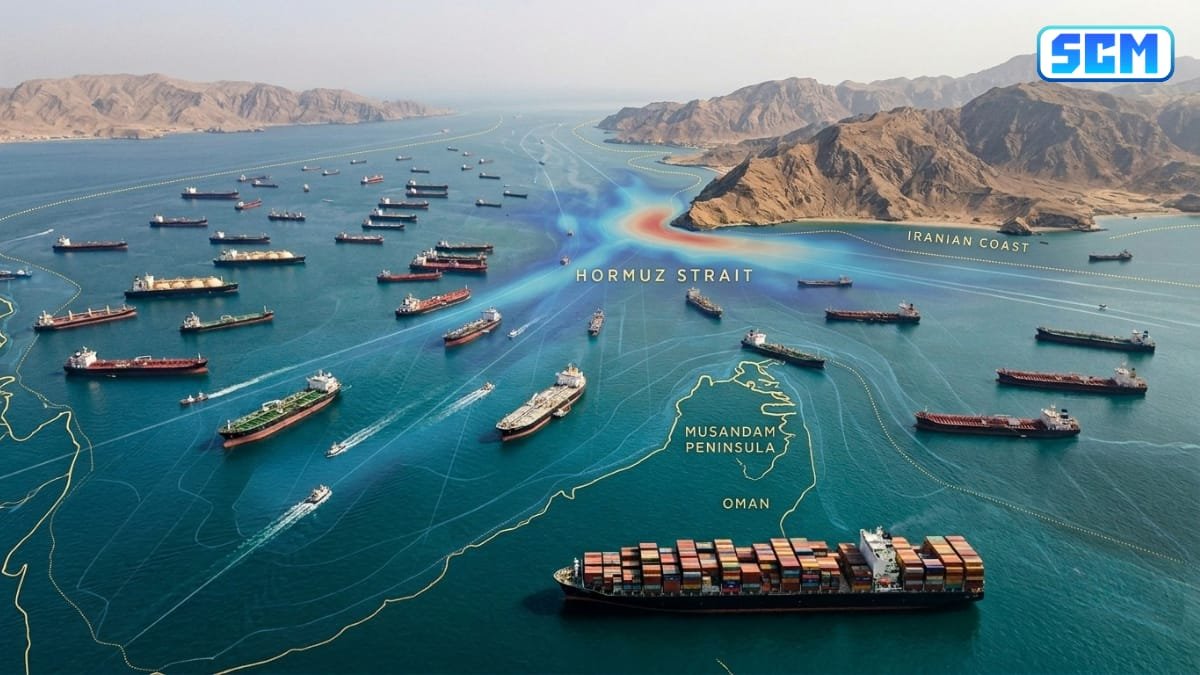
The Strait of Hormuz, one of the world’s most strategically important maritime corridors, is at the center of a major trade disruption affecting global shipping and supply chains. More than 1,100 vessels carrying an estimated $125 billion worth of cargo have been impacted by the ongoing crisis, creating uncertainty for shipping companies, importers, exporters, and logistics providers worldwide.
As freight costs rise and vessel movements slow, businesses are once again being reminded of how vulnerable global trade remains to geopolitical tensions and disruptions at critical maritime chokepoints.
Key Highlights
- Over $125 billion worth of cargo has been impacted by the Strait of Hormuz crisis.
- Approximately 1,150 vessels are facing delays or operational disruptions.
- Rising war-risk insurance premiums are increasing shipping costs.
- Oil, LNG, containerized cargo, and bulk commodities are among the most affected sectors.
- Indian importers, exporters, and freight forwarders are closely monitoring the situation.
- Supply chain leaders are accelerating investments in resilience and risk management.
- The crisis highlights the vulnerability of global trade routes to geopolitical tensions.
Why the Strait of Hormuz Matters to Global Trade
Few waterways have as much influence over international trade as the Strait of Hormuz.
Situated between the Persian Gulf and the Gulf of Oman, this narrow shipping lane serves as a critical gateway for global energy exports and commercial cargo movements. Every day, hundreds of vessels transport crude oil, LNG, chemicals, raw materials, machinery, and consumer goods through the corridor.
The route plays a crucial role in global commerce because:
- Nearly 20% of global oil shipments pass through the strait.
- Major LNG exports from Gulf nations depend on uninterrupted access.
- Manufacturers rely on the route for industrial inputs and raw materials.
- International retailers depend on timely cargo movement through the region.
When operations are disrupted in Hormuz, the consequences extend far beyond the Middle East.
A Regional Crisis Creating Global Supply Chain Challenges
The latest tensions in the Gulf region have created operational uncertainty for shipping companies and cargo owners alike.
Heightened security concerns, navigation restrictions, and rising insurance costs have forced many operators to delay vessel movements or adopt more cautious transit strategies.
According to industry estimates, approximately 1,150 ships carrying goods valued at around $125 billion have experienced delays or disruptions.
For supply chain professionals, this is more than a maritime security issue. It is a challenge that affects procurement planning, inventory management, production schedules, and customer delivery commitments.
The Shipping Industry Faces Another Major Disruption
Global supply chains have already endured years of disruption from the pandemic, port congestion, labor shortages, the Suez Canal blockage, and Red Sea security concerns.
The Hormuz crisis adds another layer of complexity.
Container Shipping Under Pressure
Container carriers operating through Gulf trade routes are facing longer waiting times and increased schedule uncertainty.
As vessels delay departures or wait for clearance, shipping reliability declines, making it harder for businesses to maintain predictable delivery timelines.
For industries operating with lean inventories, even minor disruptions can lead to production delays and stock shortages.
Energy Shipments Face Increased Risk
Oil tankers and LNG carriers remain among the most affected vessel categories.
Because the Strait of Hormuz is one of the world’s most important energy corridors, disruptions immediately raise concerns about supply continuity and price volatility.
Even when shipments continue moving, increased security costs and insurance premiums add financial pressure across energy supply chains.
Bulk Cargo Operations Slow Down
Industrial commodities, chemicals, agricultural products, and raw materials are also experiencing delays.
Extended transit times can create operational challenges for manufacturers that depend on the timely arrival of essential inputs.
Rising Freight Costs Could Impact Global Trade
One of the most immediate consequences of the crisis is the increase in transportation and logistics costs.
Shipping operators are facing:
- Higher war-risk insurance premiums.
- Increased vessel operating expenses.
- Longer voyage durations.
- Additional security requirements.
- Potential rerouting costs.
If disruptions continue, freight rates across affected trade lanes could remain under upward pressure during the coming months.
For importers and exporters, higher transportation costs could further impact profitability and supply chain planning.
What This Means for Importers and Exporters
Businesses involved in Gulf-region trade are already preparing for potential disruptions.
Key concerns include:
Longer Lead Times
Delayed vessel movements can extend delivery schedules and affect customer commitments.
Inventory Management Challenges
Companies may need to increase safety stock levels to protect against supply interruptions.
Procurement Risks
Organizations that rely on a limited supplier base may face greater exposure to disruption.
Increased Working Capital Requirements
Maintaining higher inventory levels often requires additional capital investment.
For supply chain leaders, visibility and proactive planning are becoming increasingly important.
Why Indian Businesses Are Watching Closely
India maintains strong trade relationships with Gulf countries and depends heavily on energy imports moving through the region.
A prolonged disruption could affect:
- Crude oil imports.
- Petrochemical supply chains.
- Manufacturing costs.
- Export competitiveness.
- Freight forwarding operations.
Indian importers, exporters, customs brokers, and logistics providers are closely monitoring developments because even short-term disruptions can create ripple effects across multiple industries.
Sectors such as chemicals, pharmaceuticals, automotive, engineering goods, and consumer products could face indirect consequences if shipping delays persist.
The Human Impact Behind the Numbers
Beyond cargo values and freight costs, thousands of seafarers continue to face uncertainty.
Extended deployments, delayed crew changes, and operational challenges are placing additional pressure on maritime workers responsible for keeping global trade moving.
As authorities work to stabilize shipping operations, ensuring crew safety remains a critical priority.
The Bigger Lesson: Supply Chain Resilience Matters More Than Ever
Perhaps the most important lesson from the Hormuz crisis is the growing importance of supply chain resilience.
For years, businesses focused heavily on efficiency and cost optimization. Recent disruptions have demonstrated that resilience and flexibility are becoming equally important.
Organizations are increasingly investing in:
- Multi-sourcing strategies.
- Supply chain visibility platforms.
- AI-powered risk monitoring solutions.
- Predictive logistics analytics.
- Regionalized supply networks.
- Strategic inventory management.
The companies best positioned to manage future disruptions will be those that can quickly adapt when geopolitical events impact trade flows.
Industry Perspective
The Hormuz disruption highlights a reality that supply chain leaders can no longer ignore: geopolitical risk is now a core business consideration.
Whether the challenge comes from conflict, sanctions, trade restrictions, or maritime security concerns, organizations must prepare for sudden disruptions to critical trade routes.
As global supply chains become more interconnected, resilience planning is shifting from a risk-management exercise to a competitive advantage.
For logistics leaders, the question is no longer whether another disruption will occur—it is how prepared their organization will be when it does.
Conclusion
The Strait of Hormuz has long been one of the world’s most important maritime chokepoints, but the current crisis demonstrates how dependent global trade remains on a handful of strategic shipping routes.
With billions of dollars in cargo affected and supply chains facing renewed uncertainty, businesses are being forced to rethink traditional logistics strategies. While shipping operations may gradually stabilize, the broader lesson is clear: resilience, visibility, and risk management have become essential components of modern supply chain success.
For logistics professionals, freight forwarders, manufacturers, and global traders, the Hormuz crisis may ultimately be remembered as another defining moment in the evolution of global supply chain management.


