

Quick Summary
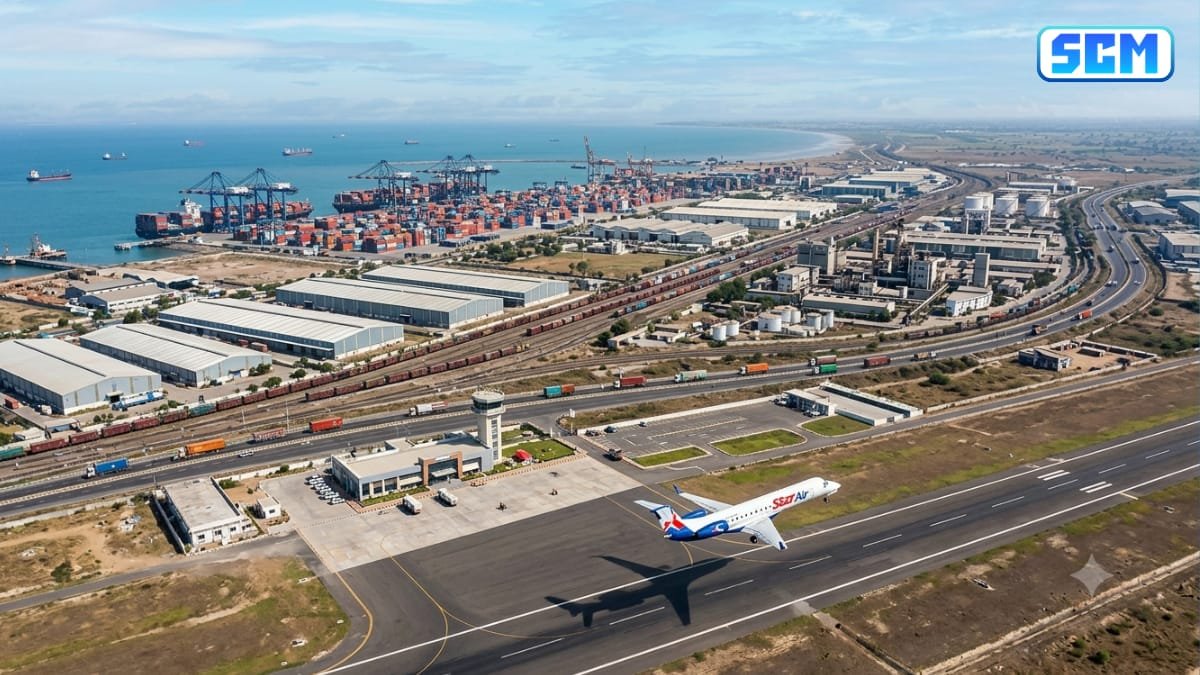
Mundra Airport has officially commenced commercial flight operations, marking a significant milestone for Gujarat’s Kutch region and India’s logistics infrastructure landscape. Located near Mundra Port—India’s largest private commercial port—the airport is expected to strengthen multimodal connectivity, improve business accessibility, support exporters, and enhance the region’s attractiveness as a manufacturing and logistics hub.
While the launch introduces new passenger services, its broader significance lies in how it complements one of India’s most important trade gateways and reinforces the country’s push toward integrated logistics networks.
Key Highlights
- Mundra Airport has started scheduled commercial flight operations.
- Star Air will connect Mundra with eight key Indian cities.
- The airport strengthens connectivity around Mundra Port and nearby industrial clusters.
- Improved accessibility is expected to support exporters, manufacturers, and logistics companies.
- The development aligns with India’s multimodal logistics and infrastructure growth strategy.
- Future cargo opportunities could further enhance the region’s supply chain capabilities.
More Than an Airport: A Strategic Infrastructure Milestone
The inauguration of commercial operations at Mundra Airport is not just another aviation story. For logistics professionals and supply chain stakeholders, it represents the latest step in transforming Kutch into one of India’s most strategically connected trade corridors.
For years, Mundra Port has been a critical gateway for India’s import-export ecosystem, handling vast volumes of containerized cargo, bulk commodities, and industrial shipments. However, despite its significance, business connectivity to the region remained largely dependent on road transportation and limited aviation access.
The launch of commercial flight services changes that dynamic.
With direct air connectivity now available, business leaders, investors, exporters, logistics operators, and customers can reach the region more efficiently, reducing travel time and enabling faster commercial decision-making.
Why Supply Chain Professionals Should Pay Attention
The real significance of Mundra Airport extends beyond passenger traffic.
Modern supply chains increasingly depend on integrated transportation ecosystems where ports, airports, rail networks, highways, warehouses, and industrial zones operate as a connected network rather than isolated assets.
Mundra is rapidly evolving into exactly that kind of ecosystem.
The airport’s operational launch strengthens the region’s multimodal logistics capabilities by creating closer links between:
- Maritime transportation
- Aviation infrastructure
- Rail freight networks
- National highway corridors
- Industrial manufacturing zones
- Warehousing and distribution centers
As global supply chains prioritize speed, resilience, and flexibility, such integrated logistics hubs are becoming increasingly valuable.
Direct Connectivity to Major Business Centers
Commercial services launched through Star Air will connect Mundra with several important destinations across India, including:
- Mumbai
- Bengaluru
- Goa
- Surat
- Hindon (Delhi NCR)
- Belagavi
- Kolhapur
- Nanded
These routes will significantly improve accessibility for businesses operating in and around Kutch.
For manufacturers, exporters, and logistics companies, improved connectivity means easier customer visits, faster supplier engagement, enhanced project management, and more efficient movement of technical and commercial teams.
In an increasingly competitive business environment, accessibility often becomes a key factor influencing investment decisions.
Strengthening Mundra’s Position as a Logistics Powerhouse
Over the past two decades, Mundra has emerged as one of India’s most important logistics and industrial centers.
The region today hosts:
Manufacturing Operations
Industries ranging from engineering and metals to chemicals and renewable energy equipment manufacturing have established a strong presence in and around Mundra.
Export-Oriented Businesses
Companies serving global markets rely heavily on efficient transportation infrastructure to remain competitive.
Logistics and Warehousing Facilities
Growing cargo volumes have encouraged significant investment in warehousing, distribution, and supply chain infrastructure throughout the region.
The airport adds another critical layer to this ecosystem, supporting faster business movement and creating opportunities for future logistics expansion.
The Potential Air Cargo Opportunity
Although passenger operations are currently the primary focus, many industry observers see long-term cargo potential as one of the airport’s most important opportunities.
As India’s manufacturing sector expands and supply chains become increasingly time-sensitive, demand for efficient air cargo solutions continues to grow.
In the future, Mundra Airport could support the movement of:
- High-value industrial products
- Critical spare parts
- Engineering equipment
- Pharmaceuticals
- Time-sensitive export shipments
The combination of seaport and airport infrastructure within the same logistics ecosystem could provide businesses with greater flexibility when selecting transportation modes.
For freight forwarders, this opens the possibility of more integrated logistics solutions that combine ocean freight and air freight capabilities.
Aligning with India’s Logistics Transformation Agenda
India has placed logistics efficiency at the center of its economic growth strategy through initiatives such as:
- PM Gati Shakti
- National Logistics Policy
- Dedicated Freight Corridors
- Port modernization programs
- Multimodal logistics park development
The launch of Mundra Airport aligns closely with these initiatives.
Rather than developing transportation assets independently, policymakers and infrastructure developers are increasingly focusing on creating interconnected logistics ecosystems that reduce costs, improve efficiency, and support trade competitiveness.
Mundra’s evolving infrastructure model reflects this vision in action.
What This Means for Businesses
For companies operating across supply chains, the airport’s launch delivers several potential advantages:
Faster Business Mobility
Executives, suppliers, customers, and technical teams can reach Mundra more quickly.
Improved Investment Appeal
Enhanced connectivity often serves as a catalyst for industrial investment and economic development.
Better Supply Chain Coordination
Easier access helps improve communication and collaboration across supply chain networks.
Future Logistics Expansion
As transportation infrastructure develops, businesses gain access to additional logistics and distribution opportunities.
Collectively, these benefits strengthen the region’s competitiveness within both domestic and international markets.
Industry Perspective
The story of Mundra Airport is ultimately about connectivity.
The world’s most successful trade hubs are no longer defined solely by ports, airports, or industrial zones. Their strength comes from how effectively these assets work together.
By adding commercial aviation connectivity to an already powerful maritime and industrial ecosystem, Mundra is moving closer to becoming a fully integrated logistics hub capable of supporting India’s long-term ambitions in manufacturing, exports, and global trade.
For supply chain professionals, the airport’s launch is a development worth watching—not because of the flights themselves, but because of what they represent: another step toward a more connected, efficient, and competitive logistics network.
Conclusion
The commencement of commercial operations at Mundra Airport marks a significant milestone for Gujarat’s Kutch region and India’s broader logistics landscape. Beyond improving passenger connectivity, the airport strengthens one of the country’s most important trade ecosystems by integrating aviation infrastructure with port, road, rail, and industrial networks.
As India continues investing in multimodal logistics and supply chain modernization, Mundra Airport is positioned to play an increasingly important role in supporting trade growth, industrial development, and regional economic expansion.


