

Quick Summary
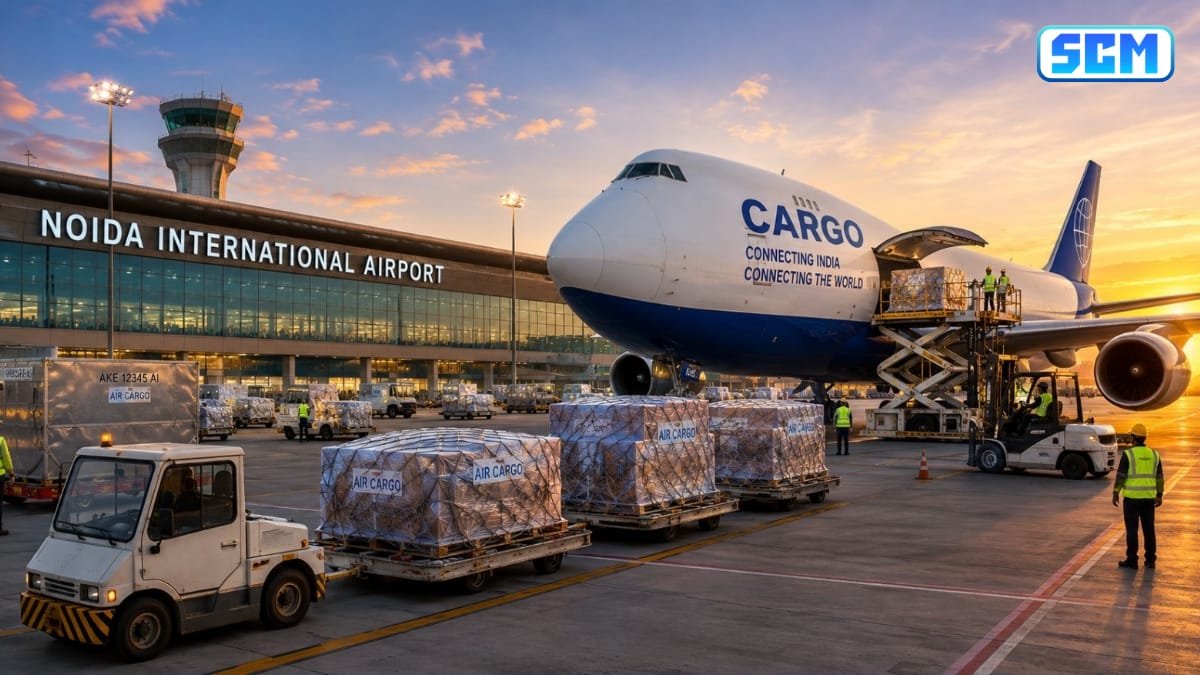
Noida International Airport is set to handle its first cargo flight, marking a major milestone for India’s aviation and logistics sector. The launch strengthens North India’s air freight infrastructure, improves regional supply chain connectivity, and positions the airport as a future multimodal logistics hub. The development is expected to support exporters, e-commerce companies, manufacturers, and freight operators across Delhi-NCR and surrounding industrial regions.
Key Highlights
- First cargo flight operations to begin at Noida International Airport
- Major boost for North India’s logistics and air freight sector
- Dedicated cargo and warehousing infrastructure already planned
- Airport expected to reduce congestion at Delhi Airport
- Strong growth opportunities for exporters and e-commerce players
- Strategic connectivity with expressways and industrial corridors
Noida International Airport Enters Cargo Operations Phase
Noida International Airport has taken a significant step toward becoming one of India’s largest logistics and aviation hubs with the launch of its first cargo flight operations. The move marks the beginning of commercial cargo handling at the airport and is expected to reshape air freight movement across North India.
Located in Jewar, Uttar Pradesh, the airport has been designed as a next-generation aviation and logistics ecosystem capable of supporting both passenger and cargo growth at scale.
The cargo launch comes shortly after passenger operations began, signaling the airport’s rapid transition into a full-fledged commercial aviation hub.
Why This Development Matters for India’s Logistics Industry
The start of cargo services is a major development for India’s expanding logistics and supply chain sector.
For years, Delhi’s Indira Gandhi International Airport has managed the majority of air cargo traffic for North India. However, increasing cargo volumes, e-commerce demand, and export growth have created pressure on existing infrastructure.
Noida International Airport is expected to address these challenges by:
- Expanding regional air cargo capacity
- Improving freight movement efficiency
- Supporting faster export-import operations
- Reducing logistics bottlenecks
- Enhancing multimodal connectivity
The airport’s strategic location near major industrial and manufacturing zones gives it a strong advantage for freight movement.
Strategic Location Strengthens Supply Chain Connectivity
One of the airport’s biggest advantages is its connectivity to major transportation corridors and industrial hubs.
The airport is positioned close to:
- Yamuna Expressway
- Eastern Peripheral Expressway
- Delhi-Mumbai Industrial Corridor (DMIC)
- Dedicated Freight Corridor infrastructure
- Industrial clusters in Noida, Greater Noida, Ghaziabad, Agra, and Aligarh
This connectivity can significantly reduce cargo transit time between factories, warehouses, and air freight terminals.
Industry experts believe the airport could become a critical gateway for:
- Electronics exports
- Pharmaceutical shipments
- Textile cargo
- Automotive components
- Agricultural and perishable goods
- E-commerce fulfillment
Dedicated Cargo Infrastructure Planned
The airport has been developed with long-term cargo growth in mind.
The cargo ecosystem includes:
- Integrated cargo terminals
- Modern warehousing infrastructure
- Cold-chain capabilities
- Automated cargo handling systems
- Scalable logistics infrastructure
- Future multimodal freight integration
Initial cargo handling capacity is expected to exceed 250,000 metric tonnes annually, with significant expansion planned in future phases.
The airport’s cargo and warehousing infrastructure is also expected to attract third-party logistics providers, freight forwarders, customs brokers, and e-commerce operators.
Major Opportunity for E-Commerce and Express Logistics
The rise of India’s e-commerce industry has dramatically increased demand for faster air cargo movement and fulfillment infrastructure.
Noida International Airport could become a key hub for:
- Same-day delivery operations
- Cross-border e-commerce shipments
- High-value electronics logistics
- Time-sensitive freight movement
Its proximity to densely populated urban markets in Delhi-NCR gives logistics operators an operational advantage in reducing delivery timelines and transportation costs.
As India’s digital commerce economy expands, air cargo infrastructure will play a larger role in enabling rapid fulfillment networks.
Economic and Industrial Impact
The airport is expected to create a broader economic impact beyond aviation.
Key sectors likely to benefit include:
- Warehousing and industrial real estate
- Transportation and trucking
- Export manufacturing
- Freight forwarding
- Supply chain technology
- Customs and trade services
The surrounding region is already witnessing increased investment in:
- Logistics parks
- Industrial corridors
- Grade-A warehousing
- Commercial infrastructure
This aligns with India’s long-term goal of reducing logistics costs and improving supply chain efficiency under initiatives focused on infrastructure modernization and export growth.
“The launch of cargo operations at Noida International Airport could transform the logistics landscape of North India by creating a faster and more efficient freight ecosystem.”
Reducing Pressure on Delhi Airport
Another major advantage is the potential reduction of cargo congestion at Delhi’s existing aviation infrastructure.
As cargo traffic continues to grow, capacity constraints at Delhi Airport have become a challenge for airlines and freight operators.
Noida International Airport can help:
- Distribute cargo volumes more efficiently
- Reduce turnaround times
- Improve slot availability
- Support additional cargo carriers
- Enhance operational flexibility
This dual-airport ecosystem may strengthen Delhi-NCR’s position as one of South Asia’s most important logistics regions.
Future Expansion Plans
Noida International Airport is being developed in multiple phases and has ambitious long-term expansion plans.
Future developments may include:
- Additional runways
- Expanded cargo terminals
- Large-scale logistics zones
- MRO (Maintenance, Repair & Overhaul) facilities
- Enhanced rail and road connectivity
- Increased international cargo operations
Once fully developed, the airport is expected to become one of India’s largest aviation and logistics infrastructure projects.
Challenges Ahead
While the cargo launch is a positive milestone, industry experts note that several operational challenges remain.
These include:
- Building strong airline cargo networks
- Integrating customs and clearance systems
- Scaling multimodal connectivity
- Ensuring last-mile logistics efficiency
- Competing with established cargo hubs
The pace of ecosystem development around the airport will play a major role in determining how quickly it can emerge as a leading air freight gateway.
Industry Outlook
The launch of the first cargo flight at Noida International Airport represents a major step in India’s logistics infrastructure transformation.
With growing demand for:
- Faster freight movement
- Export-oriented supply chains
- E-commerce fulfillment
- Multimodal logistics infrastructure
the airport is expected to become a critical node in North India’s transportation and trade ecosystem.
For logistics companies, exporters, freight forwarders, and supply chain operators, the airport’s cargo operations could open new opportunities for faster, more efficient, and scalable freight movement in the coming years.


