

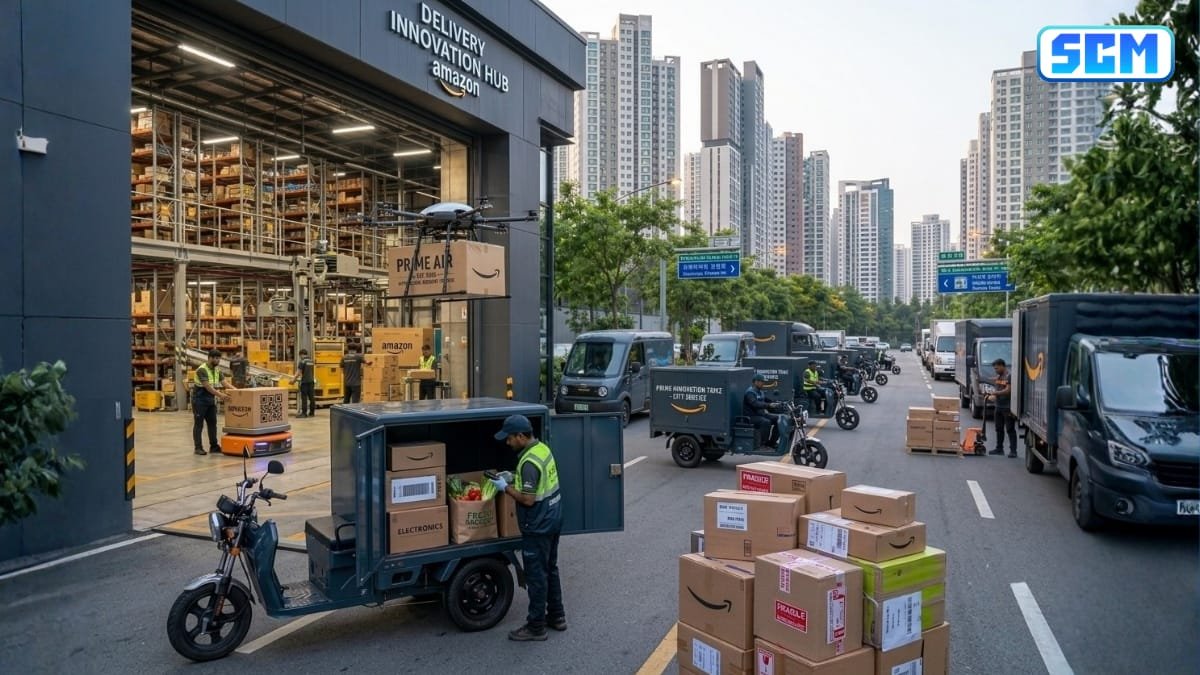
India’s quick-commerce race is becoming more intense, and Amazon has just made one of its biggest moves yet.
The company has announced plans to expand Amazon Now to more than 300 cities across India, significantly increasing its reach in a market where consumers are increasingly expecting deliveries in minutes rather than days. Alongside the expansion, Amazon has unveiled the Sammaan Programme, a new initiative aimed at improving the welfare of delivery associates through education support, insurance benefits, financial inclusion programs, and enhanced rest facilities.
The dual announcement sends a clear message: Amazon is not only investing in faster deliveries but also in the workforce that powers its growing logistics network.
Quick Summary
- Amazon Now will expand to over 300 cities across India.
- The service is currently one of Amazon India’s fastest-growing businesses.
- Amazon launches the Sammaan Programme for delivery associates.
- Benefits include scholarships, insurance coverage, financial support, and road safety initiatives.
- Ashray rest centres will expand from around 100 to 250 locations.
- The move strengthens Amazon’s position in India’s rapidly growing quick-commerce market.
Amazon Raises the Stakes in India’s Quick-Commerce Battle
Over the past few years, Indian consumers have rapidly embraced instant delivery services. What began as a convenience offering for groceries has evolved into a highly competitive industry where customers expect everything from daily essentials to electronics to arrive at their doorstep within hours.
Amazon’s latest expansion reflects this shift in consumer behavior.
By extending Amazon Now to more than 300 cities, the company is positioning itself to compete more aggressively with established quick-commerce players such as Blinkit, Zepto, Swiggy Instamart, Flipkart Minutes, and BigBasket.
However, Amazon’s strategy appears to go beyond speed alone. The company is leveraging its extensive logistics network and fulfilment capabilities to offer a wider product assortment than many traditional quick-commerce operators.
For consumers, this means access to a broader range of products with significantly reduced delivery times.
The Logistics Engine Behind the Expansion
Ultra-fast delivery is not simply a technology challenge—it is a supply chain challenge.
To support its ambitious expansion plans, Amazon is investing heavily in infrastructure designed to move inventory closer to customers.
Expanding Micro Fulfilment Networks
Micro fulfilment centres are becoming increasingly important in modern e-commerce operations. These facilities allow companies to store inventory within urban areas, reducing the distance between products and consumers.
By placing inventory closer to demand centres, Amazon can process orders faster and improve delivery efficiency while reducing transportation costs.
Growth of Urban Fulfilment Centres
Amazon is also expanding its Urban Fulfilment Centre (UFC) network.
Unlike traditional quick-commerce dark stores that often carry a limited inventory range, UFCs are designed to support a broader product selection. This enables Amazon to combine rapid delivery with greater product availability—a key advantage in a competitive market.
Broader Product Selection
The expanded network will support a wide range of categories, including:
- Groceries
- Fresh fruits and vegetables
- Frozen foods
- Household essentials
- Personal care products
- Beauty products
- Home and kitchen items
- Consumer electronics and accessories
This approach allows Amazon to serve both immediate needs and planned purchases through a single ecosystem.
Why the Sammaan Programme Matters
While the expansion of Amazon Now is grabbing headlines, the launch of the Sammaan Programme may have equally significant implications for India’s logistics sector.
The programme is focused on supporting delivery associates, who play a critical role in enabling rapid delivery services across the country.
As competition intensifies among quick-commerce operators, companies are increasingly recognizing that workforce welfare can be just as important as warehouse capacity and delivery speed.
Amazon’s latest initiative reflects this growing industry trend.
Key Benefits for Delivery Associates
Education Support
The programme will offer educational assistance and scholarship opportunities for the children of delivery associates.
By investing in education, Amazon aims to create long-term benefits for delivery partners and their families.
Enhanced Insurance Coverage
Improved insurance protection will provide greater financial security for delivery associates, helping families manage unexpected challenges more effectively.
Financial Inclusion Programs
The initiative also includes support for accessing financial services and government welfare schemes, helping delivery partners strengthen their financial stability.
Road Safety Initiatives
Given the demanding nature of last-mile delivery operations, road safety remains a critical concern.
Amazon plans to introduce additional safety-focused initiatives designed to help delivery associates operate more safely while navigating increasingly busy urban environments.
Ashray Rest Centres to Expand Across India
One of the most practical components of the Sammaan Programme is the expansion of Amazon’s Ashray rest centres.
These facilities provide delivery associates with access to:
- Air-conditioned seating
- Drinking water
- Washrooms
- Mobile charging stations
- Basic first-aid support
Amazon plans to increase the number of Ashray centres from approximately 100 locations to 250 locations across India.
Importantly, these facilities are intended to support the broader delivery ecosystem and are not limited solely to Amazon personnel.
For delivery workers spending long hours on the road, access to safe and comfortable rest areas can significantly improve working conditions.
What This Means for the Supply Chain Industry
Amazon’s announcement reflects several broader trends shaping the future of logistics and e-commerce in India.
Hyperlocal Fulfilment Is Becoming the New Standard
As delivery expectations continue to rise, businesses are investing in decentralized inventory networks that bring products closer to consumers.
The days when a single regional warehouse could efficiently serve an entire market are gradually fading.
The Last Mile Has Become the Competitive Battleground
The real competition is no longer limited to online storefronts or product pricing.
Today, customer loyalty is increasingly influenced by how quickly and reliably an order reaches the doorstep. Every minute saved in the fulfilment and delivery process can create a competitive advantage.
Workforce Welfare Is Becoming a Business Priority
The launch of the Sammaan Programme highlights a growing industry realization: sustainable growth requires investment in people as much as infrastructure.
As quick-commerce networks continue to scale, companies that provide stronger support systems for delivery associates may gain advantages in retention, productivity, and service quality.
Competition Will Continue to Intensify
Amazon’s expansion is likely to trigger further investment across the sector as competitors accelerate efforts to expand warehouse networks, optimize delivery routes, and improve customer experience.
For the logistics industry, this means continued growth in warehousing, automation, fulfilment technology, and last-mile delivery innovation.
Industry Perspective
Amazon’s latest move is significant because it addresses two of the biggest challenges facing modern e-commerce operations: speed and sustainability.
Many quick-commerce companies have focused heavily on reducing delivery times. Amazon, however, appears to be pursuing a broader strategy—one that combines fulfilment infrastructure, product availability, and workforce support under a single growth model.
If successfully executed, this approach could strengthen Amazon’s position in India’s fast-evolving quick-commerce landscape while setting new benchmarks for operational efficiency and delivery partner welfare.
Conclusion
Amazon’s plan to expand Amazon Now to more than 300 cities represents a major milestone in the evolution of India’s quick-commerce sector.
The investment in fulfilment infrastructure will help the company bring faster deliveries to millions of additional consumers, while the launch of the Sammaan Programme demonstrates a parallel commitment to improving the well-being of delivery associates.
For the logistics and supply chain industry, the announcement reinforces a growing reality: the future of commerce will be shaped not only by how fast products move, but also by how effectively companies support the people and infrastructure that make those deliveries possible.


