


Quick Summary
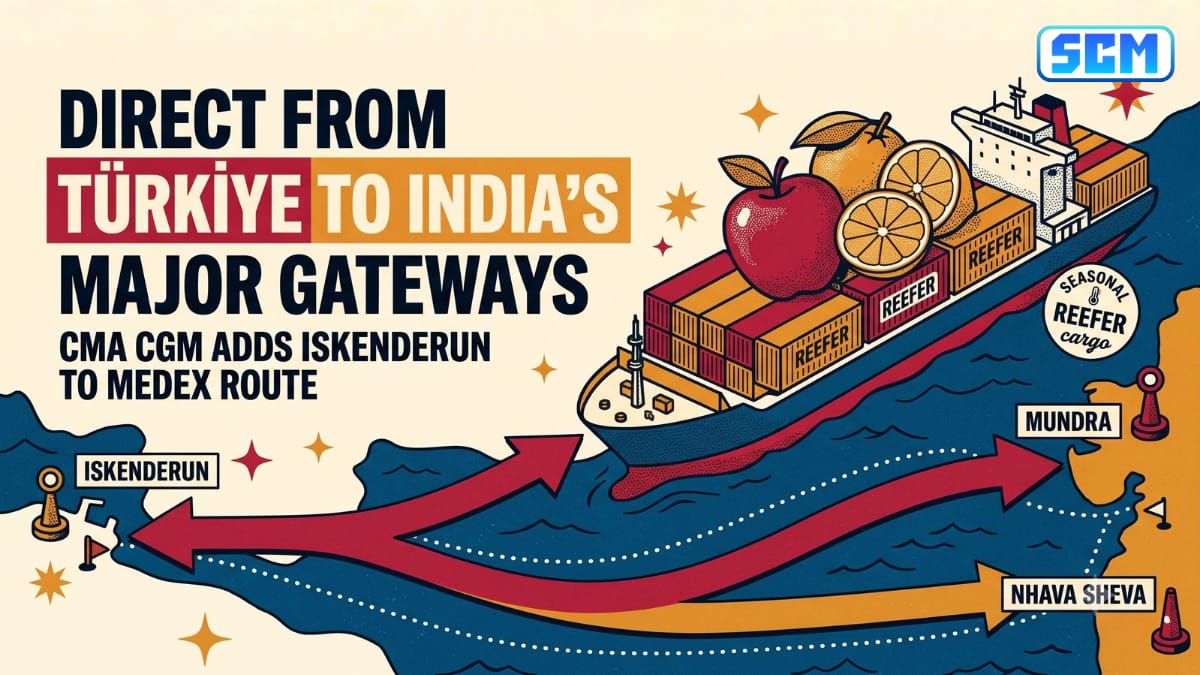
CMA CGM is expanding its MEDEX (Med Express) container shipping service by adding Iskenderun in southern Türkiye from Week 42, beginning October 12, 2026. The updated route connects Iskenderun with Beirut, Jeddah, Duqm, Mundra, Nhava Sheva, Colombo and Djibouti. The change creates another direct maritime connection for southern Turkish exporters serving India and Middle Eastern markets, with particular relevance for seasonal refrigerated cargo such as apples and citrus.
Key Highlights
- New port connection: Iskenderun joins CMA CGM’s MEDEX service from October 12, 2026.
- Stronger India connectivity: The revised rotation includes Mundra and Nhava Sheva, two important gateways for India’s container trade.
- Support for reefer cargo: The service is positioned to facilitate seasonal exports of apples, citrus and other suitable refrigerated goods.
- Regional trade links: The revised route connects Türkiye with markets across the Eastern Mediterranean, Red Sea, Arabian Sea and Indian Subcontinent.
- First vessel: CMA CGM TOSCA is scheduled to operate the revised rotation.
CMA CGM Expands MEDEX Service with a New Iskenderun Connection
CMA CGM is strengthening its maritime network between Türkiye and India by adding Iskenderun to its MEDEX container shipping service. The revised service, effective from Week 42 beginning October 12, 2026, is intended to improve shipping connectivity between southern Türkiye, the Middle East and the Indian Subcontinent.
The development provides exporters in southern Türkiye with an additional maritime option for reaching major Indian cargo gateways, including Mundra in Gujarat and Nhava Sheva near Mumbai. It also reinforces connections with regional markets through ports in Lebanon, Saudi Arabia, Oman, Sri Lanka and Djibouti.
According to industry reports published in October 2026, CMA CGM TOSCA will be the first vessel to operate the updated rotation. The change is particularly relevant to seasonal refrigerated exports, including apples and citrus, which require appropriate temperature-controlled transportation and careful shipment planning.
For importers, exporters and logistics providers, the expansion is a reminder that changes to shipping networks can influence cargo routing decisions, port selection and the coordination of inland transportation.
What Is the New MEDEX Service Route?
The revised MEDEX rotation links eight ports across the Eastern Mediterranean, Red Sea, Arabian Sea and Indian Ocean.
| Port | Country | Role in the regional network |
| Iskenderun | Türkiye | New connection for southern Turkish cargo |
| Beirut | Lebanon | Gateway for Lebanese and regional trade |
| Jeddah | Saudi Arabia | Major Red Sea cargo gateway |
| Duqm | Oman | Port serving Oman’s growing maritime and industrial activity |
| Mundra | India | Important container gateway on India’s western coast |
| Nhava Sheva | India | Major gateway serving Mumbai and surrounding industrial regions |
| Colombo | Sri Lanka | Regional transshipment and container hub |
| Djibouti | Djibouti | Strategic gateway near major Red Sea and East African shipping routes |
Source: Published reports on the revised MEDEX rotation. Actual port calls and schedules remain subject to carrier confirmation.
The revised route gives southern Turkish cargo another connection to the Indian market through Mundra and Nhava Sheva. These gateways serve different hinterland requirements, so the most appropriate port will depend on the shipment’s final destination, inland transport costs, customs arrangements and available sailing schedules.
The addition of Iskenderun should therefore be viewed as a network expansion rather than a guarantee that every shipment will experience shorter transit times or lower freight costs.
Why Iskenderun Matters for Turkey–India Trade
Iskenderun is located on Türkiye’s Mediterranean coast and serves the country’s southern industrial and agricultural hinterland. Adding the port to a major carrier’s service network can offer local businesses another option for moving containerised goods to international markets.
Previously, depending on the origin of the cargo and the carrier’s available services, exporters may have needed to evaluate alternative ports, inland trucking arrangements or connecting services. A new call at Iskenderun provides an additional routing option that could simplify logistics planning for some shippers.
1. More shipping options for southern Turkish exporters
Exporters based in southern Türkiye can evaluate the updated MEDEX service when planning shipments to India and the Middle East.
An additional port connection may help businesses compare inland transportation costs, container availability, sailing schedules and total logistics expenses. Whether the new route offers a commercial advantage will depend on the shipment’s origin, destination and booking conditions.
2. Improved access to Indian cargo gateways
The inclusion of Mundra and Nhava Sheva is important for companies shipping to western India.
Mundra serves cargo moving through Gujarat and the wider northern and western Indian hinterland. Nhava Sheva is an important gateway for Maharashtra and industrial markets connected to the Mumbai region.
For importers, the final choice should consider not only ocean freight but also terminal charges, customs clearance, container movement, delivery requirements and the availability of inland transportation.
3. Additional flexibility in supply chain planning
Shipping networks can change in response to customer demand, cargo flows and carrier network strategies. An additional port call gives logistics teams another option to evaluate when planning future movements.
However, shippers should compare the complete door-to-door journey rather than selecting a service based only on its advertised port rotation.
Reefer Cargo: An Important Opportunity for Seasonal Exports
One of the notable commercial aspects of the MEDEX expansion is its potential to support seasonal refrigerated cargo exports from Türkiye, particularly apples and citrus.
Refrigerated containers, commonly known as reefer containers, are used to transport temperature-sensitive goods under specified conditions. Fresh produce shipments require suitable temperature settings, ventilation, handling procedures and monitoring throughout the transportation process.
A shipping service connecting southern Türkiye with India and Middle Eastern markets could provide another option for exporters seeking to reach customers during seasonal demand periods.
However, the suitability of a particular sailing depends on several operational factors:
- Temperature management: The cargo must be carried at the temperature and ventilation settings appropriate to the product.
- Transit time: Exporters should evaluate the expected journey duration against the product’s shelf life and destination requirements.
- Equipment availability: Reefer container availability and access to suitable electrical connections at terminals are important considerations.
- Port handling: Delays during loading, transshipment or discharge can affect the quality of perishable goods.
- Documentation and compliance: Exporters must meet applicable customs, phytosanitary and destination-country import requirements.
The addition of Iskenderun creates a potential routing opportunity, but it does not by itself establish a particular transit time, guarantee reefer equipment availability or confirm that every type of fresh produce can be shipped under the service.
Exporters should confirm these details with CMA CGM and their logistics partners before committing to time-sensitive cargo movements.
What Does the Expansion Mean for Indian Importers and Exporters?
The service change may create opportunities for companies trading between India, Türkiye and neighbouring markets. Its practical value will depend on the type of cargo, shipment volume, origin and destination.
For Indian importers
Indian businesses sourcing goods from Türkiye may gain another routing option to evaluate, particularly when the cargo originates in or around southern Türkiye.
Importers should compare the MEDEX option with alternative services based on:
- Total freight and inland transportation costs.
- Estimated arrival dates and schedule reliability.
- Container availability and cargo-handling requirements.
- Customs clearance and delivery arrangements.
- The risk of delays affecting production or inventory.
The most suitable service is not necessarily the one with the lowest quoted ocean freight. Total landed logistics cost and schedule dependability are equally important when managing procurement.
For Indian exporters
Indian exporters can also consider the broader network when assessing connections with the Middle East and other markets served through the MEDEX rotation.
The service’s inclusion of ports such as Jeddah, Duqm and Colombo may be relevant to businesses evaluating regional cargo movements. Nevertheless, exporters should verify the available origin-destination routing for their specific shipments rather than assuming every port pair has a direct connection.
For freight forwarders and logistics providers
Freight forwarders will need to assess the updated rotation against existing customer requirements and available carrier alternatives.
Useful operational checks include:
- Confirm the revised service schedule and the relevant vessel’s port calls.
- Check booking availability for the required origin-destination combination.
- Compare expected transit times and transshipment requirements, where applicable.
- Verify container type, reefer requirements and equipment availability.
- Coordinate shipping documentation, cargo cut-offs and inland pickup or delivery.
- Communicate any schedule changes to customers before cargo dispatch.
These checks help logistics teams determine whether the updated service delivers a genuine operational benefit.
How the New Connection Could Influence Regional Shipping
The addition of Iskenderun highlights the importance of port connectivity in international container shipping. A carrier’s network is not simply a collection of ports; it is a system that links manufacturing centres, agricultural exporters, distribution hubs and consumer markets.
By connecting southern Türkiye with the Middle East and the Indian Subcontinent, the revised MEDEX rotation offers another pathway for regional trade.
The wider implications include:
Greater routing choice: Shippers may have an additional service to compare against existing carrier options.
Closer alignment with cargo origins: Businesses located near Iskenderun can evaluate whether using the port reduces inland transportation requirements.
Support for seasonal cargo movements: Refrigerated exports may benefit from an additional connection, provided suitable equipment and schedules are available.
More complex planning requirements: A wider network still requires accurate scheduling, cargo documentation, customs compliance and coordination between shipping lines, terminals and inland transport providers.
Importantly, the service update does not automatically mean lower freight rates, shorter transit times or increased cargo volumes. Those outcomes depend on commercial demand, capacity, sailing schedules and wider market conditions.
What Shippers Should Check Before Booking MEDEX
Companies considering the revised service should confirm the operational details directly with the carrier or their freight forwarder.
Before booking, verify:
- The latest MEDEX port rotation and vessel schedule.
- Whether Iskenderun is available for the required origin-destination movement.
- Expected transit time and any transshipment arrangements.
- Freight rates, surcharges and applicable local charges.
- Container availability, especially for refrigerated cargo.
- Shipping instructions, documentation deadlines and terminal cut-offs.
- Destination customs requirements and inland delivery arrangements.
Schedules can change because of operational conditions, port congestion, weather or other disruptions. The latest booking confirmation should therefore take precedence over an older published schedule.
Conclusion
CMA CGM’s addition of Iskenderun to its MEDEX service strengthens the range of maritime connections available between southern Türkiye, the Middle East and India.
The revised rotation links Iskenderun with Beirut, Jeddah, Duqm, Mundra, Nhava Sheva, Colombo and Djibouti, creating another option for exporters and importers evaluating regional container movements.
The potential benefits are especially relevant to southern Turkish exporters of seasonal refrigerated cargo, including apples and citrus. For Indian businesses, the development provides another service to consider when comparing shipping routes, port access and total logistics costs.
The commercial impact will ultimately depend on confirmed sailing schedules, equipment availability, transit times and freight rates. Shippers should evaluate these factors before incorporating the revised MEDEX service into their supply chain plans.
Source note: This article is based on industry reporting published in October 2026 and CMA CGM’s published MEDEX service information. Operational details should be verified against the latest carrier schedule before shipment booking.
