

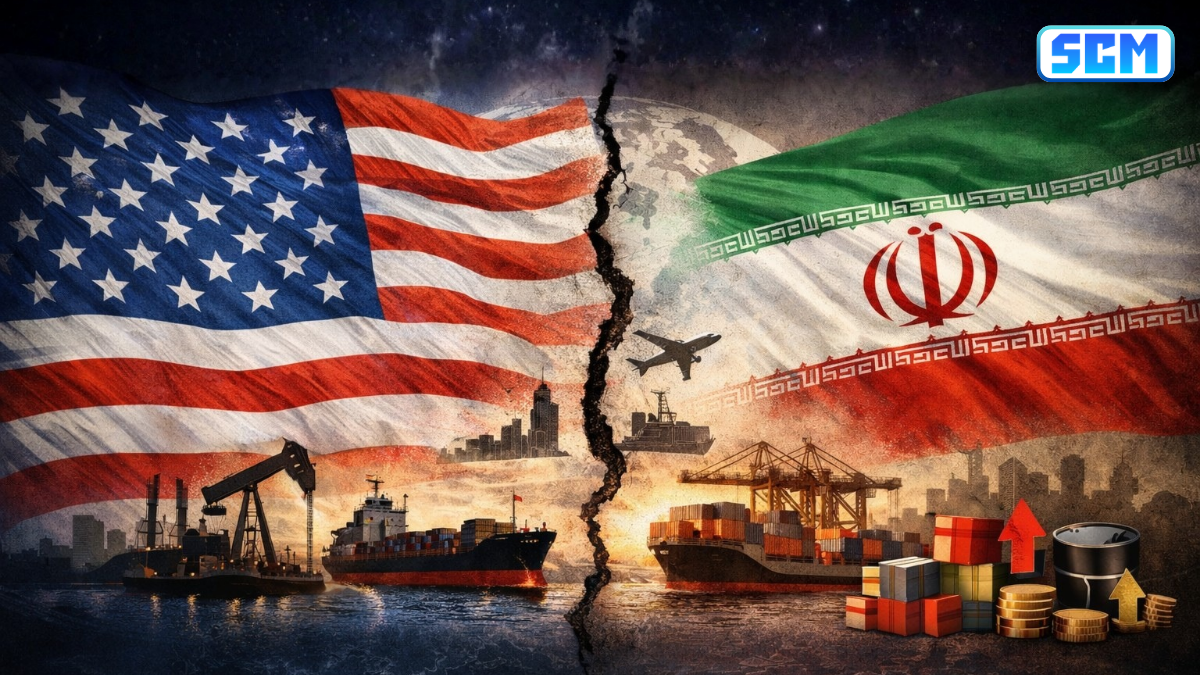
Tensions between the United States and Iran have escalated sharply, moving beyond diplomacy and military posturing into the realm of global trade and supply chains. In a strong warning to the international community, the United States has announced that any country continuing trade or oil purchases from Iran may face a 25% tariff on its trade with the US.
This decision marks a significant shift in US economic strategy and has far-reaching consequences for energy markets, logistics networks, manufacturing costs, and global trade relationships.
What Has the US Announced?
The US administration has stated that:
- Countries trading with Iran, including those buying Iranian crude oil or conducting commercial transactions, could face a 25% tariff on exports to the United States.
- The move is intended to increase economic pressure on Iran, especially amid rising domestic unrest and geopolitical tensions.
- While detailed legal guidelines are still awaited, the announcement itself has already sent shockwaves through global markets.
This policy effectively forces countries to choose between doing business with Iran or maintaining smooth trade relations with the United States.
Why Is the US Taking This Step?
The US aims to:
- Isolate Iran economically by discouraging third-party nations from engaging in trade.
- Reduce Iran’s oil export revenues, a major source of income for the country.
- Use trade policy as a geopolitical weapon, rather than direct military action.
This strategy aligns with Washington’s broader approach of using sanctions, tariffs, and secondary economic pressure to influence geopolitical outcomes.
Countries Likely to Be Impacted
Several countries may feel pressure due to existing trade ties with Iran:
- China – A major buyer of Iranian oil
- Turkey & UAE – Regional trade and logistics links
- India – Limited but strategic trade relations
- Other Asian and Middle Eastern economies
Even countries with indirect trade exposure may face compliance challenges due to banking, insurance, and shipping dependencies.
Impact on Global Supply Chains
1. Higher Energy and Transportation Costs
Iran is a key oil supplier. Any disruption or restriction:
- Raises global oil prices
- Increases fuel surcharges for shipping, trucking, and air freight
- Pushes up manufacturing and logistics costs worldwide
Energy-intensive industries feel the impact first, followed by consumers.
2. Risk to Critical Trade Routes
The Middle East is home to strategic chokepoints like the Strait of Hormuz, through which a large share of global oil shipments pass.
- Rising tensions increase insurance premiums for vessels
- Shipping companies may reroute cargo, increasing transit times and costs
- Ports in the region could face operational slowdowns
3. Disruption to Manufacturing & Inventory Planning
- Companies relying on Just-in-Time (JIT) models face higher risk
- Businesses may be forced to hold higher safety stock
- Supplier diversification becomes necessary but expensive
This results in longer lead times and higher working capital requirements.
4. Inflationary Pressure Across Industries
As fuel, transport, and raw material costs rise:
- Prices increase for consumer goods, electronics, automobiles, and food
- Margins shrink for manufacturers and traders
- End consumers ultimately bear the cost
5. Shift Toward Supply Chain Resilience
Many companies are now:
- Re-evaluating supplier locations
- Considering near-shoring or friend-shoring
- Investing in digital supply chain visibility tools
Geopolitics is now a core factor in supply chain strategy, not just cost or efficiency.
Impact on India and Emerging Markets
For India:
- Direct trade with Iran has reduced in recent years, limiting immediate exposure
- However, higher oil prices and freight costs will still affect imports and exports
- Indian exporters to the US could face competitiveness challenges if tariffs are imposed
Other emerging economies face similar indirect pressures.
What Happens Next?
Key uncertainties remain:
- Will the US issue formal legal frameworks for the tariff?
- Will exemptions or waivers be allowed?
- How will major economies respond—compliance, negotiation, or resistance?
Markets are closely watching diplomatic signals, as even the threat of tariffs is enough to reshape global trade behavior.
Conclusion
The US warning of a 25% tariff on countries trading with Iran is more than a political statement—it is a major disruption risk for global supply chains. From oil prices and shipping costs to inventory planning and inflation, the ripple effects are already being felt.
For businesses, logistics providers, and manufacturers, this moment underscores one reality:
👉 Geopolitics is now inseparable from supply chain strategy.


