

Introduction
In today’s interconnected world, goods travel across continents before reaching consumers. From raw materials in Africa to manufacturing plants in Asia and retail shelves in Europe, global supply chains are vast and complex. But behind every shipment, contract, and invoice, one critical factor keeps the flow of trade alive — Trade Finance.
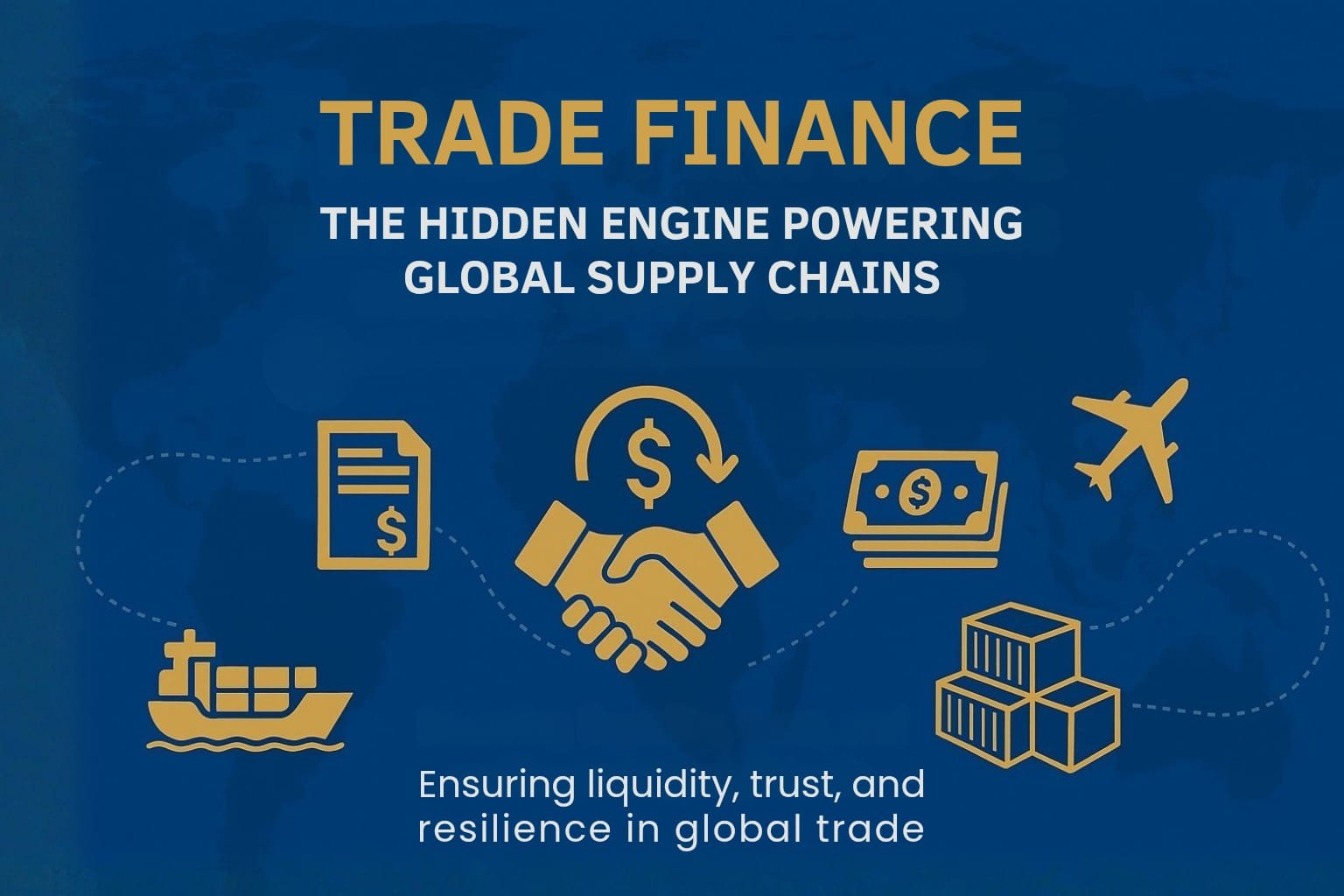
Trade finance acts as the financial backbone of global commerce, ensuring that businesses can trade smoothly, even across borders where trust, timing, and liquidity can become major challenges. It bridges the gap between buyers and sellers, helping them manage risks, ensure payments, and maintain a healthy flow of goods.
In this article, we’ll explore the importance of trade finance in supply chains, its key functions, benefits, types, and how it supports global trade operations.
What is Trade Finance?
At its core, trade finance refers to financial instruments and products that enable international trade and commerce. It helps importers and exporters manage the risks involved in trade — such as payment delays, currency fluctuations, and political instability — by providing secure payment methods, working capital, and risk mitigation tools.
In simple terms:
Trade finance ensures that the buyer pays on time and the seller gets paid securely, allowing the flow of goods and services without disrupting the supply chain.
The Link Between Trade Finance and Supply Chain
Supply chains depend heavily on trust, timing, and liquidity. When a manufacturer in one country buys raw materials from a supplier in another, both parties face uncertainty — the supplier fears non-payment, while the buyer worries about non-delivery.
This is where trade finance acts as a bridge — providing the trust, funding, and guarantees needed to move products and payments seamlessly across borders.
How Trade Finance Integrates with Supply Chain:
- Pre-shipment financing: Enables manufacturers to purchase raw materials and produce goods before receiving payment.
- Post-shipment financing: Provides liquidity to exporters once goods are shipped, even before payment is received from buyers.
- Payment guarantees: Tools like letters of credit ensure that payment will be made once contractual obligations are met.
- Risk mitigation: Banks and financial institutions cover risks arising from non-payment, political instability, or foreign exchange fluctuations.
By ensuring that every stage of the trade cycle is financially supported, trade finance keeps the global supply chain moving efficiently.
Why Trade Finance is Important in Supply Chain
1. Ensures Continuous Cash Flow
One of the biggest challenges in international trade is delayed payments. Exporters often wait weeks or months to receive payments after shipment, which can disrupt production and procurement cycles.
Trade finance solves this problem by providing working capital through tools like invoice factoring, letters of credit, and export credit. This allows businesses to maintain cash flow and continue operations smoothly.
2. Builds Trust Between Global Buyers and Sellers
When trading internationally, trust is not easy to establish. Trade finance instruments like letters of credit (LCs) act as a safety net, assuring exporters that they’ll get paid once terms are fulfilled and assuring importers that goods will be shipped as agreed.
This reduces fraud, disputes, and financial risk, enabling long-term business relationships across countries.
3. Reduces Risk and Uncertainty
International trade involves multiple risks — from political instability and currency fluctuations to non-payment or non-delivery.
Through trade finance tools like export credit insurance, bank guarantees, and documentary collections, these risks are significantly minimized. This gives businesses the confidence to expand into new markets without fearing financial loss.
4. Improves Supply Chain Efficiency
With trade finance in place, suppliers receive payments on time, manufacturers get raw materials faster, and buyers receive products without delay.
By removing financial bottlenecks, trade finance ensures the smooth movement of goods and services, reducing lead times and improving the overall efficiency of the supply chain.
5. Encourages Global Expansion
For small and medium-sized enterprises (SMEs), entering international markets can be daunting due to capital constraints and payment risks.
Trade finance levels the playing field by giving smaller players access to credit, insurance, and guarantees. This empowers SMEs to compete globally, build international partnerships, and expand their operations confidently.
6. Supports Just-in-Time (JIT) Supply Chains
Modern supply chains often rely on Just-in-Time (JIT) systems — producing and delivering goods as needed to reduce inventory costs.
Trade finance ensures that funding and payments happen precisely when required, supporting the time-sensitive nature of JIT operations and minimizing disruptions.
7. Facilitates Long-Term Supply Chain Relationships
When suppliers and buyers know that financing and payments are reliable, it fosters stronger partnerships. This leads to better pricing, priority service, and improved collaboration, strengthening the entire supply chain network.
Key Trade Finance Instruments Used in Supply Chains
Here are the most common trade finance tools that help manage global transactions efficiently:
- Letter of Credit (LC): A bank-issued guarantee that ensures payment to the exporter once all shipment terms are met. It protects both buyer and seller by reducing the risk of non-payment or non-delivery.
- Bill of Exchange: A written order from the exporter demanding payment from the importer within a specified time. It provides a legal assurance of payment.
- Documentary Collection: Banks act as intermediaries — collecting payment from the importer in exchange for shipping documents. It’s less secure than an LC but cheaper and faster.
- Trade Credit / Open Account: Allows the importer to receive goods and pay later, usually within 30–90 days. Common in trusted business relationships.
- Export Credit Insurance: Protects exporters against non-payment caused by buyer insolvency, political issues, or currency restrictions.
- Factoring and Forfaiting: Financial institutions buy exporters’ receivables (invoices) at a discount, giving them immediate cash flow while taking on the risk of collection.
- Bank Guarantees: A commitment by a bank to cover losses if a party fails to fulfill contractual obligations — ensuring business continuity and confidence.
Real-World Example: Trade Finance in Action
Let’s consider a practical scenario:
A textile exporter in India receives a large order from a retailer in Europe. However, manufacturing and shipping will take 60 days, and payment will only be made 30 days after delivery.
Without trade finance, the exporter would struggle to buy raw materials and cover operational costs during this period.
By using a letter of credit, the exporter secures payment assurance from the buyer’s bank. The exporter’s bank then provides pre-shipment finance to fund production. Once goods are shipped and documents are verified, payment is released — ensuring liquidity and trust on both sides.
This financial support keeps the exporter’s operations running, ensures timely delivery, and strengthens supply chain reliability.
The Role of Technology in Modern Trade Finance
As global trade evolves, technology is transforming how trade finance supports supply chains.
- Blockchain and Digital LCs: Blockchain-based platforms are replacing paper-heavy processes with secure, tamper-proof digital transactions. Digital Letters of Credit reduce processing time from weeks to hours.
- Artificial Intelligence (AI) and Automation: AI-driven tools help banks and companies analyze risk, detect fraud, and automate documentation, improving speed and accuracy.
- Supply Chain Finance Platforms: Modern Supply Chain Finance (SCF) platforms connect buyers, suppliers, and financial institutions digitally, ensuring transparency and instant access to financing.
- E-documentation and Trade Portals: Digital trade documentation — like eBills of Lading and eCertificates — reduce errors and enhance visibility across global networks.
Challenges in Trade Finance
Despite its benefits, trade finance faces certain challenges:
- Complex paperwork and compliance requirements
- Limited access for SMEs due to strict banking criteria
- Currency volatility and geopolitical risks
- Fraud and document forgery
- Slow adoption of digital solutions in developing regions
Overcoming these challenges through digital innovation and financial inclusion will be key to making trade finance more accessible and efficient globally.
The Future of Trade Finance in Supply Chain
The future of trade finance lies in digitization, transparency, and sustainability.
- Digitization will eliminate manual bottlenecks, ensuring faster, safer transactions.
- ESG-linked trade finance will encourage green and ethical supply chains.
- AI and blockchain will redefine how trust and credit are established in international trade.
As global trade grows more interconnected, trade finance will remain the invisible force driving supply chain resilience and growth.
Conclusion
Trade finance isn’t just about money — it’s about trust, liquidity, and continuity in the global supply chain. It enables businesses of all sizes to trade confidently, overcome financial barriers, and build strong cross-border partnerships.
From providing working capital and risk protection to fostering international collaboration, trade finance plays a vital role in sustaining and strengthening supply chains worldwide.
In an era where supply chain disruptions can impact the entire global economy, trade finance stands as a stabilizing force — ensuring goods, capital, and trust continue to flow smoothly across borders.


