


Quick Summary
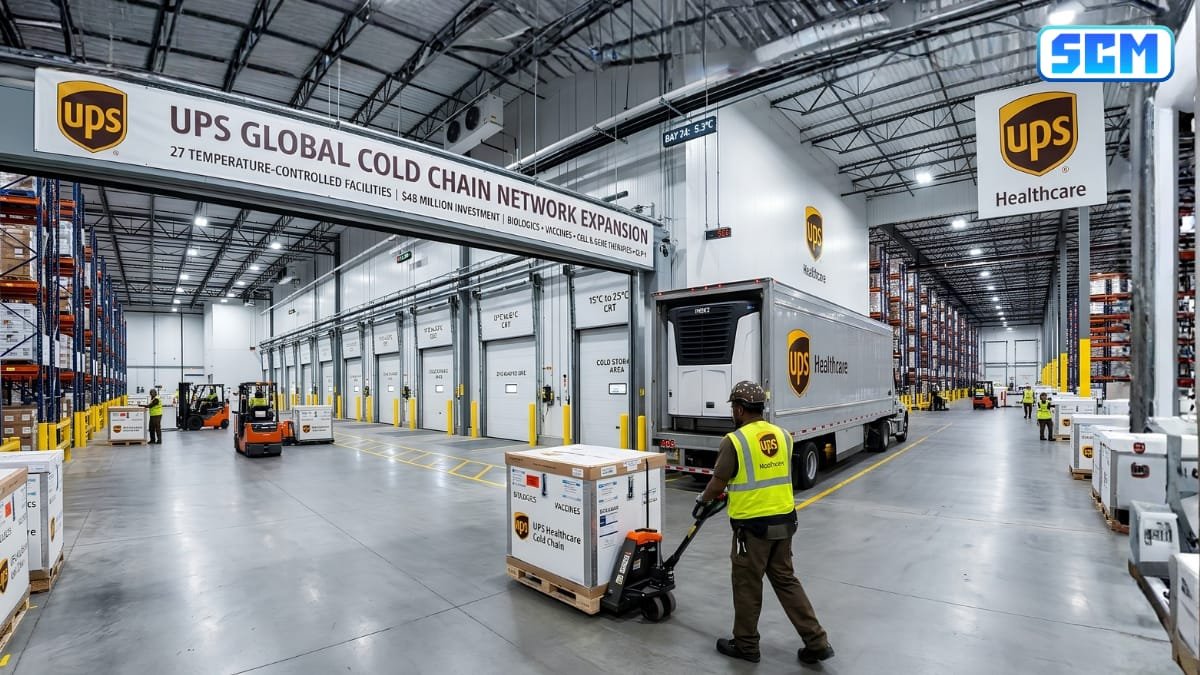
UPS has announced a $48 million investment to expand its global healthcare logistics infrastructure through the addition of 27 temperature-controlled cross-dock facilities worldwide. The move aims to support the growing demand for biologics, vaccines, cell and gene therapies, and GLP-1 medications while strengthening UPS’s position in one of the fastest-growing segments of the global supply chain industry.
Key Highlights
- UPS is investing $48 million in healthcare logistics infrastructure.
- The company will add 27 temperature-controlled cross-dock facilities globally.
- Expansion targets biologics, vaccines, cell and gene therapies, and GLP-1 drugs.
- Facilities will operate under pharmaceutical-grade temperature controls.
- The investment strengthens end-to-end cold chain visibility and compliance.
- UPS continues expanding its healthcare logistics portfolio through strategic investments and acquisitions.
- Healthcare logistics is becoming one of the highest-value segments in global supply chains.
UPS Makes Strategic Healthcare Logistics Play with $48 Million Cold Chain Expansion
As global pharmaceutical supply chains become more complex and temperature-sensitive, logistics providers are investing heavily in specialized infrastructure to meet evolving healthcare requirements. UPS has taken another major step in this direction by announcing a $48 million investment aimed at expanding its global cold chain network and strengthening its healthcare logistics capabilities.
The investment will fund the addition of 27 temperature-controlled freight cross-dock facilities across key international markets. While the announcement focuses on infrastructure, the broader significance lies in UPS’s effort to position itself at the center of a rapidly expanding healthcare logistics market driven by biologics, personalized medicine, and advanced pharmaceutical therapies.
For the logistics industry, this is more than a network expansion—it is a strategic bet on the future of healthcare supply chains.
Why Healthcare Logistics Has Become a Strategic Battleground
The traditional logistics market is increasingly competitive, with carriers facing pressure on pricing and capacity utilization. Healthcare logistics, however, offers a different opportunity.
Unlike conventional freight, pharmaceutical products require:
- Strict temperature controls
- Regulatory compliance
- Real-time monitoring
- Chain-of-custody documentation
- Specialized handling procedures
As a result, healthcare logistics commands higher margins and creates long-term partnerships between logistics providers and pharmaceutical manufacturers.
Industry forecasts indicate that the market for temperature-sensitive biologics could exceed $39 billion by 2033, driven by increasing demand for specialty drugs, vaccines, and personalized therapies. This growth is encouraging global logistics companies to build more sophisticated cold chain networks capable of handling highly sensitive products.
UPS’s latest investment reflects this broader industry shift.
What UPS Is Expanding
The company plans to add 27 temperature-controlled cross-dock facilities that will serve as critical transfer points between air, ground, and international transportation networks.
These facilities are designed to maintain product integrity while shipments move between transportation modes.
The network will support multiple temperature ranges:
| Temperature Range | Typical Pharmaceutical Products |
| 2°C to 8°C | Vaccines, insulin, biologics |
| 15°C to 25°C | Controlled room-temperature medicines |
| Frozen Conditions | Cell therapies, advanced biologics, specialty pharmaceuticals |
By reducing transfer times and maintaining controlled environments, UPS aims to minimize temperature excursions that can compromise product quality and regulatory compliance.
The Growing Demand Behind the Investment
Several healthcare trends are driving increased demand for specialized cold chain logistics.
Biologics Continue to Reshape Pharmaceutical Supply Chains
Biologics now represent a significant share of new drug approvals worldwide. Unlike traditional pharmaceuticals, these products often require continuous temperature monitoring from manufacturing facilities to patients.
Even minor temperature deviations can reduce product effectiveness and create substantial financial losses.
Cell and Gene Therapies Require Precision Logistics
Cell and gene therapies are transforming modern medicine, but they also introduce unique supply chain challenges.
Many of these treatments:
- Have extremely short shelf lives
- Require frozen or ultra-low temperature storage
- Must be delivered within precise time windows
- Demand complete shipment traceability
This makes logistics execution a critical component of patient care.
Global Expansion of GLP-1 Medications
The rapid growth of GLP-1 medications used for diabetes and weight management is creating additional demand for temperature-controlled transportation infrastructure worldwide.
As production scales globally, pharmaceutical companies require logistics partners capable of supporting large-volume international distribution while maintaining strict temperature standards.
Why Cross-Docking Matters in Pharmaceutical Logistics
Cross-dock facilities may not receive the same attention as warehouses or transportation fleets, but they play a crucial role in pharmaceutical supply chains.
Every time a shipment changes transportation modes, risks increase.
Potential issues include:
- Temperature excursions
- Delayed transfers
- Product handling errors
- Loss of shipment visibility
- Compliance failures
By expanding its global cross-docking network, UPS is working to reduce these risks while creating a more seamless movement of healthcare products across international markets.
For pharmaceutical manufacturers, minimizing risk during transportation is often as important as reducing transit times.
Strengthening End-to-End Visibility Through Technology
Modern healthcare logistics extends beyond physical infrastructure.
Visibility has become a key competitive differentiator.
UPS plans to integrate the new facilities into its broader healthcare logistics ecosystem, enabling:
- Real-time shipment tracking
- Continuous temperature monitoring
- Automated alerts and notifications
- Improved chain-of-custody documentation
- Faster disruption management
As pharmaceutical companies face increasing regulatory scrutiny, the ability to provide complete shipment transparency has become essential.
The future of healthcare logistics will be driven not only by transportation assets but also by digital visibility and predictive monitoring capabilities.
UPS Versus the Competition
UPS is not alone in targeting healthcare logistics growth.
Major global logistics providers have been expanding their healthcare networks, including:
- FedEx Healthcare
- DHL Life Sciences & Healthcare
- Kuehne+Nagel PharmaChain
- DB Schenker Healthcare Logistics
However, UPS has accelerated its strategy through a combination of infrastructure investments and acquisitions.
Recent acquisitions such as Bomi Group, Frigo-Trans, BPL, and Andlauer Healthcare Group have significantly expanded UPS’s healthcare footprint across Europe and North America.
The latest investment strengthens the company’s ability to connect these assets into a more integrated global network.
What This Means for Pharmaceutical Companies
The expanded network offers several advantages for pharmaceutical manufacturers and healthcare providers.
Improved Product Integrity
Enhanced temperature controls help reduce the risk of product degradation and spoilage.
Faster Global Distribution
More strategically located cross-dock facilities can reduce transit delays and improve network efficiency.
Greater Compliance Confidence
Facilities designed to meet pharmaceutical standards support adherence to increasingly stringent regulatory requirements.
Enhanced Risk Management
Real-time monitoring and improved visibility allow organizations to identify and resolve issues before shipments are compromised.
Supply Chain Metaverse Insight
UPS’s $48 million investment reflects a larger transformation occurring across global supply chains.
Healthcare logistics is evolving from a specialized service into a strategic infrastructure category. As pharmaceutical innovation accelerates, logistics providers are becoming essential partners in ensuring treatment availability, patient safety, and regulatory compliance.
The companies that succeed in this market will not necessarily be those with the largest transportation fleets. Instead, they will be those capable of combining:
- Cold chain expertise
- Digital visibility platforms
- AI-powered monitoring
- Regulatory compliance capabilities
- Global healthcare infrastructure
UPS’s latest expansion demonstrates how logistics providers are increasingly competing on supply chain intelligence and service reliability rather than transportation capacity alone.
Future Outlook
Healthcare logistics is expected to remain one of the fastest-growing sectors within the global supply chain industry over the next decade.
Several trends are likely to drive continued investment:
- Growth of biologics and specialty pharmaceuticals
- Expansion of personalized medicine
- Increased use of AI in supply chain monitoring
- Rising global demand for cold chain infrastructure
- Greater regulatory oversight of pharmaceutical transportation
As these trends accelerate, healthcare supply chains will require increasingly sophisticated logistics networks capable of delivering both operational efficiency and regulatory compliance.
UPS’s latest investment positions the company to benefit from these market shifts while supporting the next generation of pharmaceutical innovation.
Conclusion
UPS’s decision to invest $48 million in expanding its global cold chain network signals more than just infrastructure growth. It highlights the strategic importance of healthcare logistics in the future of global supply chains.
By adding 27 temperature-controlled cross-dock facilities and enhancing end-to-end visibility, UPS is strengthening its ability to serve the growing market for biologics, vaccines, cell and gene therapies, and other temperature-sensitive products.
As healthcare supply chains become more complex and pharmaceutical innovation continues to accelerate, investments like these will play a critical role in ensuring product integrity, regulatory compliance, and patient access worldwide.
