


Quick Summary
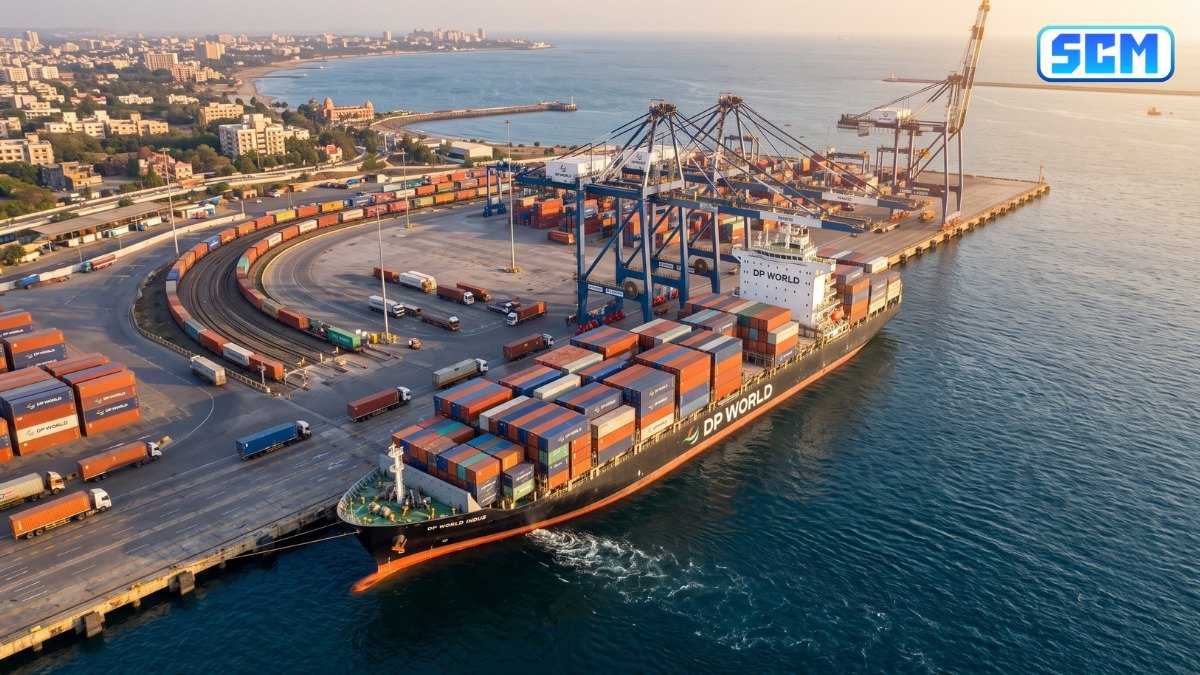
DP World has expanded its India coastal shipping network with the acquisition of the container vessel DP World Indus. The move strengthens the company’s ability to offer more controlled, scheduled and integrated domestic sea-freight services across India’s coastline.
The acquisition is strategically important because India’s logistics sector is working to move more cargo from roads to coastal shipping, rail and inland waterways. With DP World Indus, the company can improve capacity planning, service reliability and multimodal connectivity for cargo owners, importers, exporters and freight forwarders.
Key Highlights
- DP World has acquired the container vessel DP World Indus.
- The vessel will support the expansion of DP World’s India coastal shipping network.
- The move can help shift selected domestic cargo from road transport to sea-based logistics.
- It strengthens DP World’s end-to-end logistics model across ports, terminals, warehousing, rail and freight forwarding.
- The acquisition supports India’s wider push for coastal shipping under the Sagarmala programme.
- DP World has also committed to investing up to $5 billion in India’s trade and logistics infrastructure in the coming years.
DP World Adds DP World Indus to Its India Shipping Network
Global logistics company DP World has expanded its maritime footprint in India with the acquisition of the container vessel DP World Indus. The vessel acquisition is expected to support the company’s coastal and short-sea shipping ambitions while improving domestic cargo movement between India’s key port regions.
The development comes at a time when Indian logistics operators are under increasing pressure to reduce transport costs, improve delivery predictability and lower the carbon intensity of freight movement. Coastal shipping is becoming an important alternative for cargo that currently depends heavily on long-haul trucking.
DP World’s latest move indicates that the company is not only investing in ports and terminals but is also building greater control over the vessels and services that connect those assets.
Why India’s Coastal Shipping Market Matters
India has a coastline of more than 7,500 kilometres, along with major ports on the western, southern and eastern coasts. Despite this advantage, a significant portion of domestic freight continues to move by road.
Road freight remains essential, especially for first-mile and last-mile delivery. However, long-distance trucking can be affected by congestion, fuel costs, driver availability, toll charges and route disruptions. For high-volume and non-time-critical cargo, coastal shipping can provide a more efficient option.
Coastal shipping can be particularly suitable for:
- Containerised consumer goods
- Automotive components
- Industrial machinery
- Chemicals and raw materials
- Retail inventory
- Project cargo
- Agricultural and food products
- E-commerce replenishment cargo
By adding DP World Indus to its fleet, DP World can potentially offer shippers more scheduled coastal transport options between major Indian port clusters.
What the DP World Indus Acquisition Means for Shippers
The value of this acquisition is not limited to one vessel. It is part of a wider logistics strategy in which DP World can connect maritime capacity with port terminals, rail freight, warehouses, customs services and inland transportation.
For cargo owners, this can create a more integrated movement model from origin to destination.
1. Better Schedule Reliability
When shipping companies rely entirely on chartered vessels, schedules can be affected by vessel availability, charter rates and operational disruptions. Owning or controlling a vessel gives DP World more flexibility to manage deployment and sailing schedules.
This can improve planning for manufacturers, exporters and freight forwarders that need predictable cargo movement.
2. Reduced Dependence on Long-Haul Road Transport
Coastal shipping can reduce the need for trucks to move cargo over very long domestic distances. Instead, trucks can be used for shorter first-mile and last-mile movements, while the longer middle leg is handled by sea.
This approach can reduce pressure on highways and support more efficient multimodal logistics planning.
3. Stronger Port-to-Door Logistics Solutions
DP World operates across several logistics segments, including ports, terminals, freight forwarding, warehousing, rail and marine services. The acquisition of DP World Indus allows the company to integrate vessel capacity into this broader network.
For example, cargo can move from a manufacturing hub to a DP World-connected port, travel by coastal vessel and then be distributed through rail, road or warehouse networks at the destination.
4. Potential Carbon Reduction Opportunities
Shipping generally produces lower emissions per tonne-kilometre than road freight for large cargo volumes. While the exact environmental benefit depends on vessel utilisation, route distance, cargo type and last-mile transport, coastal shipping can support lower-carbon freight strategies.
This is becoming increasingly relevant for companies tracking Scope 3 emissions and working towards sustainability targets.
DP World’s Wider India Logistics Strategy
The DP World Indus acquisition is part of a larger India-focused investment and logistics strategy.
Earlier in 2026, DP World acquired another container vessel, DP World Chennai, which was integrated into the company’s Red Sea–Gulf–India service. That acquisition was aimed at improving schedule reliability and capacity on the India–Middle East trade corridor.
The addition of DP World Indus now indicates that DP World is applying a similar asset-control strategy to India’s domestic coastal shipping market.
The company has also signed a Memorandum of Understanding with Sagarmala Finance Corporation Limited to collaborate on the development and scaling of sustainable coastal and short-sea shipping services in India.
This aligns with India’s broader goal of increasing the share of freight transported through coastal shipping, inland waterways and rail-based logistics.
How the Move Supports the Sagarmala Vision
India’s Sagarmala programme focuses on port-led development, logistics efficiency, coastal economic growth and better multimodal connectivity.
Coastal shipping is a central part of this vision because it can connect industrial clusters, manufacturing hubs and consumption centres through sea routes. It can also reduce logistics costs for cargo that does not require urgent road delivery.
DP World’s investment in DP World Indus supports this direction by adding private-sector capacity to India’s coastal shipping ecosystem.
For the country, more reliable coastal services could help create stronger links between:
- Western India manufacturing clusters
- Southern India industrial and automotive hubs
- Eastern India consumption and production centres
- Major container ports and inland logistics parks
- Export-oriented manufacturing zones
Challenges That Will Determine the Success of Coastal Shipping
While the acquisition is positive for the coastal shipping market, the commercial success of such services will depend on several operational factors.
Service Frequency
Cargo owners need regular sailings to plan inventory and distribution. A coastal service with low frequency may not be suitable for time-sensitive supply chains.
Port Connectivity
The vessel service must connect efficiently with terminals, container depots, rail networks, warehouses and road transport providers.
Competitive Pricing
Coastal shipping must remain commercially attractive after considering port handling, container repositioning, first-mile trucking and last-mile delivery costs.
Transit Time
Sea freight may be slower than direct road transport on some domestic routes. Shippers will need to balance cost savings against delivery timelines.
Container Availability
Reliable access to containers, equipment and empty-container repositioning will be important for scaling coastal shipping volumes.
A Shift Towards More Asset-Controlled Logistics
The acquisition of DP World Indus also reflects a broader logistics trend. Global logistics companies are increasingly investing in owned or controlled assets to improve supply-chain resilience.
During recent years, freight markets have faced vessel shortages, port congestion, changing trade routes and volatile charter rates. Companies with stronger control over vessels, terminals and inland logistics assets can offer customers more predictable services.
For DP World, owning or controlling vessels helps create closer coordination between marine operations and its wider logistics network.
This can be particularly valuable in India, where cargo movement often involves multiple transport modes, customs processes, port handling and inland distribution.
What Happens Next?
The industry will now watch for details on the operating route, port rotation, capacity, sailing frequency and customer segments targeted by DP World Indus.
If DP World deploys the vessel on regular domestic routes connecting major ports, it could strengthen competition in India’s coastal container shipping market. It may also encourage other logistics operators and shipping lines to invest more aggressively in domestic short-sea services.
The long-term opportunity is significant. India’s growing manufacturing base, expanding e-commerce sector, infrastructure investments and export ambitions all require more efficient freight movement.
Coastal shipping will not replace road freight, but it can become a stronger part of a balanced multimodal logistics system.
Frequently Asked Questions
What is DP World Indus?
DP World Indus is a container vessel acquired by DP World to support the expansion of its India coastal shipping network.
Why did DP World acquire DP World Indus?
DP World acquired the vessel to strengthen its coastal and short-sea shipping capabilities, improve service control and support integrated logistics services in India.
How can coastal shipping benefit Indian businesses?
Coastal shipping can help businesses move large cargo volumes more efficiently, reduce long-distance trucking dependence, improve supply-chain resilience and potentially lower transport emissions.
Does coastal shipping replace road freight?
No. Coastal shipping works best as part of a multimodal logistics model. Road freight remains important for first-mile and last-mile delivery.
How does this support India’s Sagarmala programme?
The acquisition supports the Sagarmala vision of port-led development, improved coastal shipping, stronger multimodal logistics and lower logistics costs.
Conclusion
DP World’s acquisition of DP World Indus is more than a fleet expansion. It represents a strategic investment in India’s coastal shipping potential and the future of multimodal logistics.
By combining vessel ownership with ports, terminals, rail, warehousing and freight forwarding, DP World is positioning itself to offer more integrated domestic cargo solutions. For shippers, the development could mean better schedule reliability, more transport options and reduced dependence on long-haul road freight.
As India continues to invest in port-led development and logistics modernisation, coastal shipping is likely to become an increasingly important part of the country’s supply chain infrastructure.
