

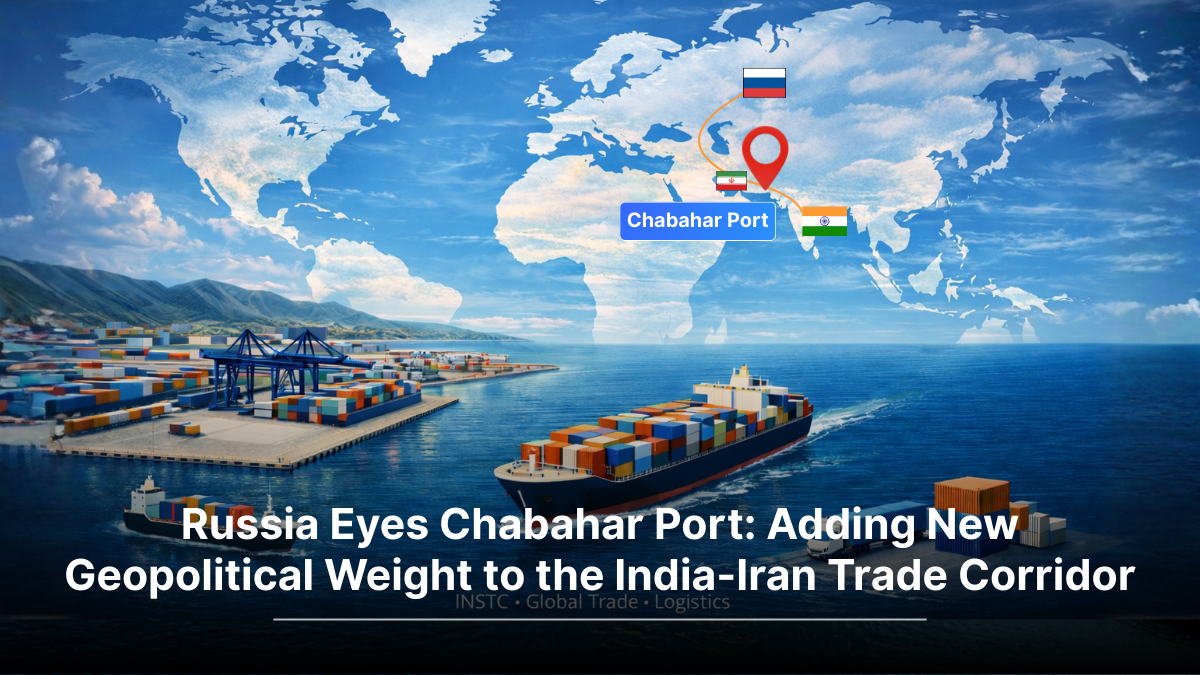
Chabahar Port in Iran has once again come into global focus as Russia explores a possible role in the port’s development and operations. Already backed by India and strategically important for Iran, Chabahar is now emerging as a major geopolitical and trade hub connecting South Asia, Central Asia, and Europe.
Russia’s interest adds a new dimension to the India–Iran trade corridor, strengthening regional connectivity while reshaping power dynamics in Eurasian trade.
What Is Chabahar Port and Why Is It Important?
Chabahar Port is located on Iran’s southeastern coast, along the Gulf of Oman, making it Iran’s only deep-sea port with direct access to the Indian Ocean.
Why Chabahar Matters:
- It allows India to trade with Iran, Afghanistan, and Central Asia without passing through Pakistan
- It serves as a strategic alternative to China-backed Gwadar Port in Pakistan
- It plays a key role in the International North–South Transport Corridor (INSTC)
India has invested heavily in the port’s infrastructure and operations, viewing Chabahar as both a trade gateway and a strategic asset.
Why Is Russia Interested in Chabahar Port?
Russia is facing logistical and trade challenges due to Western sanctions and is actively looking for new, reliable trade routes. Chabahar offers Russia several advantages:
1. Access to Warm-Water Trade Routes
Chabahar provides Russia with a direct maritime link to the Indian Ocean, reducing reliance on longer European routes.
2. Strengthening the INSTC
The International North–South Transport Corridor connects:
- Russia
- Central Asia
- Iran
- India
By linking Chabahar more closely with INSTC rail and road networks, Russia can cut transport time and costs by up to 30–40% compared to traditional sea routes.
3. Expanding Trade with India and Asia
India is one of Russia’s key trading partners. Chabahar can become a preferred route for Russian exports such as:
- Energy products
- Fertilizers
- Metals
- Agricultural goods
What Does This Mean for India?
For India, Russia’s interest is largely a strategic positive.
Key Benefits for India:
- Stronger global backing for Chabahar as a trade hub
- Increased cargo volumes, making the port more commercially viable
- Enhanced connectivity to Central Asia, Russia, and Eastern Europe
- A stronger counterbalance to China-Pakistan Economic Corridor (CPEC)
India has long positioned Chabahar as a symbol of independent regional connectivity, and Russia’s participation could elevate the port from a regional project to a multilateral trade corridor.
Iran’s Perspective: Economic Growth and Strategic Balance
For Iran, Russian involvement means:
- Increased foreign investment and cargo traffic
- Stronger positioning against economic isolation
- A chance to turn Chabahar into a global transit hub
Iran is actively promoting Chabahar as a port open to multiple international partners, and Russia fits well into this strategy.
Impact on Afghanistan and Central Asia
Chabahar has already proven critical for Afghanistan’s trade, especially when routes through Pakistan face disruptions.
With Russia entering the picture:
- Central Asian countries like Uzbekistan and Kazakhstan may increasingly use Chabahar
- Landlocked nations gain direct access to the sea
- Regional trade becomes less dependent on politically sensitive routes
This could significantly reshape trade patterns across Central Asia.
The Sanctions Angle: A Complex Challenge
Chabahar operates under a special sanctions waiver from the United States due to its importance for regional stability and humanitarian trade.
However:
- Russia’s involvement may increase sanctions scrutiny
- India will need careful diplomacy to balance ties with the US, Iran, and Russia
- Any escalation could impact financing and insurance for shipping lines
Despite these challenges, the strategic value of Chabahar remains strong.
What This Means for the Global Logistics Industry
For logistics and freight stakeholders:
- New trade lanes between India–Russia–Central Asia
- Reduced transit times and shipping costs
- Increased demand for multimodal transport solutions
- Greater importance of compliance-ready customs and port management systems
Ports, freight forwarders, and customs brokers will need to adapt quickly as cargo flows evolve.
Conclusion
Russia’s interest in Chabahar Port marks a significant shift in regional trade and geopolitics. What began as an India–Iran connectivity project is now evolving into a multi-nation trade corridor with global impact.
If managed carefully, Chabahar could become one of the most important trade gateways of the next decade, reshaping commerce across South Asia, Central Asia, and Europe.


