

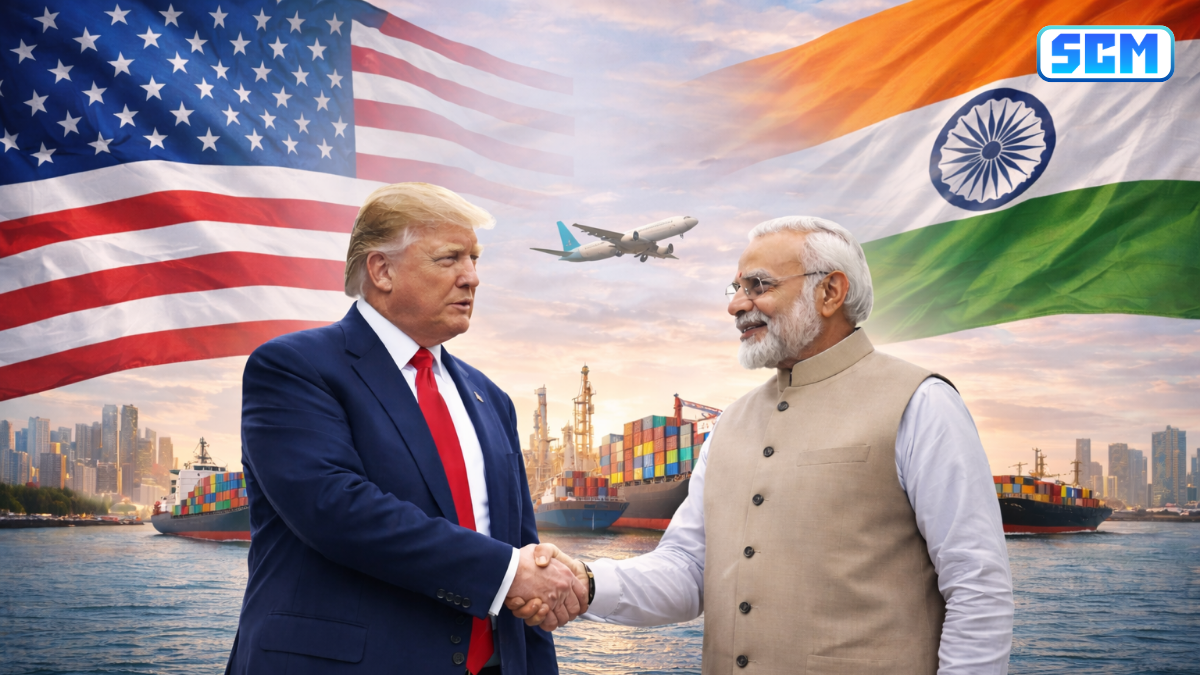
In a major breakthrough for bilateral economic ties, India and the United States have agreed to a trade pact that reduces U.S. tariffs on Indian exports to approximately 18%, marking a significant de-escalation of recent trade tensions. The agreement is being viewed as a strategic reset in economic relations and a move that could meaningfully reshape global supply chains.
This development comes after months of negotiations and follows heightened tariff measures imposed last year, including additional levies linked to geopolitical concerns.
Key Highlights of the Agreement
1. Tariff Reduction to 18%
The United States will lower tariffs on Indian imports to around 18%, down from previously elevated levels that had significantly impacted trade flows.
This reduction is expected to:
- Improve price competitiveness of Indian goods in the U.S. market
- Restore export margins for Indian manufacturers
- Revive stalled export orders across sectors
2. India to Ease Barriers on U.S. Goods
In return, India has committed to reducing tariffs and trade barriers on several U.S. products, with reports suggesting potential expansion of U.S. exports in petroleum, defense, aircraft, and other strategic sectors.
This reciprocal market access signals a move toward deeper economic integration between the two nations.
Why This Deal Matters
Strengthening India’s Export Position
The United States is one of India’s largest export destinations. Lower tariffs will particularly benefit:
- Textiles & Apparel – A key labor-intensive sector heavily dependent on U.S. demand
- Gems & Jewellery – Improved competitiveness in a price-sensitive market
- Marine Products (Shrimp exports) – The U.S. is a primary buyer
- Chemicals & Engineering Goods – Critical for global supply chain integration
By reducing cost pressures, Indian exporters are expected to regain lost market share and enhance production volumes.
Impact on Global Supply Chains
1. Boost to “China-Plus-One” Strategy
Global manufacturers have been diversifying sourcing away from China. With improved U.S. market access, India becomes a stronger alternative manufacturing hub.
The tariff alignment improves India’s relative positioning in sectors like:
- Apparel manufacturing
- Auto components
- Specialty chemicals
- Industrial goods
This could encourage multinational firms to:
- Expand sourcing from India
- Increase manufacturing investments
- Strengthen supplier networks across Indian ports and logistics corridors
2. Enhanced Trade Stability
Markets reacted positively to the announcement, with improved investor sentiment and currency stability reported following the deal.
For exporters, predictability in tariff structures is critical for:
- Long-term contracts
- Pricing strategies
- Supply chain planning
Geopolitical Dimensions
The agreement is also tied to broader geopolitical considerations. Reports indicate India has agreed to adjust its crude oil sourcing strategy, reducing reliance on Russian imports as part of the broader understanding.
This adds a strategic layer to the deal, aligning trade policy with energy diplomacy and global geopolitical priorities.
Sector-Wise Business Implications
For Indian Businesses
- Improved order inflow from U.S. buyers
- Better margins due to lower landed cost
- Opportunity to scale operations
For U.S. Companies
- Greater access to India’s fast-growing consumer and industrial market
- Expansion opportunities in defense, aerospace, energy, and agriculture
What Comes Next?
The current agreement is being described as a first-phase framework, with more detailed sector-specific negotiations expected in the coming months.
Future discussions may include:
- Digital trade
- Technology cooperation
- Supply chain resilience frameworks
- Expanded investment partnerships
Conclusion
The India–US trade pact represents more than just a tariff reduction. It signals:
- A reset in bilateral economic relations
- Stronger supply chain cooperation
- Greater geopolitical alignment
- Enhanced export competitiveness for India
With tariffs reduced to 18%, India strengthens its position as a preferred manufacturing and sourcing destination, while the United States secures deeper engagement with one of the world’s fastest-growing major economies.
If the momentum continues, this pact could mark the beginning of a new phase in global trade realignment—placing India at the center of emerging supply chain networks.


