

Quick Summary
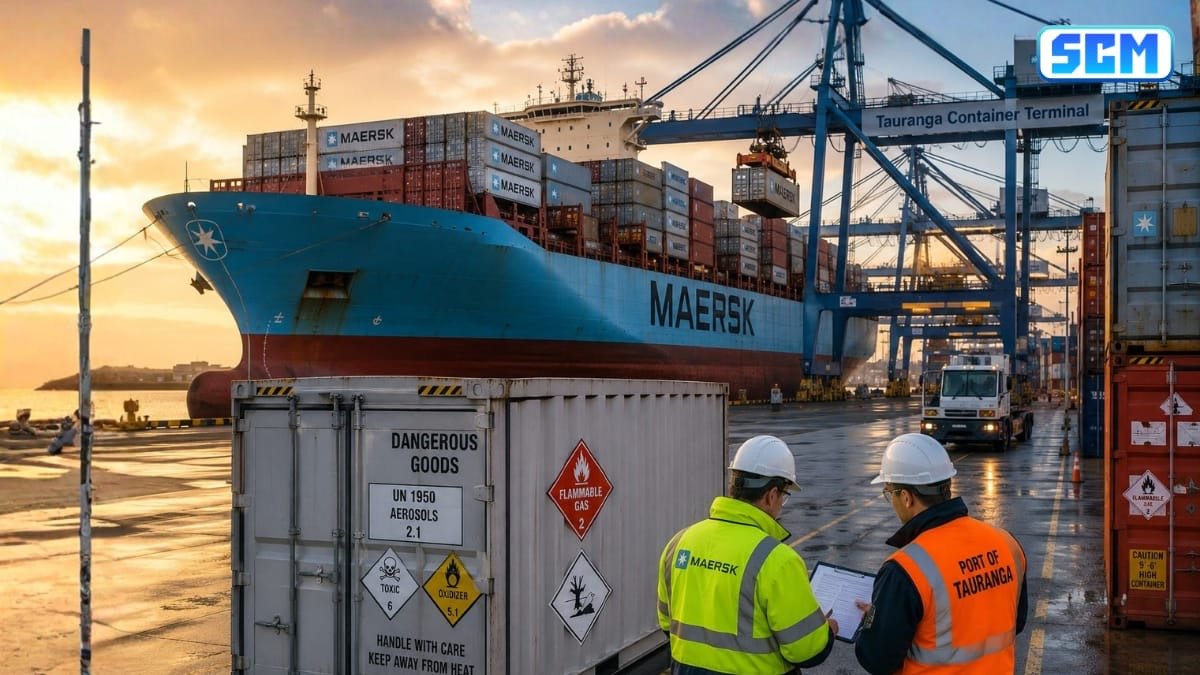
A.P. Moller – Maersk has announced new Dangerous Goods (DG) handling requirements at Tauranga Container Terminal in New Zealand, effective from 1 July 2026. The updated rules require all hazardous cargo documentation, customs approvals, and transport arrangements to be completed before vessel arrival. The move aims to improve terminal safety, reduce hazardous cargo dwell time, and strengthen compliance across supply chains.
Key Highlights
- New DG rules begin on 1 July 2026
- DG containers require full clearance before vessel arrival
- Non-compliant containers may remain onboard vessels
- Strict hazardous cargo dwell-time limits remain in force
- Freight forwarders must improve pre-arrival planning
- Global ports are tightening dangerous goods compliance standards
New DG Rules Introduced at Tauranga Container Terminal
Global shipping giant A.P. Moller – Maersk has alerted customers about significant operational changes affecting Dangerous Goods (DG) containers moving through Tauranga Container Terminal, one of New Zealand’s busiest maritime gateways.
Under the revised policy, DG containers will only be discharged from vessels if all required approvals and evacuation arrangements are finalized before the ship arrives at port.
The changes are scheduled to take effect from 1 July 2026 and are expected to impact importers, freight forwarders, customs brokers, and transport operators handling hazardous cargo shipments into New Zealand.
What Importers Must Complete Before Vessel Arrival
According to Maersk, importers must ensure the following requirements are completed prior to vessel berthing:
- Customs clearance approval
- Ministry for Primary Industries (MPI) clearance
- Shipping line cargo release
- Confirmed inland transportation booking
- Ability to evacuate cargo within legal storage timelines
Containers failing to meet these conditions may remain onboard the vessel or be redirected to off-site storage facilities arranged by the shipping line.
The shipping company stated that the terminal’s hazardous cargo handling framework leaves limited flexibility for delays once containers arrive.
Why Tauranga Terminal Is Enforcing Stricter Hazardous Cargo Controls
Tauranga Container Terminal operates under strict hazardous cargo regulations as a regulated transit facility for dangerous goods.
Due to safety and compliance requirements, DG cargo is subject to strict dwell-time restrictions inside the terminal.
Current DG Storage Limits Include:
- Standard dangerous goods: Maximum 3-day dwell time
- Explosives (Class 1): Highly restricted storage
- Oxidizing substances (Class 5.1): Limited terminal handling
- Toxic substances (Class 6): Enhanced compliance requirements
- Radioactive materials (Class 7): Special handling protocols
Terminal authorities reportedly cannot legally extend hazardous cargo storage periods beyond regulated timelines.
As global ports continue facing congestion and operational pressure, terminals are increasingly tightening hazardous cargo management policies to reduce risk exposure.
Impact on Freight Forwarders and Supply Chain Operations
The new rules will force logistics stakeholders to improve coordination and documentation readiness before cargo arrival.
Faster Documentation Processing
Freight forwarders and customs brokers will need to accelerate paperwork submission to avoid shipment delays.
Increased Pre-Arrival Planning
Transport bookings and container evacuation schedules must now be arranged earlier in the supply chain cycle.
Higher Compliance Pressure
Importers handling chemicals, industrial materials, batteries, pharmaceuticals, and regulated cargo categories may face stricter compliance monitoring.
Potential Additional Costs
Non-compliant shipments could result in:
- Container rollover charges
- Storage and diversion fees
- Demurrage costs
- Delayed cargo delivery
- Supply chain disruptions
Global Shipping Industry Moving Toward Stricter DG Compliance
The Tauranga rule changes reflect a broader global trend in container logistics where ports and shipping lines are prioritizing:
- Hazardous cargo safety
- Port risk reduction
- Environmental compliance
- Faster cargo evacuation
- Digital shipment visibility
- Automated compliance systems
Major shipping hubs worldwide are introducing tighter controls on lithium batteries, chemicals, flammable materials, and regulated industrial cargo as maritime regulators increase scrutiny on dangerous goods transportation.
Industry analysts believe stricter DG management policies will continue expanding across international container terminals over the next few years.
Digital Transformation Becoming Critical for DG Logistics
The latest changes also highlight the growing importance of digitalization in hazardous cargo management.
Logistics providers are increasingly adopting:
- AI-powered compliance systems
- Automated customs documentation
- Real-time shipment tracking
- Smart port visibility platforms
- Integrated freight management software
Companies failing to modernize operational workflows may face rising compliance risks and slower cargo movement in increasingly regulated shipping environments.
Conclusion
Maersk’s latest warning signals a major operational shift in hazardous cargo management at Tauranga Container Terminal. The stricter Dangerous Goods regulations are designed to improve port safety, reduce compliance risks, and prevent hazardous cargo congestion inside the terminal.
For importers, freight forwarders, and logistics operators, the changes underline the importance of proactive planning, faster documentation processing, and stronger supply chain coordination.
As global shipping regulations continue evolving, businesses handling dangerous goods will increasingly need digital compliance systems and real-time logistics visibility to maintain smooth cargo movement across international trade networks.


