

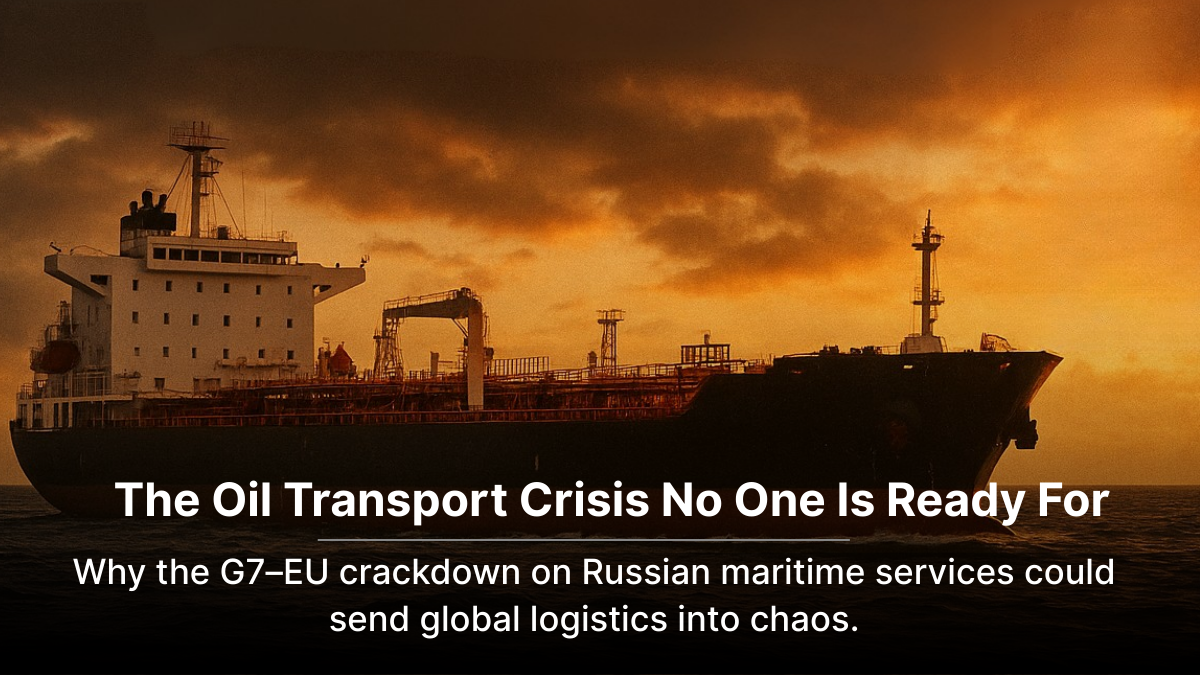
The global oil trade is entering a messy, unpredictable phase. The G7 and the European Union are preparing to enforce a full ban on maritime services for Russian oil tankers by early 2026. On paper, it’s a sanction. In reality, it’s a direct hit on the logistics system that moves millions of barrels of crude across oceans every single day.
Let’s break down what’s happening, what’s at stake, and why every importer, freight operator, and logistics decision-maker should pay attention.
What exactly are G7 and EU planning?
Since 2022, Western countries allowed Russian oil to move as long as it stayed under a “price cap”. It was a compromise: punish Russia financially without destabilizing global supply.
That compromise is now being thrown out.
The new proposal:
Cut Russia off completely from Western shipping, insurance, financing, and all maritime services.
This isn’t about the oil itself. It’s about the ships that carry it, the insurers that guarantee it, and the financial systems that keep the trade moving. Remove those, and the supply chain gets shaky very fast.
The rise of the “shadow fleet” — a massive blind spot
When sanctions tightened earlier, Russia didn’t slow down exports. Instead, it built a workaround: a fleet of old, re-flagged, barely-insured tankers controlled through opaque ownership networks.
This group is now known as the shadow fleet.
Key numbers worth noting:
- Estimates suggest around two-thirds of Russia’s oil exports are already moving through this grey network.
- Many vessels are 20–25 years old, well beyond typical safe operating life.
- Transparency is low. Accountability is lower.
The risk isn’t just political — it’s environmental, operational, and commercial. A shadow-fleet tanker breaking down or spilling crude in a narrow channel doesn’t just hurt Russia. It shuts down global lanes for everyone.
What the ban could trigger
If the ban kicks in early 2026, expect major shifts:
1. Disruption to one-third of Russia’s oil exports
A significant portion still depends on Western insurers and service providers. Removing access means:
- Delays
- Higher shipping costs
- More pressure on buyers in Asia, including India and China
2. Rapid expansion of the shadow fleet
Russia will try to push even more cargo through non-compliant vessels.
This increases:
- Operational risk
- Collision and spill hazards
- Insurance complications for ports and buyers
3. Possible tightening of global oil supply
If some cargo becomes too hard or risky to move, buyers may pull back.
Fewer barrels in circulation = pressure on prices.
4. Rising freight rates
Risky cargo = higher premiums + fewer willing carriers.
Tanker markets might see volatility similar to the Red Sea crisis.
What this means for India and other major importers
Countries like India, which buy discounted Russian crude to control domestic energy inflation, will feel the impact.
Expect:
- Longer voyage times as fleet routes change
- Higher landed cost due to vessel risk premiums
- More scrutiny from Western insurers and regulators
- Tighter documentation requirements around vessel compliance
India’s refiners may continue buying, but the logistics chain that brings the oil home will get more complicated.
Can the ban actually work?
This is the big question.
The G7 can block Western insurers, banks, and shipping registries. But it cannot stop:
- Re-flagging of ships
- Non-Western financing
- Ship-to-ship transfers on open seas
- Middleman companies popping up overnight
Enforcement will be tough, especially when a large portion of the trade is already happening outside the Western system.
In other words:
The ban will bite, but it won’t break Russian exports.
Instead, it will push more trade into the shadows — with higher risk for everyone else.
The big takeaway
The maritime ban isn’t just a political move. It’s a logistics earthquake.
It reshapes:
- How oil moves
- Who insures it
- What risks ports and importers must accept
- How freight markets calculate cost and risk
The world isn’t facing an oil shortage. It’s facing a safe-and-legal-transport shortage — which can be just as disruptive.
Over the next year, oil logistics will become:
- More opaque
- More expensive
- More complex
Every company connected to shipping, energy, refining, or trade finance should be watching this closely.


