

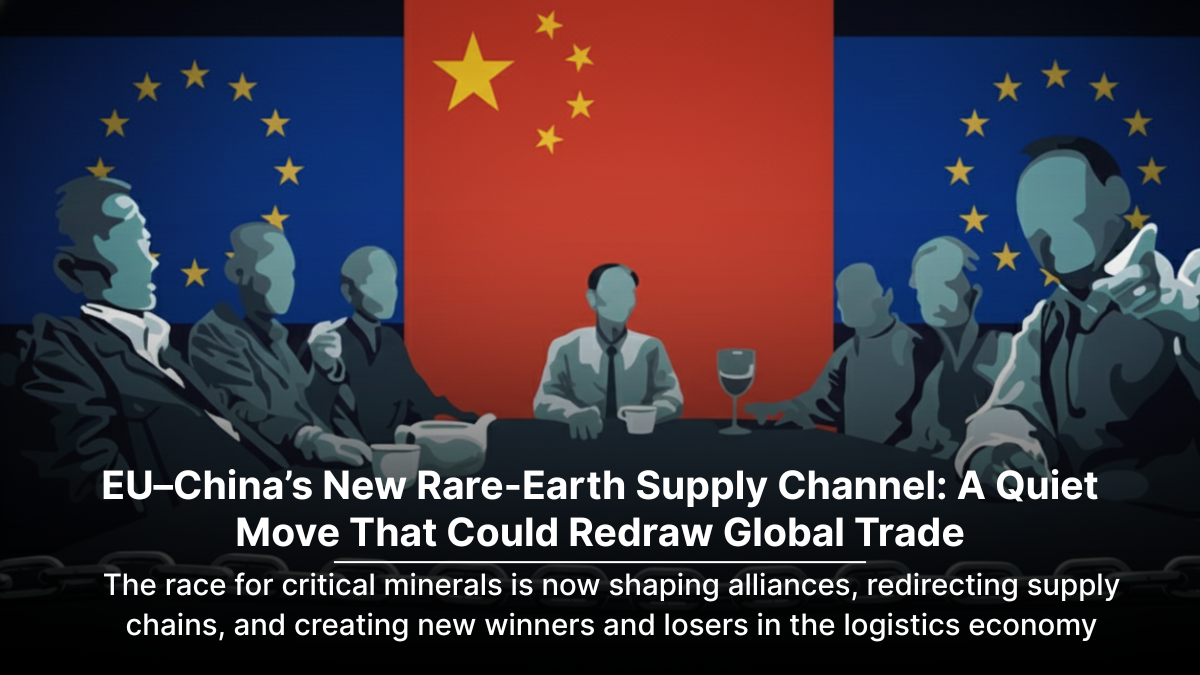
Global trade is shifting again not because of tariffs or shipping shortages this time, but because of something far more strategic: rare-earths. The European Union and China have just agreed to create a special supply channel to secure the movement of rare-earth minerals and critical raw materials. On the surface, it looks like a technical trade announcement. In reality, it’s a big geopolitical play that could reshape manufacturing, logistics, and the future of clean energy.
Why rare-earths suddenly matter this much
Rare-earth elements sit quietly inside almost everything modern: electric vehicles, wind turbines, chips, smartphones, batteries, aerospace parts, and even medical scanners. Without them, the global supply chain slows, stalls, or rewires itself entirely.
The problem? China dominates production and processing, controlling roughly two-thirds of the global output. Europe, on the other hand, imports a huge chunk of what it needs. That dependency has been a growing concern for manufacturers, especially as geopolitical tensions have intensified over the past few years.
What this special channel actually means
This new EU–China arrangement isn’t a free-trade agreement. It’s more of a dedicated corridor, designed to:
- keep rare-earth shipments flowing even during political tension
- reduce the risk of sudden export restrictions
- give European manufacturers predictable access to materials
- stabilise the supply chain for EV, electronics, and green-energy sectors
Think of it as a VIP lane in global trade — designed to avoid chaos.
The bigger game: supply-chain security
Countries are no longer comfortable relying on single-source suppliers for essential materials. The EU–China corridor is a sign of this new reality: access to critical minerals is the new competitive advantage.
How this affects global logistics
For the logistics and freight-forwarding world, this decision creates real shifts:
- Higher cargo value on China–EU routes
- Stricter compliance and documentation
- More specialised shipments
- New opportunities for forwarders
- Increased demand for digital systems
What to watch next
This story is still unfolding. A few things will decide how big this shift becomes:
- Will the EU diversify?
- Will the U.S. respond?
- Will new trade corridors emerge?
This isn’t just a headline — it’s part of a global reset. The race for critical minerals is shaping alliances and creating a new logistics economy.


