


Quick Summary
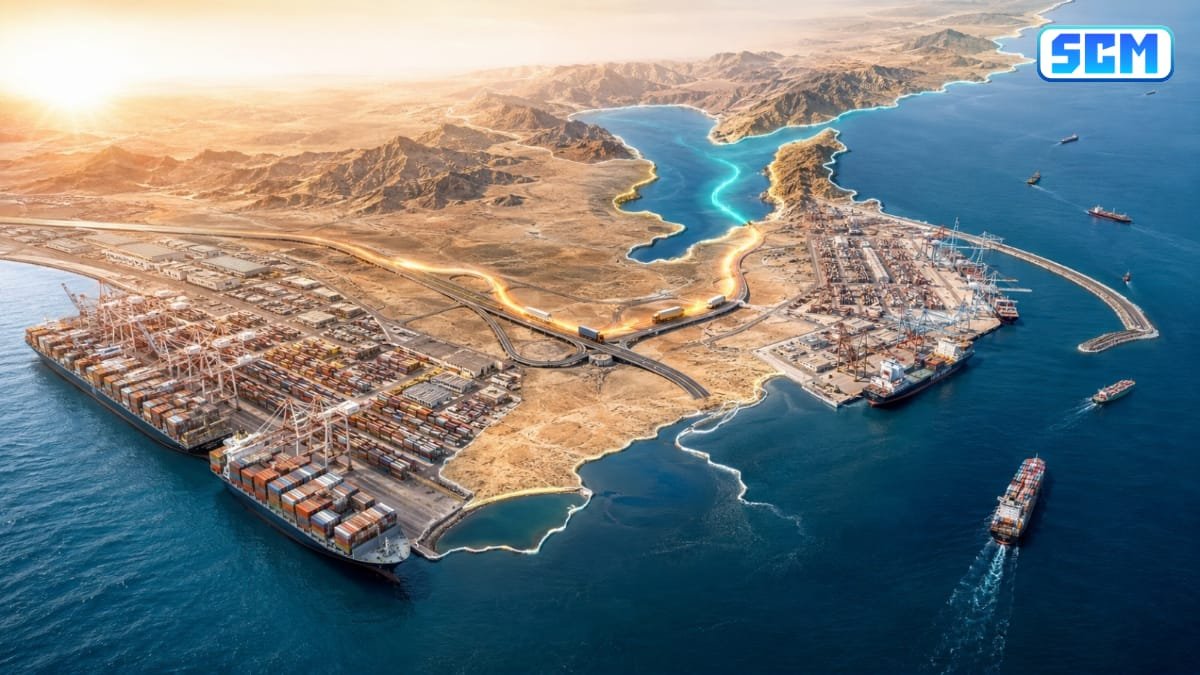
DP World has signed a 50-year concession agreement with the Fujairah Ports Authority to develop two new terminals on the UAE’s east coast — the Al Rugaylat container and multipurpose terminal, and the Dibba General Cargo terminal. Al Rugaylat will handle up to 2.5 million TEUs annually alongside 1.7 million tonnes of general cargo and 190,000 Car Equivalent Units, while Dibba will add 3.6 million tonnes of annual general cargo capacity. Construction is expected to take 24 to 30 months from commencement. When complete, DP World’s total container handling capacity in the UAE will grow from 19.4 million TEUs to almost 22 million TEUs. The strategic rationale is straightforward: Jebel Ali, DP World’s flagship port on the western coast, sits inside the Strait of Hormuz chokepoint. Fujairah does not. For India’s importers, exporters, and freight forwarders, this is not just a Middle East story — it is a supply chain story with direct implications for how cargo between India and the Gulf moves.
Why Fujairah — And Why Now
The Strait of Hormuz has been largely closed since February 28, 2026, following the resumption of the US-Iran conflict. Jebel Ali, the Middle East’s largest port and one of the world’s busiest container hubs, has been hard hit — recording a drop in activity even while remaining technically operational. Ships that previously routed through the Gulf have been forced onto longer, more expensive alternative paths.
Fujairah occupies a unique geographic position: it is the only UAE emirate located on the eastern coast, along the Gulf of Oman — outside the Strait of Hormuz. Ships can reach Fujairah without passing through the waterway at all. Under DP World’s plan, cargo will be discharged at the new Fujairah terminals and then transported by truck to Dubai, Abu Dhabi, and other Gulf destinations through DP World’s inland logistics network — connected specifically to Jafza, the Jebel Ali Free Zone.
The timing of this concession announcement — July 22, 2026 — is not coincidental. It comes as the UAE has been systematically building what officials have described as a “zero Hormuz” trade architecture: new oil pipelines to reach Gulf of Oman ports, expanded rail and road links, and now major new container terminal capacity at Fujairah. UAE Foreign Trade Minister Thani Al Zeyoudi confirmed last month that this is a deliberate national strategy, not just a corporate decision by DP World.
What the Two Terminals Will Actually Do
The two facilities serve different but complementary purposes in DP World’s east coast strategy.
Al Rugaylat Container and Multipurpose Terminal is the headline infrastructure — a deep-water terminal capable of handling the latest generation of Ultra Large Container Vessels. At 2.5 million TEUs of annual container capacity, it is a serious commercial facility, not a backup plan. The addition of 1.7 million tonnes of general cargo capacity and 190,000 Car Equivalent Units makes it genuinely multipurpose — serving the automotive trade alongside containerised cargo.
Dibba General Cargo Terminal adds 3.6 million tonnes of annual general cargo capacity — targeted at bulk, breakbulk, and project cargo that currently has limited east coast options in the UAE.
Together, these two terminals represent a strategic expansion of the UAE’s port network from a system dominated by a single western-coast gateway into a genuinely dual-coast architecture. DP World Group CEO Yuvraj Narayan framed it clearly: with Jebel Ali operating at high utilisation, the Fujairah development provides capacity to support long-term growth while simultaneously reducing Hormuz exposure.
The Jebel Ali Connection — This Is an Extension, Not a Replacement
A critical detail in DP World’s announcement is how the Fujairah terminals will be integrated into the existing network. The company has specifically stated that the new east coast terminals will be connected to Jebel Ali through DP World’s inland logistics network and integrated with Jafza.
This means the operational model is not a simple cargo diversion — it is a multimodal land bridge. Cargo arriving at Fujairah from east-of-Hormuz origins will move overland to distribution points in Dubai and the wider UAE, using the same supply chain infrastructure that makes Jebel Ali the dominant regional hub. This overland leg adds cost and time compared to a direct Jebel Ali call, but it is far preferable to the alternative of routing around the Arabian Peninsula entirely.
For shipping lines, this creates a practical option that was previously unavailable at scale: call at a DP World facility on the Gulf of Oman, discharge cargo, and let DP World’s inland network handle distribution into the UAE market — without any Hormuz transit.
India’s Direct Stake in This Development
The Hormuz disruption has already had measurable consequences for India’s trade. We covered in detail how CBIC’s Circular 09/2026 had to create emergency customs procedures for Indian export cargo returning due to Strait of Hormuz disruption — a regulatory response to a genuine operational crisis for Indian exporters.
The UAE is India’s second-largest trading partner and the largest export destination. A significant portion of India-UAE trade moves through Jebel Ali as a transshipment hub — both for cargo destined for the UAE itself and for goods transshipping onward to other Gulf and Middle East markets. When Jebel Ali faces Hormuz-related disruption, Indian trade feels it directly.
The Fujairah terminals change this calculus in a specific way: they create a Hormuz-free gateway that Indian cargo can reach directly. Fujairah is already a significant bunkering hub and has existing port infrastructure — Indian shipping lines and freight forwarders already have operational familiarity with the port. A DP World-operated mega-terminal at Fujairah, connected to Jebel Ali’s distribution network overland, gives Indian cargo owners a genuinely viable alternative routing when Hormuz conditions deteriorate.
This connects to the broader shift we have been tracking — DP World’s ongoing investment in India’s coastal shipping network through the DP World Indus acquisition is part of the same strategic picture: DP World is simultaneously building Hormuz-bypass capacity in the UAE and expanding its India logistics footprint, positioning itself as the end-to-end supply chain operator for India-Gulf trade regardless of which routing conditions apply.
What the 50-Year Concession Signals
Port concession agreements are long-term commitments — 50 years is a generational infrastructure bet. DP World is not building temporary contingency capacity at Fujairah. It is making a permanent structural commitment to the UAE’s east coast as a core part of its global port network.
The construction timeline of 24 to 30 months for the first phase means the terminals could be operational as early as mid-2028. Given that US-Iran tensions and Hormuz access uncertainty are unlikely to resolve cleanly in that timeframe, the new capacity will arrive into a trade environment where Hormuz-free routing has moved from contingency to necessity for many cargo owners.
DP World has its $3 billion capex budget for 2026 allocated across priority projects including Jebel Ali, Drydocks World, Tuna Tekra in India, London Gateway in the UK, and Ndayane in Senegal. The Fujairah concession adds to a capital deployment strategy that is systematically building out DP World’s position at chokepoints and alternative routes simultaneously — a hedge against a world where supply chain disruption is no longer exceptional but structural.
Bottom Line
DP World’s 50-year Fujairah concession is the most significant single infrastructure response to the Hormuz crisis yet announced by a private port operator. It transforms the UAE’s port geography from a Hormuz-dependent single-gateway system into a dual-coast architecture with genuine redundancy. For Indian freight forwarders, exporters, and logistics operators managing cargo on the India-Gulf corridor, the practical implication is that a credible, large-scale, Hormuz-free routing option through a familiar DP World facility is coming — and should be factored into supply chain planning now, not after the terminals open.
Managing India-Gulf cargo amid Hormuz disruption? Share your current routing strategy — we are tracking how Indian trade is adapting to the new Middle East logistics landscape.
