


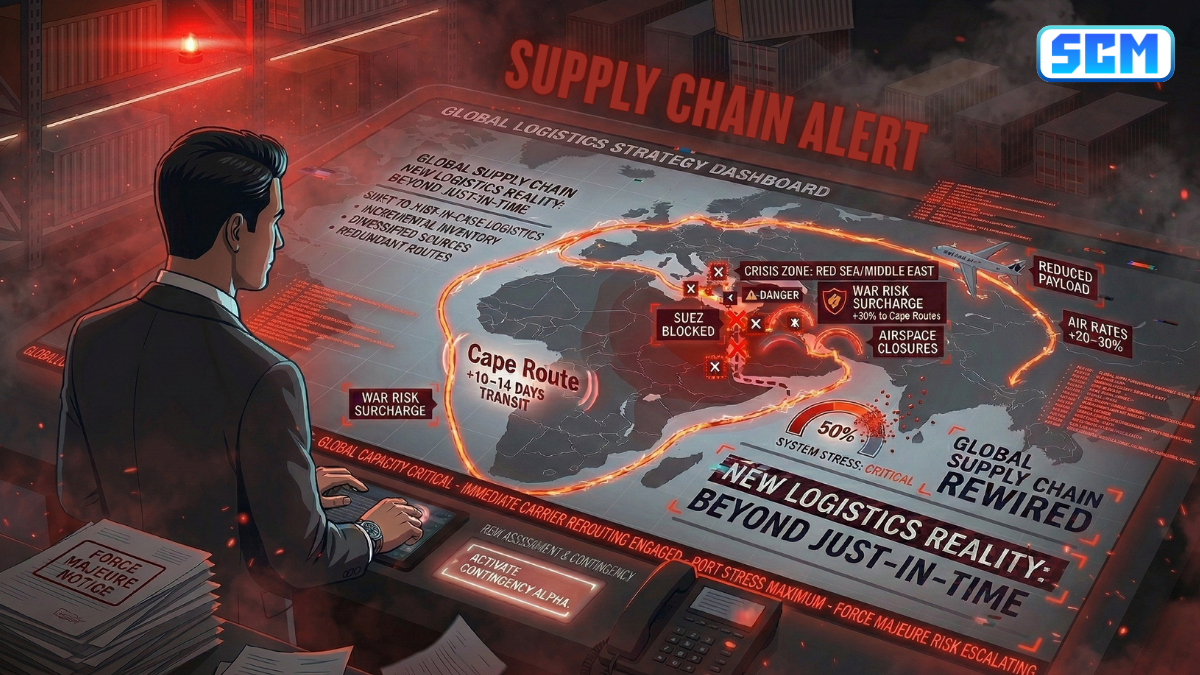
The global logistics landscape has been thrust into a “Black Swan” event of historic proportions. Following the joint U.S.-Israeli military strikes on Iran—codenamed Operation Epic Fury—the Middle East has transformed from a volatile trade corridor into a kinetic combat zone. For the supply chain industry, this is not just a regional conflict; it is a systemic shock to the world’s most critical maritime and aerial arteries.
The Great Diversion: Suez Canal vs. The Cape
The immediate fallout has seen a mass exodus of container tonnage from the Red Sea. Shipping giant Maersk, followed by other major carriers, has suspended all transits through the Suez Canal, opting for the Cape of Good Hope route.
Strategic Impact for LSPs:
- Transit Delays: Routing around the southern tip of Africa adds approximately 10–14 days to the Asia-Europe leg.
- Equipment Imbalance: The sudden extension of voyages is expected to trigger a “vessel capacity drain,” as ships stay at sea longer, reducing the frequency of empty container returns to Asian hubs.
- Surcharges: Expect immediate implementation of War Risk Surcharges (WRS) and Emergency Diverted Cargo Surcharges (EDCS).
Energy Markets and the “Hormuz Factor”
While the Suez Canal handles volume, the Strait of Hormuz handles the world’s lifeblood. With 20% of global oil (approx. 21 million barrels per day) and 25% of seaborne LNG passing through this 21-mile-wide chokepoint, the threat of an Iranian blockade has sent markets into a tailspin.
Commodity & Cost Disruptions:
- Bunker Fuel Spikes: Crude prices are currently surging toward the $80–$100 range. For freight forwarders, this translates to a rapid escalation in Bunker Adjustment Factors (BAF).
- Aluminum Supply Shock: Operation Epic Fury successfully targeted Iranian industrial infrastructure, including key smelting facilities. Iran’s removal from the market represents a loss of 600,000 tonnes of aluminum supply, which will likely force automotive and aerospace manufacturers to scramble for alternative sources in a tightening market.
Air Freight: The Closing Skies
The escalation has resulted in the immediate closure of airspace over Iran, Israel, and Iraq. Major carriers have canceled “overflight” routes, forcing a massive rerouting of air cargo.
What this means for Freight Forwarders:
- Capacity Constraints: As Asia-to-Europe flights are rerouted over Central Asia or via longer southern paths, payload capacities are being reduced to accommodate extra fuel.
- Rate Volatility: With sea-to-air conversions increasing due to maritime delays, air freight spot rates are expected to climb by 20–30% in the coming week as shippers seek “emergency speed.”
Strategic Recommendations for Industry Leaders
The “Epic Fury” crisis demands an immediate shift from “Just-in-Time” to “Just-in-Case” logistics. To mitigate these risks, industry leaders should focus on four key pillars:
- Contract Management: Review Force Majeure clauses in all existing Service Level Agreements (SLAs) to understand liability and disruption protections.
- Inventory Control: Advise clients to increase safety stock levels for high-value components immediately to buffer against transit delays.
- Visibility: Deploy real-time GPS and AIS tracking to monitor vessel diversions and port congestion as it happens.
- Alternative Hubs: Explore sea-air solutions via Dubai or Salalah, though be mindful that these hubs may face their own capacity limits as demand surges.
Conclusion: The Long Tail of Disruption
Operation Epic Fury is not a momentary glitch. The damage to Iranian infrastructure and the shift in maritime insurance risk profiles suggest that the “Cape Route” may become the new standard for the first half of 2026. Logistics providers who prioritize agility and transparent communication will be the ones to navigate this era of maritime fragility.
