


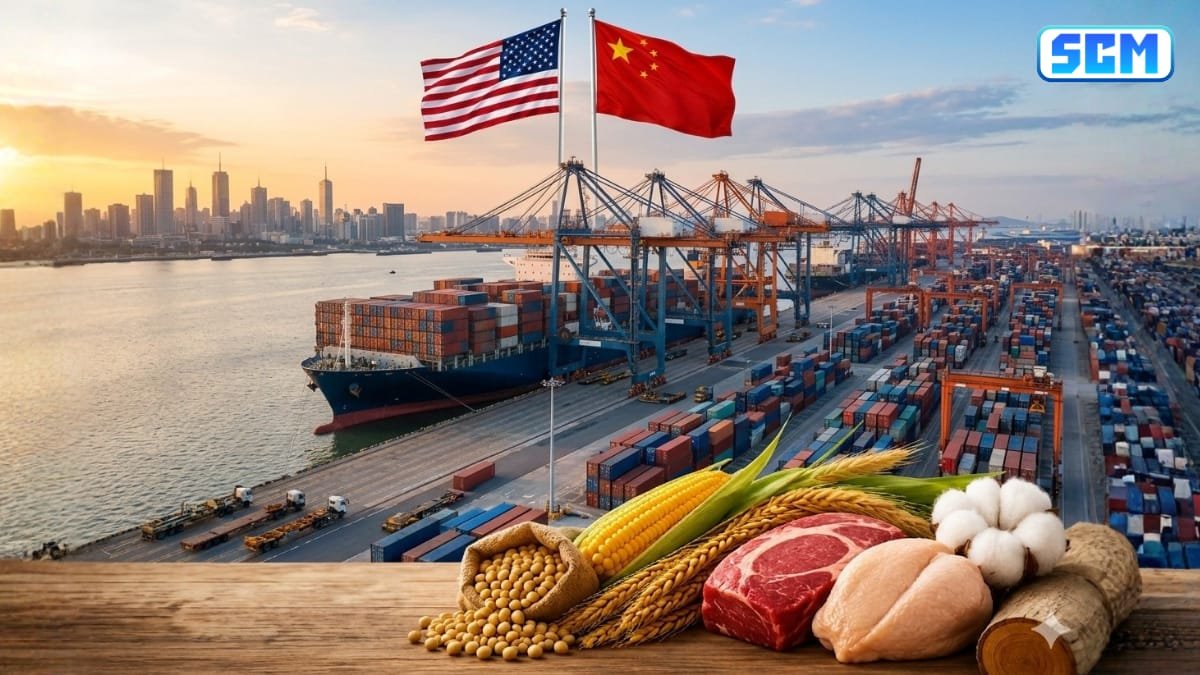
For years, the trade relationship between the United States and China has been shaped by tariffs, restrictions, uncertainty, and political tension. Now, both countries are signaling a shift toward rebuilding communication and restoring economic cooperation.
In a major development that could influence global trade, agriculture, logistics, and manufacturing markets, the U.S. and China have agreed to establish new trade and investment boards while expanding agricultural commitments worth billions of dollars annually.
The announcement comes after high-level discussions between leaders from both nations and is already drawing attention from exporters, farmers, freight operators, and global businesses that depend on stable trade flows between the world’s two largest economies.
A New Attempt to Stabilize U.S.-China Trade Relations
The newly announced initiatives include the creation of:
- A U.S.-China Trade Board
- A U.S.-China Investment Board
- Expanded agricultural trade agreements
- Discussions around reducing selected trade barriers
These boards are expected to serve as structured platforms where both countries can regularly discuss trade disputes, market access issues, investment opportunities, and future cooperation.
For businesses involved in international trade, this matters because one of the biggest challenges in recent years has been unpredictability. Frequent tariff changes, export controls, and geopolitical tensions made long-term planning difficult for companies on both sides.
The new boards are being viewed as an effort to create more consistent communication channels and reduce sudden disruptions in trade policies.
China Commits to Large-Scale U.S. Agricultural Purchases
One of the biggest highlights of the agreement is China’s commitment to purchase at least $17 billion worth of U.S. agricultural products annually between 2026 and 2028.
The expected imports include:
- Soybeans
- Corn
- Wheat
- Beef
- Poultry
- Cotton
- Sorghum
- Timber products
For American farmers, this announcement could bring significant relief.
Over the past few years, agricultural exporters in the United States faced declining exports to China due to tariff disputes and changing sourcing strategies. Many producers struggled with lower demand, price pressure, and uncertainty about future trade policies.
This new commitment has the potential to revive export momentum and improve confidence across the agricultural sector.
Following the announcement, agricultural commodity markets reportedly reacted positively, with soybean and grain prices moving higher as traders anticipated stronger demand from China.
Why Agriculture Remains Central to the Relationship
Even with ongoing geopolitical tensions, agriculture continues to be one of the most important areas of trade cooperation between the U.S. and China.
China remains one of the world’s largest food importers, while the United States is one of the largest agricultural exporters globally.
China has increasingly diversified its suppliers over the years by sourcing products from countries such as Brazil and Argentina. However, the latest agreement suggests that Beijing still sees value in maintaining strong agricultural ties with the United States to support long-term food security and supply stability.
For the U.S., agricultural exports remain politically and economically important, especially for farming communities that rely heavily on international demand.
Impact on Global Logistics and Supply Chains
Beyond farming, the agreement could also create ripple effects across the global logistics industry.
Higher agricultural trade volumes between the U.S. and China may increase demand for:
- Ocean freight services
- Cold chain logistics
- Bulk cargo shipping
- Port handling operations
- Customs clearance services
- Warehousing and distribution
Freight forwarders, shipping lines, and customs brokers could see increased activity if trade volumes continue to rise over the next few years.
This is especially important at a time when global supply chains are still adapting to disruptions caused by geopolitical conflicts, inflation, and changing trade routes.
More Than Just Agriculture
Reports also suggest that the discussions included additional commercial cooperation in sectors such as aviation and manufacturing.
China is expected to purchase a significant number of Boeing aircraft as part of broader economic cooperation efforts. Industry experts believe this could help strengthen commercial ties while supporting large-scale manufacturing and aerospace exports from the United States.
There were also discussions around improving market access for American beef and poultry exporters, including easing some import restrictions.
Businesses Remain Cautiously Optimistic
While the announcement has generated optimism, many analysts and businesses are still approaching the situation carefully.
Similar trade commitments were made during previous agreements, including the Phase One trade deal signed in 2020. Some of those purchase targets were not fully achieved, leading to skepticism about implementation.
Businesses are now watching closely to see:
- Whether both countries follow through on commitments
- How quickly policies are implemented
- Whether tariffs will actually ease
- How geopolitical tensions may affect future cooperation
For now, the agreement appears to be less about completely resolving tensions and more about preventing further economic escalation.
What This Means for Global Trade
If implemented successfully, the new trade framework could help stabilize one of the world’s most important economic relationships.
The impact may extend far beyond the U.S. and China by influencing:
- Global commodity prices
- International shipping demand
- Agricultural export competition
- Manufacturing supply chains
- Cross-border investments
Countries that currently supply agricultural products to China, such as Brazil and Australia, may also closely monitor how these new commitments affect global trade flows.
A Step Toward Predictability
The U.S.-China trade relationship remains complex, but the latest announcement signals that both countries understand the importance of maintaining economic cooperation despite political disagreements.
For exporters, logistics providers, manufacturers, and global businesses, the biggest takeaway is not just the size of the agricultural deal — it is the return of structured dialogue.
After years of uncertainty, markets are now looking for something they have not seen consistently in a long time: predictability.
