


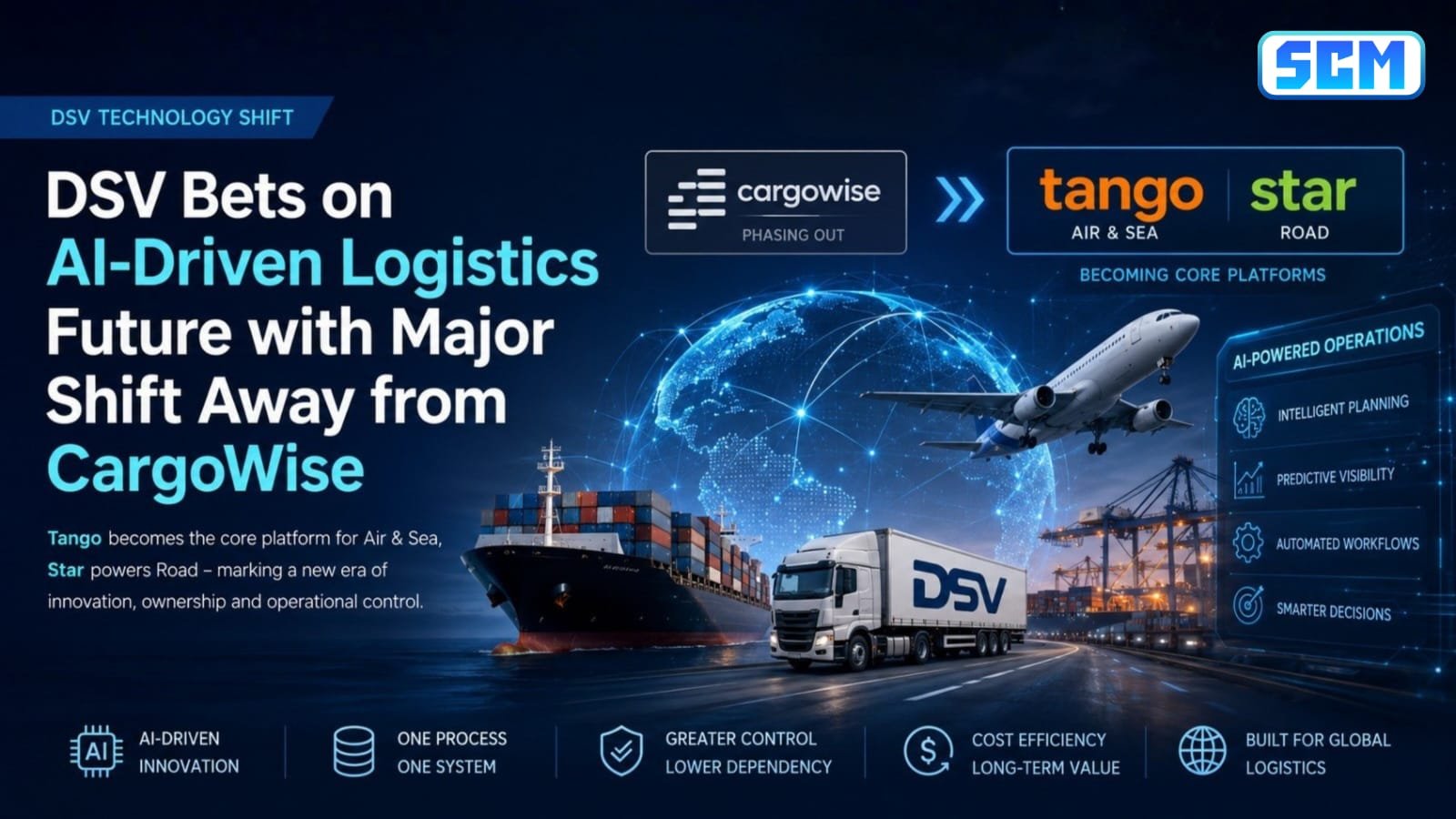
The global logistics technology landscape is witnessing a major transformation as DSV confirms its strategic move away from CargoWise in favor of DB Schenker’s in-house Tango and Star platforms. The decision signals a broader shift in the freight forwarding industry toward AI-enabled proprietary systems, operational control, and long-term digital independence.
Following its acquisition of DB Schenker, DSV has started integrating Schenker’s technology ecosystem into its global operations. As part of this transition, the company plans to position Tango as the core platform for Air & Sea logistics operations, while Star will support Road transport activities.
This move is more than a software replacement project — it reflects DSV’s vision of building a future-ready logistics ecosystem powered by automation, AI, and centralized digital processes.
DSV’s Technology Transformation Strategy
For years, CargoWise has remained one of the most widely used transport management systems (TMS) across the freight forwarding industry. Many global logistics providers rely on the platform to manage shipment visibility, customs processes, documentation, invoicing, and operational workflows.
However, DSV is now moving toward a technology model where it owns and controls its core digital infrastructure.
By leveraging Tango and Star, DSV aims to create:
- A unified global operating environment
- Standardized logistics workflows
- Faster automation capabilities
- Greater AI integration opportunities
- Reduced dependency on third-party software vendors
The company’s leadership believes this strategy will help accelerate operational efficiency while improving scalability across its expanding logistics network.
Tango Becomes the Core of DSV’s AI Vision
One of the biggest reasons behind the shift is DSV’s aggressive focus on AI-driven logistics operations.
The company plans to use Tango as the foundation for:
- Intelligent shipment planning
- Automated freight booking
- Predictive supply chain visibility
- AI-assisted customs filing
- Smart workflow automation
- Customer service enhancements
- Data-driven operational decisions
As logistics operations become increasingly digital, owning the core platform allows DSV to integrate AI capabilities faster and more flexibly compared to relying entirely on external enterprise software providers.
Industry experts believe that AI-native logistics platforms will become a major competitive advantage in the coming years, especially for large multinational freight forwarders managing complex global supply chains.
Why DSV Is Moving Away from CargoWise
The decision to reduce dependency on CargoWise is being driven by multiple strategic and operational factors.
1. Greater Technology Control
DSV wants direct ownership of critical operational systems rather than depending heavily on third-party vendors for upgrades, customization, and innovation cycles.
2. Faster Integration After the Schenker Acquisition
The acquisition of DB Schenker created overlapping operational systems across regions and business units. Consolidating operations under Tango and Star will help simplify global workflows and improve integration efficiency.
3. Long-Term Cost Optimization
Enterprise logistics software licensing costs can become substantial at scale. By transitioning to internal platforms, DSV expects to improve long-term cost management while gaining flexibility for future expansion.
4. AI and Automation Readiness
Modern logistics increasingly depends on real-time data processing and automation. Proprietary systems provide greater freedom to build AI tools tailored specifically for DSV’s operational needs.
Gradual Migration Approach
DSV has clarified that the transition will happen in phases rather than through an immediate replacement of CargoWise.
Currently:
- A portion of Air & Sea operations is already running on Tango
- CargoWise continues supporting several operational functions globally
- APIs and integration layers are being used to ensure smooth connectivity between systems
- Full migration is expected to continue over the next several years
This phased approach helps minimize operational disruption while allowing teams to gradually adapt to the new systems.
What This Means for the Global Logistics Industry
The move is being closely watched because DSV is among the world’s largest freight forwarding and logistics companies.
If the transition proves successful, it could encourage other major logistics providers to:
- Invest in proprietary digital platforms
- Build AI-focused logistics ecosystems
- Reduce dependency on single software vendors
- Explore modular and flexible technology architectures
The announcement also highlights a growing industry trend where logistics companies are no longer viewing technology merely as operational support — but as a strategic competitive advantage.
Potential Impact on CargoWise and Enterprise Logistics Software
CargoWise remains a dominant platform in global freight forwarding and continues to maintain a strong presence across the industry.
However, DSV’s shift may raise broader industry discussions around:
- Vendor dependency risks
- Software scalability costs
- AI integration flexibility
- Customization limitations in traditional enterprise platforms
Technology providers across the logistics sector may now face increasing pressure to offer more open, AI-ready, and adaptable digital ecosystems.
The Future of AI-Powered Freight Forwarding
DSV’s strategy reflects the next phase of digital transformation in logistics — where AI, automation, and platform ownership become central to operational success.
As global trade grows more complex, logistics providers are expected to prioritize:
- Real-time intelligence
- Predictive analytics
- Automated compliance
- Smart customer experiences
- Integrated global visibility
The transition from CargoWise to Tango could ultimately become one of the most significant technology shifts in modern freight forwarding history.
For the logistics industry, this development reinforces a clear message: the future of supply chain management will increasingly be shaped by AI-enabled, highly integrated, and strategically controlled digital platforms.
