


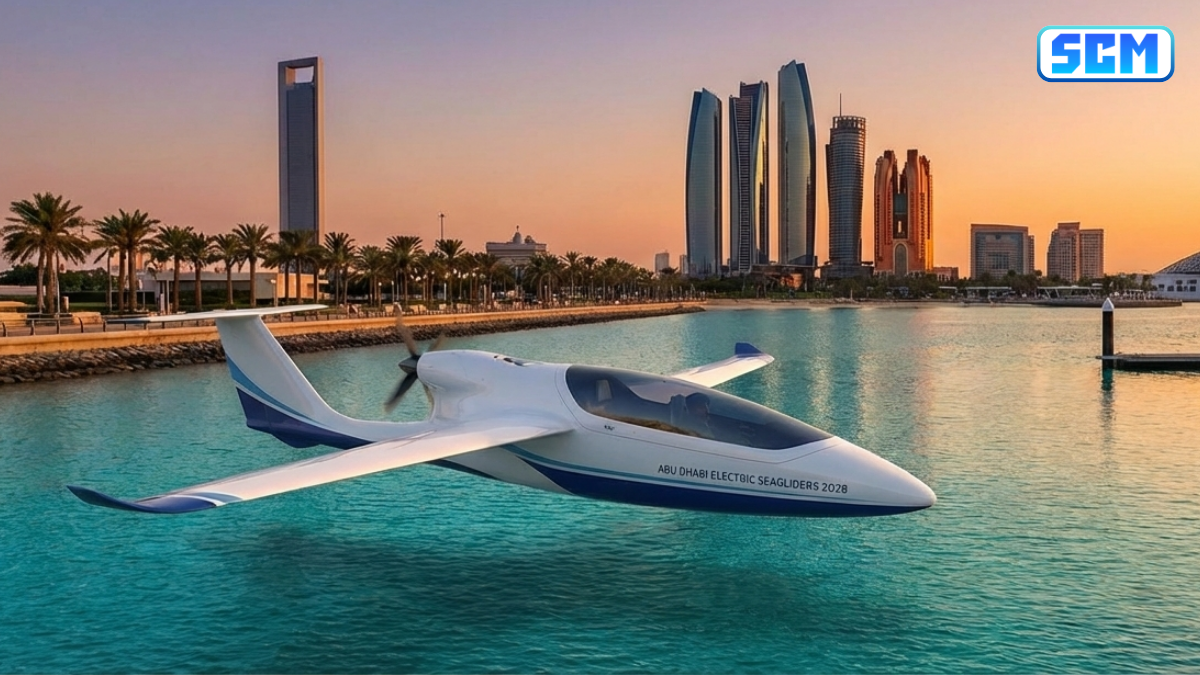
Abu Dhabi has taken a significant leap toward transforming its coastal mobility and sustainable transport landscape with a groundbreaking initiative to introduce fully electric Seagliders by 2028. This decision comes as part of a strategic transport agreement signed by key government and private entities aimed at enhancing connectivity, reducing emissions, and positioning the emirate as a global leader in innovative transportation.
What Are Seagliders?
Seagliders are a new class of all-electric marine vehicles that leverage the wing-in-ground (WIG) effect — a physical principle where a craft gains lift by flying just above the surface of the water. This enables Seagliders to move faster and more efficiently than traditional boats, combining aspects of both marine vessels and aircraft. They are designed to operate:
- Above the water surface at high speed
- With zero direct emissions
- Over coastal routes, reducing travel times between destinations significantly compared to ferry services and boats.
Seagliders are expected to revolutionize coastal travel and logistics by delivering high-speed, eco-friendly transport that can serve passengers along Abu Dhabi’s extensive coastline.
The New Coastal Transport Agreement
In early February 2026, Abu Dhabi’s government and private partners formalized a transport agreement to explore and plan for Seaglider operations across the emirate. The agreement was signed by major stakeholders:
- Department of Culture and Tourism – Abu Dhabi (DCT Abu Dhabi)
- Abu Dhabi Investment Office (ADIO)
- Integrated Transport Centre (Abu Dhabi Mobility)
- VERSA Advanced Maritime Services, the UAE’s first Seaglider operator
This collaboration marks a major milestone in expanding Abu Dhabi’s transportation offerings beyond traditional modes, aligning efforts across tourism, investment, and mobility sectors.
Route Planning and Implementation Strategy
The agreement outlines a phased approach to Seaglider deployment:
- Phase 1: Initial routes will focus on connecting Abu Dhabi City with the Al Dhafra Region, catering to both residents and visitors for swift coastal travel.
- Phase 2: Expansion of operations across other emirate coastal corridors and later potentially wider routes across the UAE.
Authorities and partners will conduct feasibility studies and market analysis to understand the best operational models — including route selection, scheduling, passenger demand, commercial viability, and environmental impact — to integrate the service seamlessly into the broader transport ecosystem.
Supporting Abu Dhabi’s Broader Goals
Sustainability and Zero Emissions
The shift toward electric Seagliders aligns with Abu Dhabi’s commitment to sustainable mobility and environmental stewardship. By deploying zero-emission vehicles for coastal transport, the emirate aims to reduce its carbon footprint while improving travel efficiency.
Enhanced Connectivity
Abu Dhabi’s extensive coastline currently relies on conventional maritime transport and road travel for cross-emirate connectivity. Seagliders promise to significantly reduce travel times, making coastal travel quicker and more attractive for commuters, tourists, and business travelers alike.
Tourism and Economic Impact
Improved coastal transport reinforces Abu Dhabi’s position as a world-class tourism destination. Seamless travel between key coastal hubs can support tourism flows, diversify transport offerings, and encourage economic growth in peripheral regions such as Al Dhafra.
Industry and Innovation Context
Abu Dhabi has been actively fostering a broader ecosystem for advanced mobility technologies:
- The emirate has engaged in complementary initiatives like air taxi and vertiport networks to support sustainable transport innovations.
- Partnerships and trials with international manufacturers such as REGENT, a U.S.-based electric Seaglider developer, underline Abu Dhabi’s interest in local and global maritime technology leadership.
- Previous agreements have focused on local manufacturing and support infrastructure, indicating a long-term vision for the UAE’s role in next-generation transport solutions.
What Comes Next
With the agreement signed, the next few years will see:
- Detailed studies on operational viability and infrastructure readiness
- Regulatory preparation for integrating Seagliders into Abu Dhabi’s transport network
- Planning and development for training, safety protocols, and docking systems
- Targeted launch of initial Seaglider services by 2028, marking a new chapter in coastal mobility innovation for the emirate.
Conclusion
Abu Dhabi’s initiative to bring electric Seagliders into service by 2028 signifies a forward-looking approach to sustainable transport solutions. By bridging advanced technology and environmental objectives with practical mobility needs, this project strengthens the emirate’s commitment to green innovation, enhanced connectivity, and economic diversification.
