


A Major Boost for India’s Temperature-Controlled Logistics Network
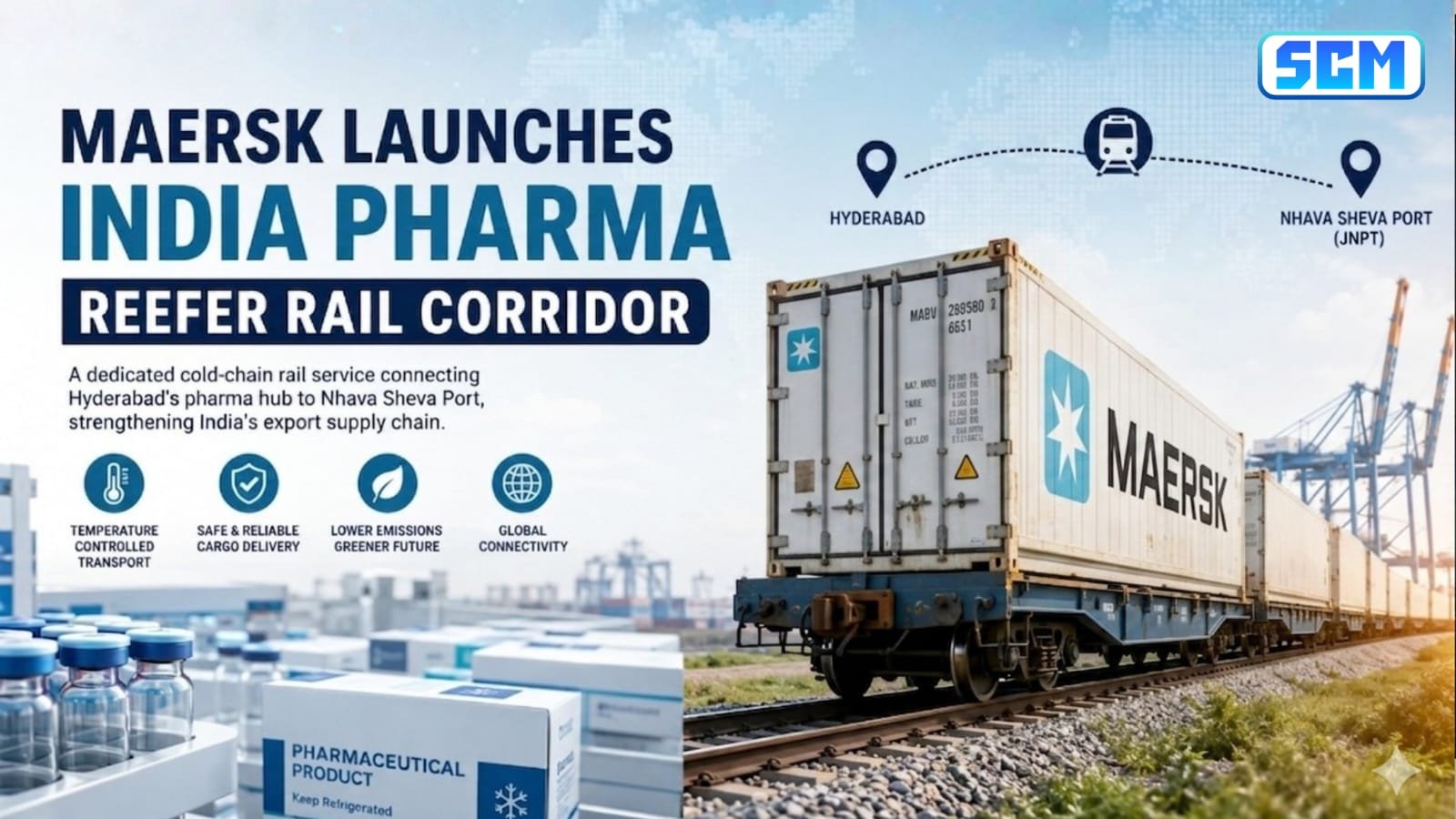
Global shipping and logistics leader Maersk has launched a dedicated pharmaceutical reefer rail corridor in India, marking a significant step toward improving cold-chain logistics for the country’s rapidly growing pharma export industry.
The newly introduced rail service connects Hyderabad — one of India’s largest pharmaceutical manufacturing hubs — with Nhava Sheva Port (JNPT) near Mumbai, creating a faster, safer, and more sustainable export route for temperature-sensitive cargo.
The initiative has been launched in collaboration with Container Corporation of India and is expected to transform how pharmaceutical products are transported from inland production centers to global markets.
Why This Launch Matters
India is one of the world’s leading pharmaceutical exporters, supplying medicines, vaccines, biologics, and healthcare products to countries across North America, Europe, Africa, and Asia.
However, maintaining product integrity during transportation has always been a major challenge, especially for temperature-sensitive shipments that require uninterrupted cold-chain conditions.
Traditionally, a large portion of pharma cargo moved by road from Hyderabad to ports on the western coast. While road transport offered flexibility, it also brought several operational risks, including:
- Traffic congestion
- Transit delays
- Temperature fluctuations
- Higher fuel dependency
- Increased carbon emissions
- Cargo handling inconsistencies
The new reefer rail corridor aims to solve these issues by introducing a predictable and controlled logistics model designed specifically for pharmaceutical cargo.
Dedicated Cold-Chain Rail Connectivity
The service operates through refrigerated reefer containers equipped with advanced temperature-control systems capable of maintaining strict cargo conditions throughout the journey.
The corridor offers:
- Weekly scheduled rail services
- Continuous temperature monitoring
- Reduced cargo handling risks
- Improved shipment reliability
- Enhanced transit visibility
- Better compliance support for pharma exporters
By shifting pharma transportation from road to rail, exporters can achieve more stable transit timelines while ensuring product quality remains intact.
Hyderabad: India’s Pharma Powerhouse
Hyderabad has earned global recognition as one of the largest pharmaceutical manufacturing centers in the world. Often referred to as “Genome Valley” and the “Bulk Drug Capital of India,” the city houses major pharmaceutical manufacturers, vaccine producers, biotech companies, and research facilities.
With increasing global demand for Indian medicines and specialty healthcare products, efficient export infrastructure has become essential for maintaining supply chain efficiency.
The new corridor directly addresses this need by providing dedicated multimodal connectivity between manufacturing facilities and India’s busiest container gateway port.
Connecting India to Global Markets
The reefer rail service has been strategically designed to support exports to major international destinations, including:
- North America
- Europe
- Latin America
- Middle East markets
- Global reefer trade lanes
Cargo transported through the corridor will connect seamlessly with Maersk’s international ocean network, helping Indian pharmaceutical exporters reduce transit uncertainty and improve global delivery performance.
The service is particularly beneficial for:
- Vaccines
- Insulin products
- Biologics
- Specialty medicines
- Temperature-sensitive APIs
- Clinical and healthcare shipments
Sustainability at the Core
One of the biggest highlights of the initiative is its environmental impact.
Rail transport is significantly more fuel-efficient compared to long-haul trucking, making it an important component of sustainable logistics strategies. According to Maersk, shifting pharmaceutical cargo from road to rail could help reduce greenhouse gas emissions by nearly 3,000 tonnes annually at current shipment volumes.
This move aligns with Maersk’s broader sustainability vision and its long-term goal of achieving Net Zero greenhouse gas emissions by 2040.
As global customers increasingly prioritize environmentally responsible supply chains, greener transport solutions are becoming a competitive advantage for exporters and logistics providers alike.
Strengthening India’s Cold-Chain Infrastructure
The launch also reflects the growing evolution of India’s logistics ecosystem. Over the past few years, India has seen increased investment in:
- Cold-chain infrastructure
- Multimodal logistics parks
- Rail freight modernization
- Digital supply chain visibility
- Port connectivity improvements
- Pharma-compliant warehousing
The dedicated reefer corridor demonstrates how integrated logistics solutions are becoming essential for industries that rely on precision and compliance.
For pharmaceutical companies, maintaining temperature integrity is not only about operational efficiency — it is also critical for meeting international regulatory standards and ensuring patient safety.
Industry Impact and Future Outlook
The introduction of a pharma-focused reefer rail corridor is expected to encourage more specialized logistics solutions across India’s export sectors.
Industry experts believe similar models could eventually expand to:
- Biotechnology shipments
- Healthcare products
- Food and beverage cold chains
- Chemical and specialty cargo
- Perishable exports
As India strengthens its position as a global manufacturing and export hub, reliable multimodal logistics infrastructure will play a key role in improving competitiveness and supporting long-term supply chain resilience.
Conclusion
Maersk’s dedicated pharma reefer rail corridor represents more than just a new transportation service — it signals a strategic shift toward smarter, greener, and more reliable cold-chain logistics in India.
By combining rail efficiency, temperature-controlled infrastructure, and global shipping connectivity, the initiative is expected to improve export reliability for Indian pharmaceutical companies while supporting sustainability goals and supply chain modernization.
For India’s logistics and pharmaceutical sectors, this development marks another important milestone in building future-ready trade infrastructure.
