


India’s logistics industry is entering a new phase of operational pressure and transformation.
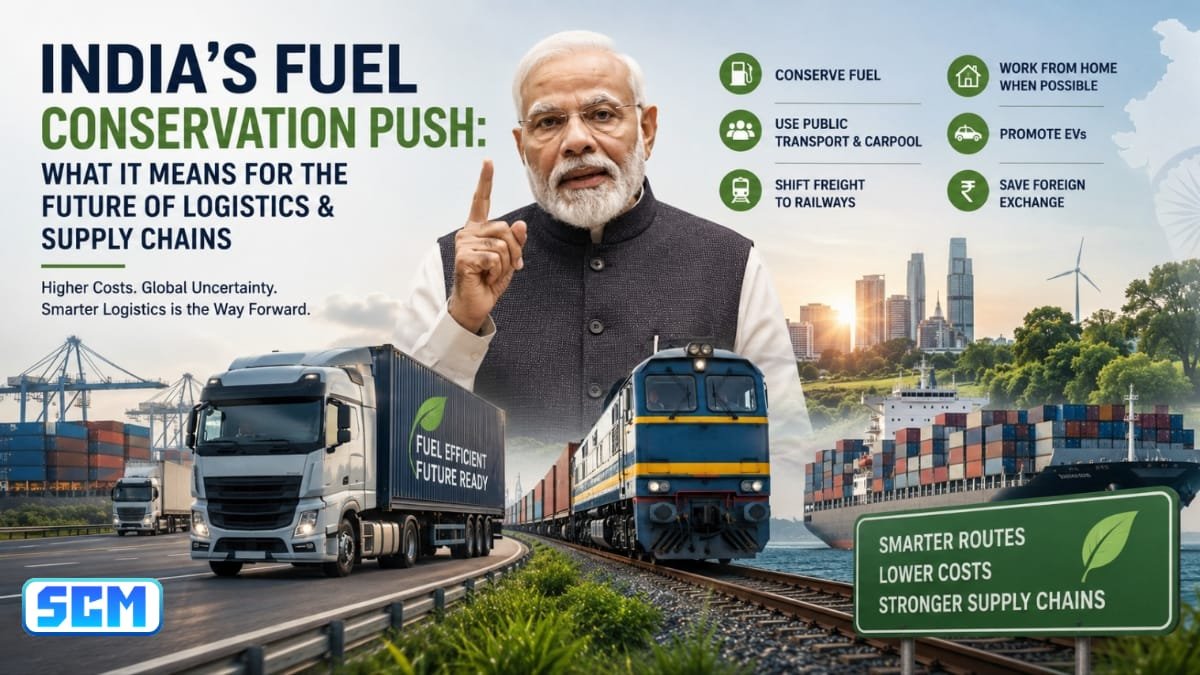
Prime Minister Narendra Modi recently urged citizens and businesses to reduce fuel consumption, use public transport, encourage carpooling, revive work-from-home practices, and shift more freight movement toward rail transport amid rising global energy concerns.
While the announcement may appear to be a public fuel-saving advisory, the logistics and supply chain industry sees it as a much larger economic and operational signal.
Behind this message lies a growing concern around:
- Rising crude oil prices
- Global geopolitical instability
- Pressure on India’s foreign exchange reserves
- Increasing transportation costs
- Supply chain disruptions across global trade routes
For India’s freight forwarders, customs brokers, transporters, warehouse operators, and exporters, the message is clear:
Operational efficiency and fuel optimization are becoming critical for long-term sustainability.
Why Fuel Conservation Matters for India
India imports nearly 85% of its crude oil requirements. Any disruption in global oil supply chains immediately impacts:
- Diesel and petrol prices
- Freight transportation costs
- Shipping and air cargo charges
- Domestic inflation
- Supply chain profitability
The ongoing tensions in West Asia and uncertainty around key oil transit routes have already triggered concerns across global logistics networks.
Since India’s logistics ecosystem still depends heavily on road transportation, even a small increase in fuel prices can significantly impact:
- Trucking operations
- Last-mile delivery
- Cross-border transportation
- Inland container movement
- Cold chain logistics
- E-commerce distribution
A Strong Push Toward Multimodal Logistics
One of the most important signals from the government’s message is the growing emphasis on rail-based freight movement.
Road transport continues to dominate cargo movement in India, but it is also one of the most fuel-intensive logistics modes.
Rail freight offers:
- Lower fuel consumption per ton-km
- Better long-distance cargo efficiency
- Reduced highway congestion
- More predictable transportation costs
This shift could accelerate adoption of:
- Dedicated Freight Corridors (DFC)
- Rail-linked logistics parks
- Inland container depots
- Multimodal transportation strategies
For logistics companies, relying entirely on road transportation may become increasingly expensive during prolonged fuel volatility.
Rising Transportation Costs Could Reshape Logistics Planning
Fuel costs are one of the biggest operational expenses in logistics.
If global crude prices continue rising:
- Truck freight rates may increase
- Air cargo costs could surge
- Ocean freight surcharges may return
- Delivery timelines may become unstable
Industries heavily dependent on transportation efficiency, such as:
- E-commerce
- Retail distribution
- FMCG
- Export-import businesses
- Manufacturing supply chains
may face margin pressure unless operations become more optimized.
This is why logistics companies are now focusing more aggressively on:
- Route optimization
- Shipment consolidation
- Fleet utilization
- Warehouse network redesign
- Regional distribution strategies
Technology Will Become Essential, Not Optional
Fuel conservation challenges are accelerating digital transformation in logistics.
Companies are increasingly investing in:
- Transport Management Systems (TMS)
- AI-based route planning
- Real-time fleet tracking
- Automated freight documentation
- Predictive logistics analytics
- Customs automation platforms
Digital logistics platforms can help businesses:
- Reduce empty trips
- Improve vehicle utilization
- Minimize fuel wastage
- Increase delivery efficiency
- Improve shipment visibility
In a high-cost transportation environment, technology-driven efficiency becomes a major competitive advantage.
Work-From-Home May Indirectly Impact Logistics Demand
The government’s suggestion to revive work-from-home practices also carries indirect implications for logistics networks.
Reduced daily commuting can:
- Lower urban fuel consumption
- Reduce city traffic congestion
- Improve delivery movement efficiency
At the same time:
- Residential deliveries may increase
- E-commerce shipment volumes may remain strong
- Hyperlocal logistics demand could continue growing
This could further strengthen the need for optimized last-mile delivery infrastructure.
The EV Logistics Transition Could Accelerate
The push toward fuel conservation also strengthens India’s long-term transition toward electric mobility.
Many logistics operators are already exploring:
- Electric delivery fleets
- EV-based urban transportation
- Sustainable warehousing
- Green supply chain initiatives
Electric logistics adoption may grow faster in:
- Courier services
- Quick commerce
- Hyperlocal delivery
- Urban distribution networks
As fuel costs rise, EV adoption becomes not only an environmental decision but also an operational cost strategy.
Geopolitical Risks Are Now a Core Logistics Challenge
The bigger concern behind the fuel conservation message is global geopolitical instability.
Disruptions in major oil transit routes can create:
- Shipping delays
- Higher marine insurance costs
- Increased bunker fuel charges
- Port congestion
- Freight rate volatility
Modern supply chains are deeply interconnected, which means global conflicts can quickly impact domestic logistics costs and trade operations.
This is forcing logistics companies to improve:
- Risk management
- Supply chain diversification
- Transportation flexibility
- Vendor planning
- Real-time visibility
What Logistics Businesses Should Focus On Now
To stay competitive during fuel and supply chain volatility, logistics companies should prioritize:
Operational Efficiency
- Reduce empty miles
- Improve load planning
- Consolidate shipments
- Optimize delivery routes
Transportation Diversification
- Increase rail utilization
- Explore multimodal transport
- Reduce dependency on long-haul road freight
Digital Transformation
- Implement logistics automation
- Use AI-driven planning tools
- Improve shipment visibility
- Automate compliance workflows
Sustainability Planning
- Explore EV fleet adoption
- Invest in green logistics initiatives
- Improve fuel monitoring systems
Final Thoughts
India’s fuel conservation push is not just a short-term advisory.
It reflects a broader shift in how governments and businesses must prepare for:
- Rising energy costs
- Geopolitical uncertainty
- Global supply chain disruptions
- Increasing transportation expenses
For the logistics industry, the future will belong to businesses that can move goods:
- Faster
- Smarter
- More efficiently
- With lower fuel dependency
The companies that embrace digital transformation, multimodal logistics, and operational optimization today will be better positioned to navigate tomorrow’s supply chain challenges.
