


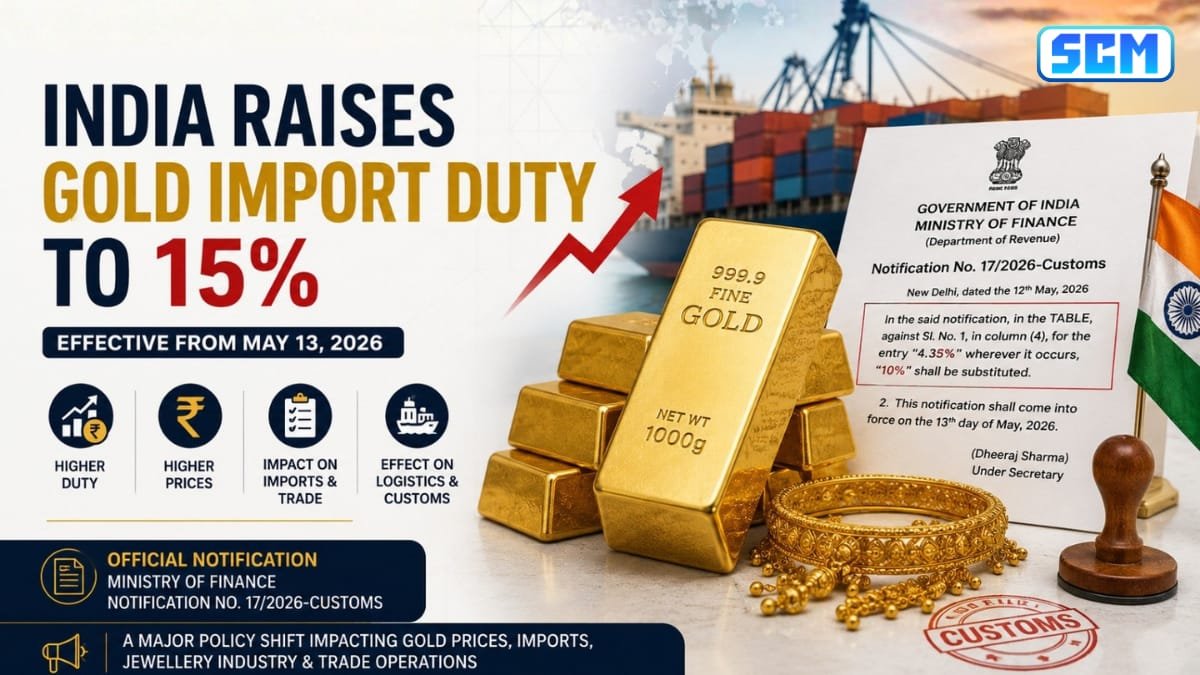
India has officially increased the import duty on gold, silver, and platinum from 6% to 15%, effective May 13, 2026. The move marks one of the biggest policy changes in India’s precious metals sector in recent years and is expected to impact gold prices, jewellery demand, bullion imports, customs operations, and the broader trade ecosystem.
The decision comes amid growing concerns over rising imports, pressure on foreign exchange reserves, and widening trade deficits. The revised duty structure is expected to influence not only consumers and investors but also logistics providers, customs brokers, bullion traders, and freight forwarding businesses.
Ministry of Finance Issues Official Notification
The Government of India has formally notified the revised import duty through Notification No. 17/2026-Customs dated May 12, 2026, issued by the Ministry of Finance, Department of Revenue.
According to the notification:
- The customs duty rate has been revised from 4.35% to 10%
- The amendment has been made under the Customs Act, 1962
- The revised rates became effective from May 13, 2026
The notification further states that the amendment was introduced in the public interest and updates the earlier Notification No. 57/2000-Customs.
What Is the New Gold Import Duty Structure?
The revised duty structure includes:
- 10% Basic Customs Duty (BCD)
- 5% Agriculture Infrastructure and Development Cess (AIDC)
This brings the effective import duty on gold and other precious metals to 15%.
The revised duty applies to:
- Gold bars and dore
- Silver imports
- Platinum
- Jewellery components and findings
Why Did India Increase Gold Import Duty?
The Indian government has taken this step to reduce non-essential imports and improve macroeconomic stability.
1. Reducing Gold Imports
India imports a large percentage of its gold demand. High import volumes increase pressure on the country’s foreign exchange reserves.
2. Supporting the Indian Rupee
Reducing gold imports may help control dollar outflows and support rupee stability.
3. Managing Trade Deficit
Gold is among India’s largest import categories after crude oil and electronics. Policymakers aim to reduce pressure on the current account deficit (CAD).
4. Encouraging Financial Investment Products
The higher duty may encourage investors to shift toward:
- Gold ETFs
- Sovereign Gold Bonds (SGBs)
- Digital gold
instead of physical gold purchases.
Immediate Impact on Gold Prices
The announcement has already triggered a rise in domestic gold prices across bullion markets and jewellery retailers.
Expected Market Impact:
- Increase in jewellery prices
- Higher cost of physical gold investments
- Expensive wedding and festive purchases
- Increased bullion market volatility
Jewellers across India have reportedly revised pricing immediately after the announcement.
Impact on India’s Jewellery Industry
India’s jewellery sector could face short-term disruptions due to rising procurement costs and slowing demand.
Key Industry Concerns
Reduced Consumer Demand
Higher prices may impact:
- Wedding jewellery purchases
- Festive buying
- Rural market demand
Pressure on Smaller Jewellers
Regional and unorganized jewellers may face stronger margin pressure compared to larger organized retail chains.
Inventory Cost Increase
Importers and retailers may require additional working capital to manage higher inventory acquisition costs.
Impact on Logistics, Customs & Trade Operations
The gold duty hike is also expected to influence:
- Bullion import volumes
- Air cargo movement
- Customs clearance operations
- Trade compliance procedures
- Import financing cycles
Businesses involved in freight forwarding, customs brokerage, and precious cargo logistics may witness operational adjustments due to reduced import frequency and increased compliance scrutiny.
Possible Supply Chain Changes
- Lower bullion shipment volumes
- Increased customs valuation checks
- More cautious import planning
- Greater focus on documentation and compliance
Could Gold Smuggling Increase Again?
Industry experts have warned that higher import duties could revive illegal gold smuggling activities.
Historically, sharp duty hikes have created pricing gaps between official imports and unofficial channels, increasing risks related to:
- Undervalued imports
- Illegal cross-border movement
- Cargo misdeclaration
Customs authorities may strengthen monitoring at airports, seaports, and land borders in response.
Expert View
Trade and bullion experts believe the revised policy may temporarily reduce gold imports while increasing domestic prices and tightening customs compliance measures across the logistics and trade ecosystem.
Analysts also expect volatility in jewellery demand and bullion trading activity in the coming months.
What Should Consumers and Investors Do?
For Consumers
Buyers planning jewellery purchases may consider:
- Monitoring gold price trends
- Buying in smaller quantities
- Exploring lightweight jewellery options
For Investors
Gold continues to remain a strong hedge against:
- Inflation
- Currency depreciation
- Global economic uncertainty
However, investors may increasingly prefer financial alternatives such as Gold ETFs and Sovereign Gold Bonds over physical gold.
FAQs
What is the new gold import duty in India?
India has increased the effective import duty on gold to 15%.
When did the new gold duty become effective?
The revised duty structure came into effect on May 13, 2026.
Why did India increase gold import duty?
The government increased the duty to reduce imports, conserve foreign exchange reserves, support the rupee, and manage the trade deficit.
Which sectors will be affected by the duty hike?
The policy is expected to impact:
- Jewellery industry
- Bullion trade
- Customs operations
- Logistics and freight movement
- Gold investors and consumers
Final Thoughts
India’s decision to raise gold import duty to 15% reflects a broader economic strategy focused on protecting forex reserves, reducing import dependency, and stabilizing the economy.
While the move may strengthen macroeconomic control, it is also expected to increase gold prices, affect jewellery demand, and reshape bullion trade and logistics operations across the country.
Businesses involved in customs, freight forwarding, trade compliance, and precious cargo movement should closely monitor evolving market conditions and compliance requirements in the coming months.
