

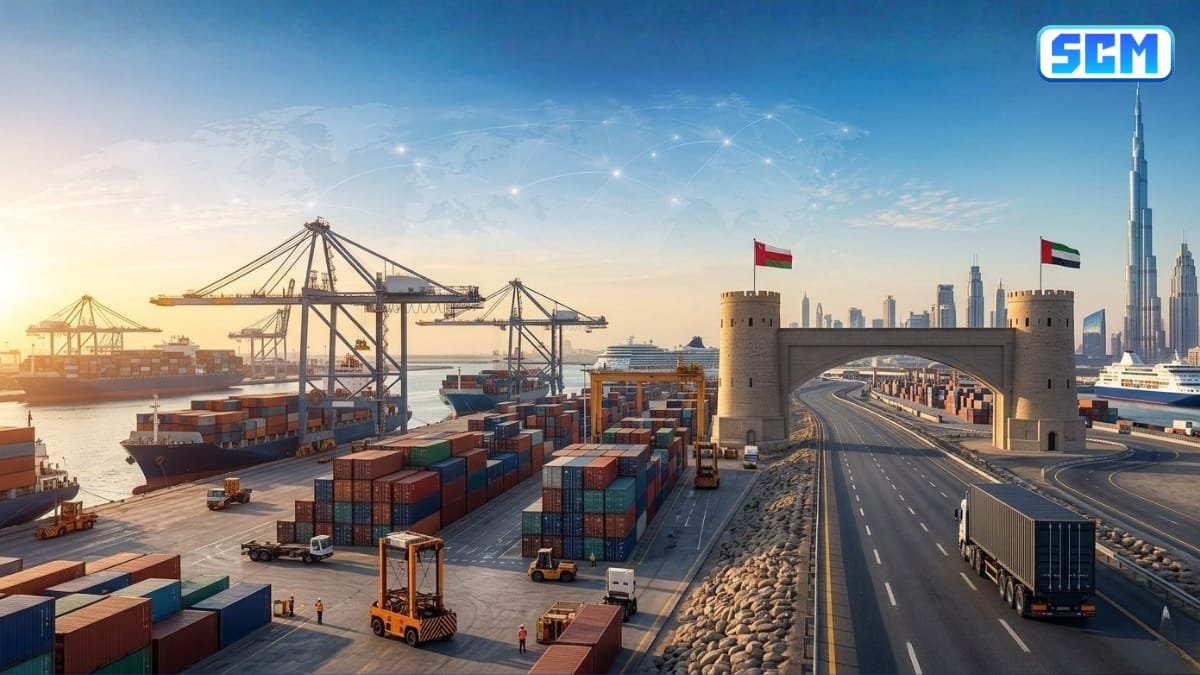
The global logistics industry is witnessing a major shift as Dubai’s newly launched “Green Corridor” rapidly transforms into a critical alternative trade route during ongoing maritime disruptions across the Gulf region.
Developed through collaboration between Dubai Customs and Oman Customs, the corridor is helping cargo move efficiently between Oman and the UAE while traditional sea routes face delays, uncertainty, and rising operational risks.
As shipping congestion and geopolitical tensions continue affecting movements through the Strait of Hormuz — one of the world’s most important maritime chokepoints — the Green Corridor is emerging as a powerful example of how governments and logistics authorities are building resilient supply chain networks for the future.
What Is Dubai’s Green Corridor?
The Green Corridor is a fast-track customs and logistics route connecting Oman’s ports with Dubai through streamlined cross-border road transportation.
Under this system, cargo arriving at Omani ports such as Sohar and Salalah can be quickly cleared under coordinated customs procedures and transported by bonded trucks through the Hatta border crossing into Dubai.
This allows businesses to bypass delays impacting traditional Gulf shipping lanes while maintaining uninterrupted cargo movement into:
- Dubai’s local market
- Jebel Ali Port
- UAE free zones
- Global re-export destinations
The initiative was reportedly operationalized within days as regional shipping disruptions intensified, demonstrating Dubai’s ability to respond quickly to supply chain emergencies.
Why the Corridor Became Necessary
The Green Corridor was launched after maritime instability disrupted normal shipping operations across the Gulf region.
The Strait of Hormuz handles a significant portion of global oil, container, and commercial cargo traffic. Any disruption in this area immediately impacts global trade flows, freight costs, and delivery schedules.
In recent months, shipping companies have faced:
- Vessel rerouting
- Port congestion
- Rising marine insurance costs
- Delayed cargo arrivals
- Increased freight rates
- Capacity shortages
Several shipping operators reduced or adjusted Gulf services to minimize operational risks, forcing importers and exporters to look for alternative logistics routes.
Dubai’s Green Corridor has now become one of the most effective contingency solutions for maintaining trade continuity.
How the Green Corridor Works
The process is designed to reduce delays and simplify cross-border cargo movement.
Step 1: Cargo Arrives at Omani Ports
Instead of directly entering UAE ports, containers are unloaded at ports in Oman.
Step 2: Fast-Track Customs Processing
Customs authorities in Oman and Dubai coordinate documentation and approvals through streamlined procedures.
Step 3: Bonded Truck Transportation
Containers are sealed under customs supervision and moved via bonded trucks through the Hatta border.
Step 4: Cargo Distribution in Dubai
Once cargo reaches Dubai, shipments can move into local distribution networks, warehouses, free zones, or re-export channels.
This multimodal sea-to-road logistics model is helping businesses avoid bottlenecks while maintaining supply chain reliability.
Massive Growth in Cargo Movement
The adoption of the corridor has grown at an extraordinary pace.
According to regional reports, customs declarations linked to the corridor surged from around 12,000 in March 2026 to nearly 100,000 in April 2026.
Cargo value moving through the route reportedly increased from approximately AED 1 billion to more than AED 8 billion within a month.
These figures highlight how quickly freight forwarders, importers, exporters, and logistics providers shifted toward the new trade route when conventional shipping operations became unstable.
Why This Matters for Global Logistics
Dubai has long been one of the world’s leading logistics and re-export hubs. Any disruption affecting UAE cargo flows impacts businesses across Asia, Europe, Africa, and the Middle East.
The Green Corridor demonstrates how the logistics industry is evolving from efficiency-focused supply chains toward resilience-focused infrastructure.
Key industry trends highlighted by this development include:
- Diversification of trade routes
- Increased customs collaboration
- Growth of multimodal transportation
- Stronger regional supply chain integration
- Faster emergency logistics planning
The initiative also reinforces Dubai’s strategic position as a global logistics command center capable of adapting during crises.
Impact on Freight Forwarders and Trade Businesses
For freight forwarders, customs brokers, importers, and exporters, the corridor creates new opportunities and operational advantages.
Faster Cargo Recovery
Businesses can reduce delays caused by congested maritime routes.
Improved Supply Chain Flexibility
Companies gain access to alternative routing options during emergencies.
Reduced Risk Exposure
Diversified logistics corridors help minimize dependency on a single shipping lane.
Higher Demand for Cross-Border Logistics
Road freight operators, bonded transport providers, and customs specialists are expected to see increased demand.
For logistics technology providers, the development also highlights the growing importance of:
- Customs automation
- Real-time shipment visibility
- Cross-border documentation management
- Integrated multimodal logistics systems
Strategic Importance for India
The corridor could also influence regional trade patterns involving India.
Indian exporters shipping goods to the UAE and Gulf markets may benefit from:
- More stable cargo movement
- Alternative Gulf entry points
- Reduced shipment uncertainty
- Better multimodal logistics connectivity
Ports such as Nhava Sheva and Mundra may continue playing a larger role in regional cargo redistribution as global carriers adapt to changing trade routes.
A New Era of Resilient Supply Chains
Dubai’s Green Corridor is more than a temporary crisis response. It reflects a larger transformation happening across the global logistics industry.
Governments, ports, customs authorities, and logistics providers are increasingly investing in backup trade corridors capable of keeping cargo moving during geopolitical disruptions, port congestion, or supply chain shocks.
As global trade becomes more unpredictable, resilient logistics infrastructure will become just as important as speed and cost efficiency.
Dubai’s latest initiative shows how rapidly coordinated customs systems, multimodal transportation, and regional partnerships can protect international trade during periods of uncertainty — and may redefine how future supply chains are built.


