


In today’s highly competitive and globalized business environment, supply chains are becoming more complex than ever. Companies are no longer just looking for transportation or warehousing services—they want end-to-end visibility, strategic control, cost optimization, and seamless coordination across the entire supply chain. This is where 4PL logistics (Fourth-Party Logistics) comes into the picture.
Fourth-party logistics goes beyond traditional logistics outsourcing. It acts as a single strategic integrator that manages multiple logistics partners, technologies, and processes on behalf of the client. In this complete guide, we’ll explore what 4PL logistics is, how it works, its benefits, challenges, use cases, and how it differs from 3PL.
What Is 4PL Logistics?
4PL (Fourth-Party Logistics) is a logistics model in which a company outsources the entire supply chain management function to a single external provider. A 4PL provider does not usually own physical assets like trucks or warehouses. Instead, it designs, manages, and optimizes the supply chain by coordinating multiple 3PLs, carriers, and service providers.
In simple terms:
- 3PL executes logistics operations
- 4PL manages and controls the entire logistics ecosystem
A 4PL provider acts as a neutral orchestrator, focusing on strategy, planning, technology integration, and performance management rather than day-to-day execution.
Evolution of Logistics: From 1PL to 4PL
To better understand 4PL, it’s important to see how logistics models evolved:
- 1PL (First-Party Logistics): Companies manage transportation and warehousing internally.
2PL (Second-Party Logistics): Asset-based providers like shipping lines, airlines, or trucking companies offer transportation services.
3PL (Third-Party Logistics): Outsourced providers handle warehousing, transportation, order fulfillment, and distribution. - 4PL (Fourth-Party Logistics): A strategic partner that manages multiple 3PLs and oversees the entire supply chain using technology and analytics.
How Does 4PL Logistics Work?
A 4PL provider operates as a single point of contact for all logistics activities. Instead of coordinating with multiple vendors, the client interacts only with the 4PL partner.
Key Functions of a 4PL Provider
Supply Chain Strategy & Design
- Network design
- Route optimization
- Cost-to-serve analysis
- Inventory planning
Vendor & Partner Management
- Selection of 3PLs and carriers
- Contract negotiation
- Performance monitoring
Technology Integration
- Transportation Management Systems (TMS)
- Warehouse Management Systems (WMS)
- ERP integration
- Data analytics and dashboards
End-to-End Visibility
- Real-time tracking
- KPI reporting
- Predictive analytics
Risk Management & Compliance
- Customs compliance
- Regulatory adherence
- Contingency planning
Key Characteristics of 4PL Logistics
- Asset-light model
- Technology-driven approach
- Vendor-neutral coordination
- Strategic, not transactional
- End-to-end supply chain ownership
4PL vs 3PL: Key Differences
| Aspect | 3PL | 4PL |
| Role | Execution-focused | Strategy + management |
| Assets | Owns warehouses, trucks | Asset-light |
| Scope | Specific logistics tasks | Entire supply chain |
| Vendor Control | Limited | Manages multiple 3PLs |
| Technology | Operational tools | Advanced analytics & integration |
| Client Relationship | Service provider | Strategic partner |
Benefits of 4PL Logistics
- End-to-End Supply Chain Visibility: 4PL provides a centralized view of inventory, transportation, suppliers, and customers across geographies.
- Cost Optimization: By analyzing data across vendors and routes, 4PLs reduce transportation costs, inventory holding costs, and inefficiencies.
- Strategic Focus for Businesses: Companies can focus on core competencies like product innovation and sales, while the 4PL handles supply chain complexity.
- Improved Performance Management: KPIs, SLAs, and performance dashboards help track vendor efficiency and service levels.
- Scalability & Flexibility: 4PL models adapt easily to business growth, seasonal demand, and global expansion.
- Risk Mitigation: Proactive planning helps manage disruptions like port congestion, geopolitical risks, or supply shortages.
Challenges of 4PL Logistics
While 4PL offers significant advantages, it also comes with challenges:
- High dependency on a single partner
- Complex implementation
- Data security concerns
Change management within organizations
Not suitable for small businesses with simple supply chains
Who Should Use 4PL Logistics?
4PL logistics is best suited for:
- Large enterprises & MNCs
- Global manufacturers
- Automotive companies
- Pharmaceutical companies
- FMCG giants
- Retail chains with complex distribution networks
- Companies operating across multiple countries
Industries That Benefit Most from 4PL
- Manufacturing
- Automotive
- Pharmaceuticals
- Consumer electronics
- FMCG
- Retail & omnichannel commerce
- Aerospace & defense
Role of Technology in 4PL Logistics
Technology is the backbone of 4PL logistics. Without advanced digital tools, managing a complex supply chain is impossible.
Key Technologies Used by 4PL Providers
- AI & Machine Learning for demand forecasting
- Cloud-based TMS & WMS
- IoT for real-time tracking
- Blockchain for secure documentation
- Advanced analytics & reporting tools
4PL Logistics Use Case Example
Scenario:
A global electronics manufacturer operates across Asia, Europe, and North America. It works with multiple freight forwarders, customs brokers, and warehouses.
4PL Solution:
- The 4PL provider designs the supply chain network
- Selects regional 3PL partners
- Integrates all systems into one dashboard
- Monitors KPIs like delivery time, cost, and inventory turnover
Result:
- 15–25% cost reduction
- Improved delivery reliability
- Centralized control and transparency
Future of 4PL Logistics
The future of 4PL logistics is closely linked to digital transformation and data-driven decision-making.
Key Trends
- AI-powered predictive logistics
- Sustainability & green supply chains
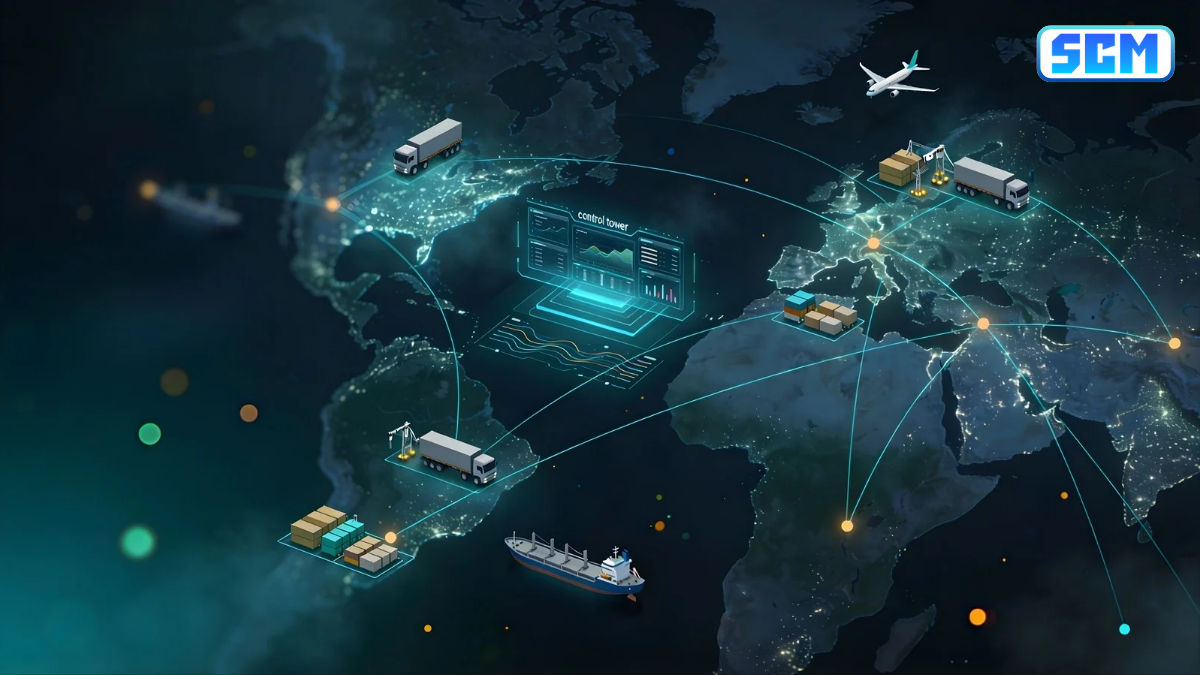
- Control tower models
- Increased demand for visibility platforms
- Integration with global trade compliance systems
As supply chains become more complex, the demand for 4PL solutions will continue to grow.
4PL and Digital Supply Chain Transformation
4PL providers act as digital enablers, helping businesses transition from fragmented operations to connected ecosystems. With real-time data and analytics, companies can make faster, smarter decisions.
Is 4PL Logistics Right for Your Business?
Ask yourself these questions:
- Do you work with multiple logistics partners?
- Is supply chain visibility a challenge?
- Are logistics costs increasing year over year?
- Do you operate globally?
- Do you need strategic control rather than execution?
If the answer is yes, then 4PL logistics may be the right solution.
Final Thoughts
4PL logistics represents a strategic shift in how companies manage their supply chains. Rather than handling multiple vendors and systems, businesses partner with a single 4PL provider that orchestrates everything—from planning and execution to optimization and reporting.
In a world where speed, efficiency, and visibility are critical, Fourth-Party Logistics is no longer optional for large and complex supply chains—it’s a competitive advantage.
