


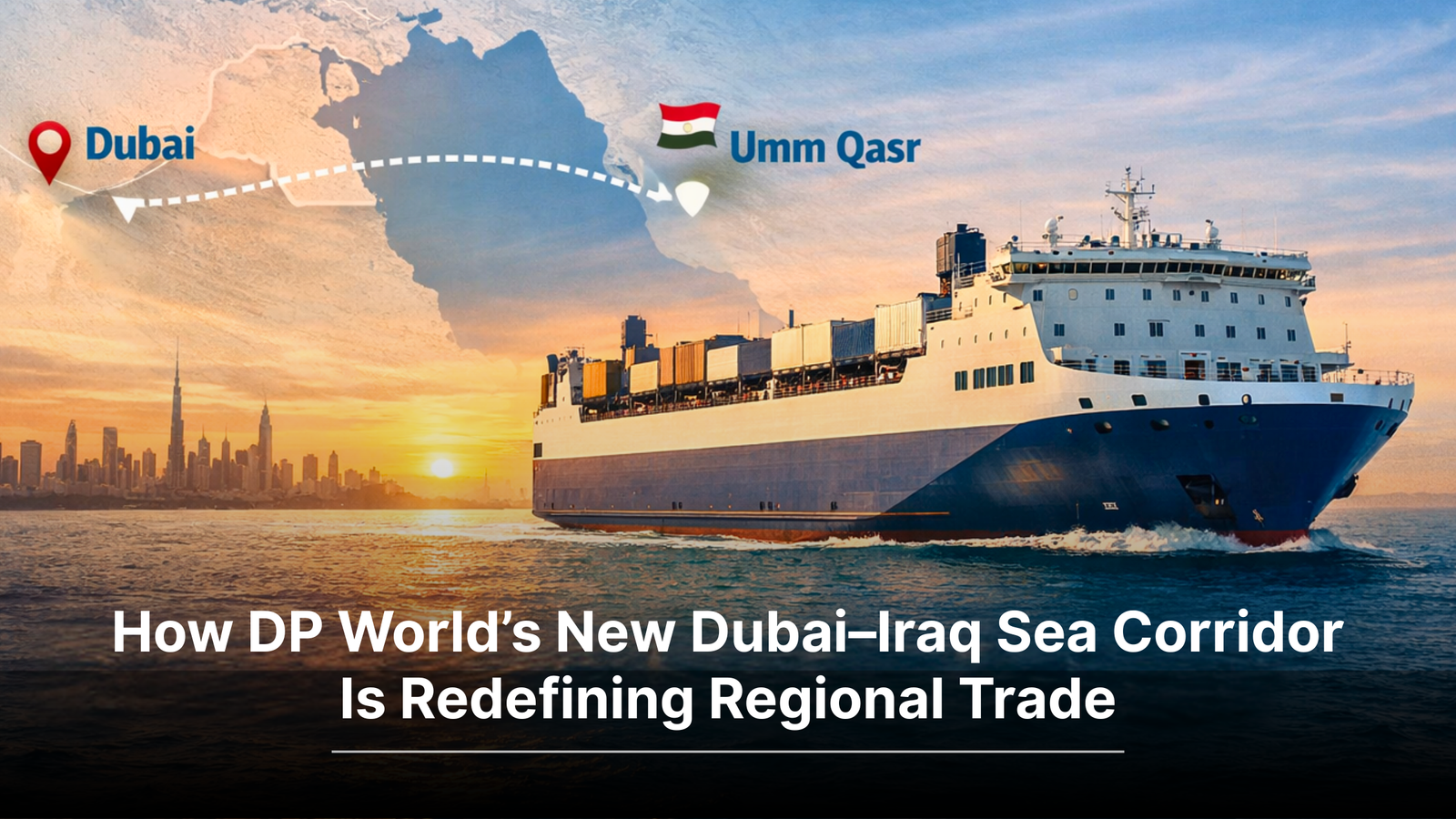
The Middle East logistics landscape is witnessing a major shift as DP World launches a new 36‑hour roll‑on/roll‑off (RoRo) maritime corridor between Dubai and Iraq. Designed to bypass long and often unpredictable overland routes, this sea link offers a faster, more reliable, and more secure alternative for moving cargo between the UAE and Iraq.
This initiative is more than just a new shipping service — it reflects how regional trade is evolving toward smarter, integrated, and time‑critical logistics solutions.
What Is the Dubai–Iraq RoRo Sea Corridor?
DP World’s new service connects Mina Rashid Port in Dubai with Umm Qasr Port in southern Iraq, completing the journey in just 36 hours.
Unlike container shipping, this service is specifically built for RoRo cargo, allowing fully loaded trucks and trailers to drive directly onto the vessel. Drivers remain onboard for the entire voyage, enabling a true door‑to‑door logistics experience with minimal cargo handling.
Key operational highlights include:
- Transit time reduced to 36 hours
- Capacity of up to 145 accompanied trailers per sailing
- Regular scheduled sailings
- Purpose‑refurbished RoRo vessel operated by DP World
Why DP World Launched This Corridor
For years, trade between the UAE and Iraq has relied heavily on road transport, which often faces challenges such as:
- Border congestion and customs delays
- Security and compliance risks
- Unpredictable transit times
- Higher operational and fuel costs
By shifting a significant portion of this movement to sea, DP World aims to remove friction from cross‑border trade and provide businesses with a logistics option that is both faster and more predictable.
This corridor directly addresses customer demand for reliability, especially for industries where delivery timelines are critical.
Strategic Importance for UAE–Iraq Trade
1. Faster and More Predictable Supply Chains
Reducing transit time to 36 hours allows importers and exporters to plan inventory more efficiently, reduce buffer stock, and improve cash flow.
2. Two‑Way Trade Growth
The service is designed for round‑trip utilization — carrying goods from Dubai to Iraq and transporting Iraqi exports back to the UAE. This supports balanced trade and better asset utilization.
3. Gateway to Wider Regional Markets
Umm Qasr serves as a key logistics gateway into Iraq. From there, cargo can move inland to major cities and even onward to neighboring countries, strengthening regional connectivity.
Benefits for Shippers and Freight Operators
The RoRo sea corridor delivers clear operational and commercial advantages:
- Lower risk: Fewer handling points mean reduced cargo damage and theft risk
- Cost efficiency: Less dependency on long‑haul trucking and border delays
- Improved compliance: Streamlined customs and port‑based controls
- Driver welfare: Drivers travel safely onboard instead of navigating long overland routes
For freight forwarders and logistics providers, this opens new opportunities to design hybrid sea‑road solutions that are both competitive and resilient.
Sustainability Angle: Sea Over Road
Shifting cargo from road to sea also aligns with sustainability goals. Maritime transport typically produces lower carbon emissions per unit of cargo compared to long‑distance trucking, helping companies reduce their logistics carbon footprint.
As sustainability reporting becomes increasingly important for global shippers, services like this corridor offer both operational and environmental value.
What This Means for the Future of Regional Logistics
DP World’s Dubai–Iraq RoRo corridor signals a broader trend:
- Movement toward multimodal logistics strategies
- Increased investment in non‑containerized cargo solutions
- Focus on speed, predictability, and resilience rather than just cost
As trade volumes between the Gulf and Iraq continue to grow, such maritime corridors are likely to play a crucial role in shaping future supply chains.
Final Thoughts
The launch of the 36‑hour Dubai–Iraq RoRo sea corridor is a strategic milestone for Middle East logistics. By replacing uncertainty with speed and structure, DP World is not just launching a new service — it is redefining how regional trade moves.
For shippers, freight forwarders, and supply chain leaders, this corridor represents a compelling alternative that blends efficiency, reliability, and sustainability into one integrated solution.
As regional trade corridors evolve, services like this may soon become the new benchmark for cross‑border logistics in the Middle East.
