


Quick Summary
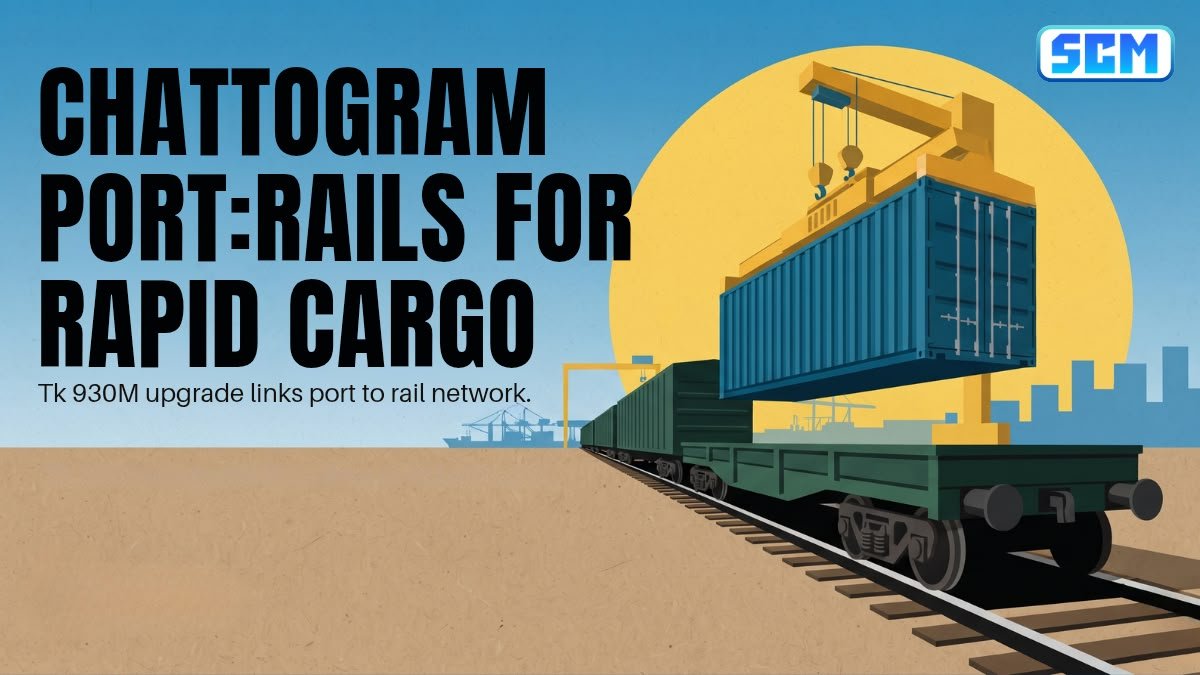
Bangladesh is planning to strengthen railway connections between Chattogram Port and the country’s inland freight network to improve cargo movement and reduce dependence on road transportation. The proposed initiative will assess rail links serving existing and upcoming port terminals, along with supporting infrastructure such as container yards, freight locomotives and cargo-handling equipment. The preparation programme is expected to complete its studies by the end of 2027. Actual construction and operational timelines will depend on subsequent approvals, financing and implementation decisions.
Key Highlights
- Bangladesh plans to improve railway connectivity for existing and upcoming Chattogram Port terminals.
- The reported budget for the preparation programme is Tk 930 million, equivalent to Tk 93 crore.
- Technical studies and conceptual designs are expected to be completed by the end of 2027.
- The initiative aims to improve freight efficiency and reduce dependence on road transportation.
- Better coordination between ports, railways and inland logistics facilities could strengthen Bangladesh’s supply chain.
- Bangladesh’s Logistics Policy 2025 targets increasing rail’s share of freight transportation from approximately 2–3% to 20%.
1. Bangladesh Plans Better Rail Connectivity at Chattogram Port
Bangladesh is preparing to strengthen railway connections to Chattogram Port as the country looks to improve freight transportation and manage growing trade volumes.
Chattogram Port, also known as Chittagong Port, is Bangladesh’s principal seaport and handles the majority of the country’s international trade. Efficient cargo movement between the port, industrial zones, warehouses and inland distribution centres is therefore essential to the national economy.
Bangladesh Railway plans to assess the connections required to integrate existing port terminals and upcoming facilities into a more coordinated freight network.
The initiative aims to address limitations in rail access, improve the utilisation of existing infrastructure and prepare the network for future cargo demand. Better railway connectivity could give importers, exporters and logistics operators an alternative to road transportation for suitable shipments.
However, the initiative remains at the preparation and assessment stage. The studies will help identify the infrastructure improvements, equipment requirements and investments needed before the proposed connections can be implemented.
2. Which Port Terminals Could Benefit from the Plan?
The assessment covers existing port facilities and upcoming terminals that will require adequate inland transportation infrastructure as cargo volumes increase.
General Cargo Berth and conventional jetty areas
These established facilities form part of Chattogram Port’s existing cargo-handling network. Improved railway integration could support the movement of suitable freight between port facilities and inland destinations.
Chittagong Container Terminal (CCT)
CCT is part of the port’s container-handling infrastructure. Better integration between railway connections, container yards and terminal operations could improve the practical use of rail for inland cargo transportation.
New Mooring Container Terminal (NCT)
The New Mooring Container Terminal plays an important role in Chattogram’s container operations. Integrating rail access with terminal loading facilities could help streamline container movement and support more efficient freight planning.
Patenga Container Terminal (PCT)
Patenga is another important terminal in the port network. Improved connectivity could help incorporate this facility into a wider rail-based freight transportation strategy.
Bay Terminal and Laldia Container Terminal
These planned or developing facilities highlight the importance of integrating inland transport infrastructure into long-term port development. Adequate railway connections could help ensure that additional terminal capacity is supported by efficient cargo evacuation arrangements.
The reported assessment also includes connectivity around Chattogram Goods Port Yard (CGPY), the Faujdarhat–CGPY section and a proposed connection associated with Bay Terminal.
The precise scope and implementation arrangements will depend on the final technical studies and subsequent project approvals.
3. What Will the World Bank-Funded Programme Examine?
The Green Railway Transport Project Preparation Facility Project will examine the technical requirements for improving rail-based freight transportation.
The reported budget for the preparation programme is Tk 930 million, equivalent to Tk 93 crore. This amount relates to project preparation and should not be interpreted as the confirmed total construction cost of all proposed railway connections.
The assessment is expected to examine the following areas:
- Railway tracks and terminal connections: Identify the connections required to link port terminals with the inland railway network.
- Container yards and loading tracks: Assess the facilities needed for loading, unloading, storing and transferring freight.
- Freight locomotives and wagons: Examine equipment requirements for reliable cargo train operations.
- Cargo-handling equipment: Evaluate requirements for cranes and other equipment used to transfer containers between transport modes.
- Railway maintenance facilities: Assess supporting infrastructure for track maintenance and locomotive servicing.
- Inland connectivity: Consider connections with the Mirsharai Economic Zone and other logistics facilities.
- Freight corridor improvements: Review relevant sections of the Dhaka–Chattogram rail corridor and supporting railway infrastructure.
Studies are expected to be completed by the end of 2027. This deadline relates to the preparation work, not the confirmed operational date for all proposed rail links.
4. Why Is Bangladesh Promoting Rail Freight Transportation?
Bangladesh’s logistics strategy aims to increase the role of rail in freight transportation. The country’s Logistics Policy 2025 has been reported to target an increase in rail’s freight share from approximately 2–3% to 20%.
The proposed improvements at Chattogram Port could support this objective in several ways.
Reduced road congestion
Large volumes of containers moving out of a busy seaport can put pressure on roads and highways. Freight trains can transport consolidated cargo loads, potentially reducing the number of individual truck journeys required for suitable routes.
Improved transportation cost efficiency
Rail can be cost-effective for large cargo volumes moving over appropriate distances. Actual savings will depend on rail tariffs, handling charges, train availability, terminal access and first-mile and last-mile delivery costs.
More predictable freight planning
Reliable rail schedules could help manufacturers, importers and exporters coordinate inventory, production and dispatch activities. Better predictability can be especially valuable for businesses handling regular shipments between ports and inland industrial centres.
Lower transport emissions
Rail freight can reduce emissions per unit of cargo compared with road transport under suitable operating conditions. The actual environmental benefit will depend on locomotive technology, train utilisation, energy sources and the amount of road transport replaced.
The objective is to develop a freight system in which rail and road transportation complement each other rather than operate as disconnected networks.
5. Railway Gauge Compatibility Remains an Important Consideration
One technical issue in improving railway connectivity is compatibility between existing railway infrastructure and future freight operations.
Some railway sections use metre gauge, while Bangladesh Railway also operates broad-gauge and dual-gauge infrastructure. Differences between railway gauges can complicate train movements across connected sections and may require upgrades or alternative operating arrangements.
The assessment will need to consider how existing tracks, new connections and future freight services can work together.
Important operational considerations include:
- Track gauge compatibility and the need for suitable upgrades.
- Availability of freight locomotives and wagons.
- Container loading and unloading capacity.
- Yard space for train formation, storage and shunting.
- Coordination between railway operators, port authorities and terminal managers.
- Integration with road transport and inland container facilities.
A railway connection will deliver limited benefits if trains cannot move efficiently through the wider network. Infrastructure planning must therefore address the complete freight journey, not just the connection immediately outside a port terminal.
6. What Could the Plan Mean for Importers, Exporters and Freight Forwarders?
If implemented effectively, improved rail connectivity could provide businesses involved in Bangladesh’s international trade with additional transportation options.
| Business segment | Potential benefit |
| Importers | More options for transporting containers from the port to inland destinations. |
| Exporters | Potentially more predictable transport planning for export cargo. |
| Freight forwarders | Greater flexibility when designing multimodal transport solutions. |
| Container operators | Better opportunities to coordinate container availability, train schedules and terminal handling. |
| Manufacturers | Potential improvements in moving raw materials and finished products. |
| Warehousing and inland container depot operators | Warehousing and inland container depot operators Better integration with port-related freight flows, subject to available network capacity. |
These benefits are potential outcomes rather than guaranteed results. Their scale will depend on the final infrastructure design, operating reliability, pricing and availability of suitable inland terminals.
Freight forwarders may be able to incorporate rail into multimodal transport plans where the route, shipment size and delivery requirements make it commercially viable.
For example, a container could travel by rail from the port to an inland terminal before completing its journey by truck. This approach would still require coordination between railway operators, terminal managers, customs stakeholders and road transport providers.
7. How Rail Connectivity Could Strengthen Bangladesh’s Supply Chain
The impact of improved port rail links extends beyond transportation infrastructure. It could influence cargo planning, inventory management and the movement of goods throughout the supply chain.
Consider an importer receiving a container at Chattogram Port and transporting it to a warehouse near Dhaka.
In a road-dependent model, the container may travel directly by truck along the road corridor. Under a well-integrated rail model, it could potentially move by train to a suitable inland terminal before being delivered by road to the warehouse.
A typical multimodal cargo journey could involve:
- Port handling: The container arrives at Chattogram Port and completes the required release procedures.
- Rail transfer: The container is transferred to a suitable freight train.
- Inland transportation: The train moves the container along the available rail corridor.
- Inland terminal handling: The container is unloaded and prepared for onward transportation.
- Final-mile delivery: A truck transports the container to the consignee’s warehouse or distribution centre.
This is an illustrative route rather than a confirmed service under the proposed project.
The main advantage of this model is the potential to combine rail’s capacity for consolidated freight movement with the flexibility of road transportation.
However, the total delivery time will depend on port dwell time, train frequency, rail transit, terminal transfers and final-mile delivery. Rail infrastructure alone will not guarantee faster cargo movement unless these activities are coordinated effectively.
8. Challenges That Could Affect Implementation
The proposed improvements offer opportunities, but several operational factors will determine whether they deliver measurable benefits.
Infrastructure investment
New tracks, loading yards, terminal connections and cargo-handling equipment may require investment beyond the preparation programme’s reported budget.
Freight service reliability
Businesses need dependable schedules, sufficient train capacity and predictable transit times before they can shift substantial cargo volumes from road to rail.
Coordination between stakeholders
Port authorities, terminal operators, railway agencies, customs stakeholders, freight forwarders and trucking companies must coordinate cargo release and transport transfers.
First-mile and last-mile transportation costs
Rail may not be the most economical option for every shipment. Additional trucking costs can reduce its advantage when cargo origins or destinations are far from suitable inland rail terminals.
Implementation timelines
Completing feasibility studies by the end of 2027 does not mean every proposed railway connection will be operational by that date. Funding approvals, procurement, construction and commissioning may follow separately.
Gauge and equipment compatibility
Differences in railway gauge, limited terminal capacity and inadequate handling facilities can reduce the benefits of improved connectivity if the wider network is not upgraded appropriately.
Addressing these challenges will be essential to converting infrastructure planning into reliable, commercially useful freight services.
Conclusion
Bangladesh’s plan to strengthen rail connectivity at Chattogram Port represents an important step towards a more integrated freight transportation network. By assessing connections across existing and future terminals, the country aims to reduce dependence on road transportation, improve cargo-handling coordination and support rising trade volumes.
The immediate milestone is the completion of studies by the end of 2027, rather than the opening of all proposed rail links. The long-term impact will depend on investment, reliable freight services, compatible railway infrastructure and effective coordination between port and inland logistics operators.
For Bangladesh’s supply chain sector, the challenge is not simply building more railway tracks. It is ensuring that port terminals, rail corridors, inland depots and final-mile transportation work together as one connected logistics system.
Frequently Asked Questions
1. What is the Chattogram Port rail connectivity plan?
It is an initiative to assess and improve railway connections serving existing and upcoming Chattogram Port terminals, with the aim of integrating port cargo movement more effectively with Bangladesh’s inland freight network.
2. When will the Chattogram Port rail connectivity studies be completed?
The preparation programme is expected to complete its studies by the end of 2027. This is not a confirmed deadline for completing construction or opening every proposed railway connection.
3. How much funding has been allocated to the preparation programme?
The reported budget is Tk 930 million, equivalent to Tk 93 crore, for feasibility studies, conceptual designs and related preparation work.
4. Why does Bangladesh want to transport more cargo by rail?
Bangladesh aims to reduce road congestion, improve freight efficiency, support growing trade and increase the share of goods transported by rail.
5. Which port facilities could benefit from the assessment?
The reported scope includes existing facilities such as Chittagong Container Terminal, New Mooring Container Terminal and Patenga Container Terminal, as well as planning for developing facilities such as Bay Terminal and Laldia Container Terminal.
6. Will improved rail connectivity automatically reduce logistics costs?
No. Better connectivity may reduce some inland transportation costs, but actual savings will depend on rail tariffs, handling charges, train frequency, terminal efficiency and first-mile and last-mile delivery costs.
