


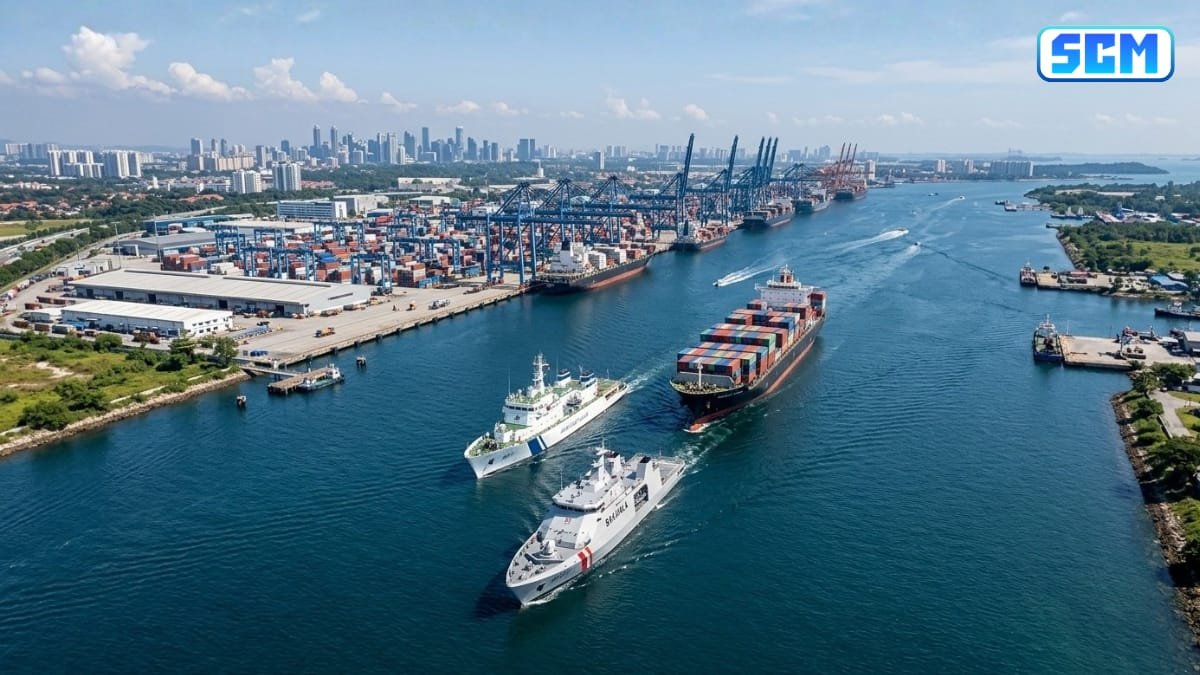
India and Indonesia have opened a new chapter in their strategic partnership, with both countries agreeing to expand cooperation in maritime security, defence, coast guard operations, port development, blue economy initiatives and maritime trade.
The announcement followed talks between Narendra Modi and Prabowo Subianto in Jakarta during the Indian Prime Minister’s July 2026 visit. The two leaders described the growing relationship as a stronger phase of the India–Indonesia Comprehensive Strategic Partnership, first established in 2018.
For the logistics and supply chain sector, the development is significant. India and Indonesia are major maritime nations located near critical sea lanes linking the Indian Ocean, Southeast Asia and the Pacific. Closer security and port cooperation could improve maritime resilience across one of the world’s busiest trade regions.
Quick Summary
India and Indonesia have agreed to deepen cooperation across defence exchanges, maritime safety, coast guard coordination, disaster management, shipbuilding, defence manufacturing, port development and maritime trade.
The agreement strengthens both countries’ ability to respond to maritime risks, including illegal fishing, piracy, smuggling, marine pollution, search-and-rescue incidents and disruptions to regional shipping routes. It also creates new opportunities for defence industrial collaboration and blue economy development.
Key Highlights of India–Indonesia Maritime Cooperation
- India and Indonesia extended their maritime safety and security cooperation framework.
- The Indian Coast Guard and Indonesia’s BAKAMLA maritime security agency will work more closely on surveillance, safety and emergency response.
- Both countries agreed to expand cooperation in the blue economy, port development and maritime trade.
- Defence exchanges, industrial cooperation, disaster management and capacity-building initiatives will be strengthened.
- India and Indonesia also announced defence-related agreements involving the BrahMos missile system and Astra air-to-air missile cooperation.
- Cooperation is expected to include shipbuilding, maintenance, repair and overhaul capabilities, defence technology and supply-chain development.
Coast Guard Cooperation Takes Centre Stage
One of the most important outcomes of the visit is stronger cooperation between the Indian Coast Guard and Indonesia’s maritime security agencies.
The two countries renewed their maritime safety and security arrangement and agreed to implement closer coordination in areas such as coastal surveillance, search and rescue, marine pollution response, humanitarian assistance and disaster relief.
This is especially relevant for the Indian Ocean, where shipping companies face growing operational risks from weather events, piracy, illegal maritime activity, geopolitical tensions and vessel-routing disruptions.
Improved coast guard coordination can help authorities exchange information faster, respond more effectively to incidents at sea and support safer movement of commercial vessels through regional waters.
Why India–Indonesia Maritime Cooperation Matters for Global Trade
India and Indonesia sit near strategically important shipping corridors.
Indonesia is located close to the Strait of Malacca, one of the world’s busiest maritime chokepoints. A significant share of global trade, including container cargo, energy shipments and raw materials, passes through this region.
India, meanwhile, is strengthening its role as a major maritime power in the Indian Ocean Region through port modernisation, naval capability expansion, coastal surveillance and trade corridor development.
A stronger India–Indonesia partnership could support:
- More secure sea lanes for container shipping and energy cargo
- Better monitoring of illegal fishing, smuggling and maritime crime
- Faster response to vessel emergencies and marine pollution incidents
- Improved disaster-response coordination across the Indian Ocean
- Greater investment opportunities in ports, shipbuilding and maritime technology
- More resilient supply chains between South Asia and Southeast Asia
For freight forwarders, shipping lines, exporters and importers, maritime stability is directly connected to transit times, cargo insurance costs, vessel routing decisions and supply-chain reliability.
Defence Cooperation Expands Beyond Military Exchanges
The partnership is not limited to naval exercises or diplomatic meetings. India and Indonesia are also looking to deepen defence industrial cooperation.
The two countries have identified opportunities in defence manufacturing, technology transfer, shipbuilding, repair facilities, research and development, and defence supply chains.
Reports following the summit also highlighted agreements connected to the BrahMos missile system and Astra air-to-air missile cooperation. However, commercial values, quantities, delivery schedules and operational deployment details should only be treated as confirmed once formally disclosed by the relevant governments or defence manufacturers.
For India, the agreement supports its broader goal of increasing defence exports and building stronger defence manufacturing partnerships with countries in the Indo-Pacific.
For Indonesia, it offers access to expanded technology, industrial cooperation and maritime security capacity at a time when regional security and supply-chain resilience are becoming more important.
Blue Economy, Port Development and Maritime Trade Opportunities
The India–Indonesia discussions also placed focus on the blue economy, port development and maritime trade.
The blue economy includes sustainable use of ocean resources for economic growth, improved livelihoods and environmental protection. It covers sectors such as shipping, fisheries, marine tourism, offshore energy, coastal infrastructure, shipbuilding and ocean-based technology.
Port cooperation can become an important part of this partnership. India is investing in port-led development through initiatives such as Sagarmala, while Indonesia continues to develop maritime infrastructure across its vast archipelago.
Potential areas of future collaboration may include:
- Port infrastructure and terminal development
- Coastal logistics and multimodal connectivity
- Ship repair and marine engineering facilities
- Digital port systems and cargo visibility platforms
- Marine environmental protection
- Sustainable shipping and green corridor projects
- Maritime training and workforce development
These initiatives could support more efficient trade flows between India, Indonesia and wider ASEAN markets.
Indo-Pacific Stability and Supply Chain Resilience
India and Indonesia share an interest in keeping the Indo-Pacific open, stable and rules-based.
Both countries have repeatedly supported freedom of navigation, peaceful resolution of disputes and respect for international maritime law. Their cooperation is particularly important as shipping networks face pressure from geopolitical conflicts, trade disruptions, rising freight costs and congestion at strategic maritime chokepoints.
The new maritime and defence cooperation framework gives both countries a more practical role in protecting regional trade routes. It also supports ASEAN centrality, a principle India continues to emphasise in its Indo-Pacific engagement.
What This Means for the Logistics Industry
For the logistics sector, the India–Indonesia partnership is a positive development because maritime security is increasingly linked to supply-chain performance.
When sea routes are disrupted, businesses face higher freight rates, delayed cargo, rerouting costs, inventory shortages and uncertainty in delivery schedules. Stronger coordination between maritime authorities can help reduce operational risk and improve confidence for shipping companies and cargo owners.
The agreement may also create longer-term opportunities for logistics providers, port operators, shipbuilders, maritime technology companies and trade businesses working between India and Southeast Asia.
As India expands its trade links with ASEAN and Indonesia develops its role as a maritime hub, cooperation in ports, digital trade systems, shipping services and supply-chain infrastructure is likely to become more important.
FAQ
What did India and Indonesia agree on in maritime cooperation?
India and Indonesia agreed to expand maritime safety, coast guard coordination, defence exchanges, disaster response, blue economy cooperation, port development and maritime trade.
Why is Indonesia important for India’s maritime strategy?
Indonesia is located near the Strait of Malacca and other key sea routes connecting the Indian Ocean with the Pacific. Its location makes it strategically important for trade, shipping security and Indo-Pacific stability.
How can this partnership help logistics and shipping companies?
Stronger maritime coordination can support safer sea lanes, quicker emergency response, better monitoring of maritime risks and more resilient supply chains across South Asia and Southeast Asia.
Will India and Indonesia cooperate on ports?
Both countries have agreed to deepen cooperation in port development and maritime trade. Specific projects and investment details may emerge as the partnership moves into implementation.
Conclusion
India and Indonesia’s decision to deepen maritime security and defence cooperation marks an important strategic development for the Indo-Pacific.
The partnership goes beyond defence agreements. It connects coast guard coordination, port development, blue economy initiatives, maritime trade, disaster response and supply-chain resilience.
For businesses involved in shipping, freight forwarding, trade and logistics, the message is clear: India and Indonesia are positioning themselves as stronger maritime partners in a region that will remain central to global commerce.
As implementation moves forward, the biggest areas to watch will be coast guard coordination, port collaboration, defence manufacturing, maritime technology and new trade connectivity projects between India and Southeast Asia.
