


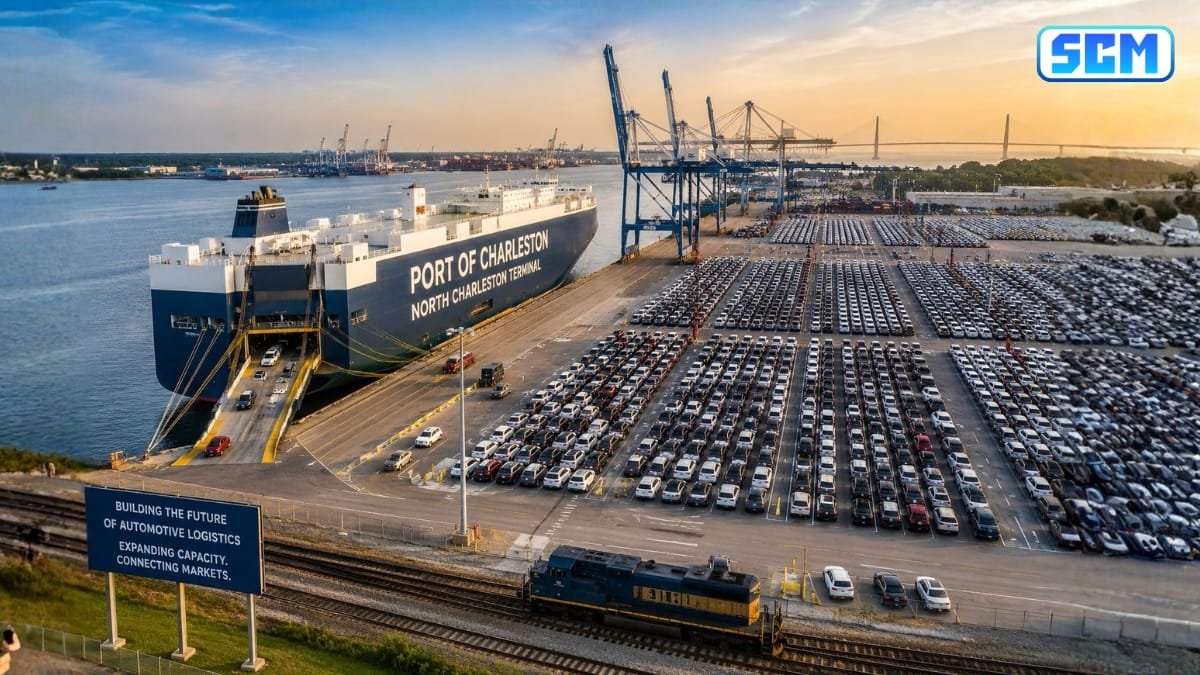
The Port of Charleston is preparing for a major automotive logistics expansion that could reshape vehicle exports and supply chain operations across the United States. South Carolina Ports (SC Ports) has announced plans to significantly increase automotive cargo capacity through expanded roll-on/roll-off (Ro-Ro) operations, improved rail infrastructure, and larger vehicle processing facilities at the North Charleston Terminal.
The project comes at a critical time for the global automotive industry as electric vehicle (EV) production, vehicle exports, and supply chain modernization continue accelerating across North America.
With South Carolina already ranking among the leading U.S. automotive export states, the expansion positions the Port of Charleston as a strategic gateway for global automotive trade and next-generation logistics infrastructure.
Key Takeaways
- Port of Charleston is expanding automotive cargo operations at North Charleston Terminal.
- The project focuses on Ro-Ro vehicle handling, rail connectivity, and expanded storage capacity
- Expansion supports growing EV manufacturing and vehicle exports in the southeastern U.S.
- Major automakers including BMW, Volvo, and Mercedes-Benz Vans rely on the port.
- The project is expected to improve supply chain efficiency, reduce congestion, and strengthen automotive logistics networks.
Why the Port of Charleston Expansion Matters
The southeastern United States has become one of the fastest-growing automotive manufacturing regions in the world. South Carolina alone hosts major manufacturing operations for:
- BMW
- Mercedes-Benz Vans
- Volvo Cars
These manufacturers depend heavily on reliable port infrastructure for importing components and exporting finished vehicles to global markets.
As production volumes continue increasing, especially for electric vehicles, ports are facing mounting pressure to modernize cargo handling infrastructure and improve transportation efficiency.
The Port of Charleston’s expansion directly addresses these growing logistics demands.
What Is Included in the Expansion Project?
The North Charleston Terminal redevelopment will focus heavily on automotive cargo operations and long-term logistics scalability.
Key Infrastructure Developments
Expanded Ro-Ro Operations
The port will increase its roll-on/roll-off handling capabilities for:
- Passenger vehicles
- Electric vehicles
- Heavy machinery
- Automotive equipment
Ro-Ro shipping allows vehicles to be driven directly on and off ships, improving operational efficiency and reducing cargo handling risks.
Enhanced Rail Connectivity
A major component of the project involves strengthening rail infrastructure through collaboration with Palmetto Railways.
Improved rail access will:
- Accelerate inland transportation
- Reduce trucking congestion
- Lower logistics costs
- Support just-in-time manufacturing
For automotive manufacturers, faster rail connectivity is essential for maintaining uninterrupted production schedules.
Additional Vehicle Storage Capacity
The expansion includes large-scale vehicle parking and staging areas to manage rising cargo volumes more efficiently.
This helps:
- Reduce terminal congestion
- Improve cargo flow
- Increase export readiness
- Support higher shipping volumes during peak seasons
Redevelopment of Industrial Land
SC Ports plans to redevelop adjacent industrial property near the North Charleston Terminal to maximize operational efficiency and future cargo growth opportunities.
This strategic land utilization allows long-term scalability for future automotive logistics demand.
Growing Importance of Ro-Ro Shipping in Automotive Logistics
Roll-on/roll-off shipping has become one of the most important transportation methods for the global automotive industry.
Benefits of Ro-Ro Cargo Operations
| Benefit | Impact on Automotive Logistics |
| Faster Loading & Unloading | Reduces vessel turnaround time |
| Lower Vehicle Damage Risk | Improves cargo safety |
| Efficient High-Volume Handling | Supports export growth |
| Lower Operational Costs | Improves supply chain profitability |
| Faster Delivery Cycles | Enhances global trade efficiency |
As vehicle exports continue increasing worldwide, ports with advanced Ro-Ro infrastructure are gaining a competitive advantage in global logistics markets.
EV Manufacturing Is Driving Port Infrastructure Investments
The automotive industry’s shift toward electric vehicles is significantly changing logistics requirements across global supply chains.
The southeastern U.S. is emerging as a major EV manufacturing corridor due to:
- Large-scale battery plant investments
- Expanding EV assembly facilities
- Favorable logistics infrastructure
- Growing supplier ecosystems
As EV production increases, ports must handle:
- Higher cargo volumes
- Specialized vehicle handling
- Battery transportation requirements
- Faster export cycles
The Port of Charleston’s expansion is designed to support this evolving automotive landscape.
Economic Impact on South Carolina’s Supply Chain Industry
The automotive cargo expansion is expected to generate substantial economic benefits for South Carolina and the surrounding region.
Potential Economic Benefits
Job Creation
The project will support employment growth in:
- Port operations
- Warehousing
- Freight forwarding
- Rail logistics
- Transportation management
Increased Trade Volume
Expanded infrastructure will allow SC Ports to handle larger volumes of vehicle imports and exports annually.
Stronger Regional Supply Chains
Improved connectivity between manufacturers, inland logistics hubs, and port terminals will strengthen overall supply chain resilience.
Attraction of New Investments
Modern logistics infrastructure often attracts:
- Automotive suppliers
- Distribution centers
- Manufacturing facilities
- Third-party logistics providers
This can accelerate industrial development across the southeastern U.S.
Strategic Importance for Global Supply Chains
The Port of Charleston’s expansion reflects broader global supply chain trends shaping the future of logistics.
Key Industry Trends Driving Port Investments
Nearshoring & Reshoring
Companies are increasingly moving manufacturing closer to North American markets to reduce dependency on distant supply chains.
Supply Chain Diversification
Businesses are expanding logistics networks to improve resilience against global disruptions.
Infrastructure Modernization
Ports worldwide are investing in:
- Automation
- AI-powered logistics systems
- Smart cargo tracking
- Digital supply chain visibility
Rising Demand for Export Capacity
Growing global automotive demand requires ports to process larger cargo volumes more efficiently.
The Port of Charleston is positioning itself as a long-term strategic logistics hub within this evolving ecosystem.
Challenges the Port Industry Still Faces
Despite strong growth opportunities, port infrastructure projects face several industry-wide challenges.
Key Challenges
Rising Infrastructure Costs
Large-scale terminal expansion projects require massive long-term investments.
Global Trade Volatility
Economic uncertainty, geopolitical tensions, and shipping disruptions continue impacting global logistics.
Sustainability Requirements
Ports are under pressure to reduce emissions and adopt greener operations.
Workforce Shortages
The logistics sector continues facing labor shortages across transportation and supply chain operations.
However, long-term automotive trade forecasts continue showing strong growth potential.
Expert Insight: Why This Expansion Is a Major Logistics Move
The Port of Charleston’s automotive expansion is not just about increasing cargo space.
It represents:
- The modernization of U.S. automotive logistics
- The rise of EV-driven supply chains
- The growing role of ports in integrated logistics ecosystems
- The importance of rail-port connectivity in future trade operations
Ports are evolving from traditional shipping gateways into advanced logistics and distribution hubs that directly support manufacturing efficiency and global trade competitiveness.
Final Thoughts
The Port of Charleston’s decision to expand automotive cargo capacity marks a significant milestone for the U.S. logistics and automotive industries.
With enhanced Ro-Ro infrastructure, stronger rail connectivity, expanded vehicle handling capacity, and long-term industrial development plans, the port is positioning itself for the future of global automotive trade.
As EV production rises and supply chains become increasingly technology-driven, ports capable of supporting high-volume, fast-moving automotive logistics will play a critical role in shaping the future of international commerce.
For automakers, logistics providers, freight forwarders, and global supply chain stakeholders, the Port of Charleston expansion represents a strategic investment in faster, smarter, and more resilient transportation infrastructure.
