


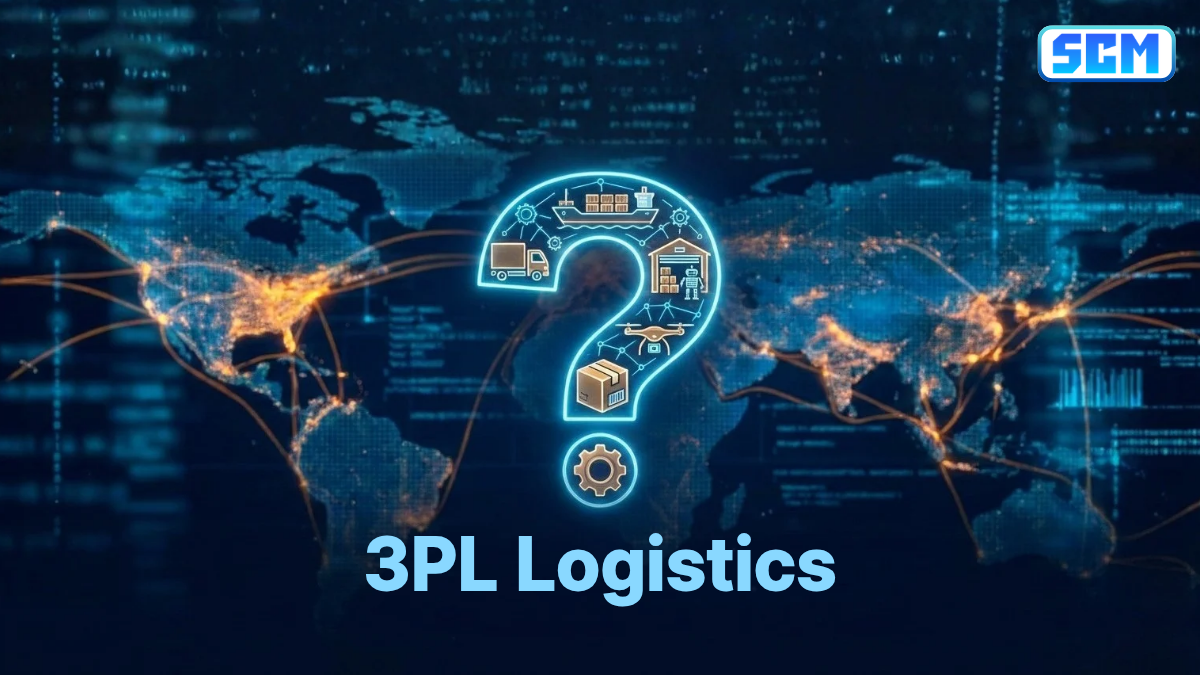
In today’s fast-moving business world, companies are under constant pressure to deliver products faster, cheaper, and more efficiently. Managing warehousing, transportation, inventory, and order fulfillment internally can be complex and expensive. This is where 3PL logistics comes into the picture.
3PL, or Third-Party Logistics, has become a backbone of modern supply chains, helping businesses focus on growth while logistics experts handle operations. In this detailed guide, we’ll break down what 3PL logistics is, how it works, its benefits, challenges, and when a business should consider using a 3PL provider.
What Is 3PL Logistics?
3PL logistics (Third-Party Logistics) refers to outsourcing logistics and supply chain operations to an external service provider. Instead of managing transportation, warehousing, inventory, and distribution in-house, companies rely on a specialized logistics partner.
In simple terms:
A 3PL company manages all or part of your logistics operations so you can focus on your core business.
These providers act as an extension of your business, handling the movement and storage of goods from suppliers to customers.
Understanding 3PL with a Simple Example
Imagine you run an eCommerce business selling products across India:
- Orders come from multiple cities
- Inventory needs to be stored safely
- Products must be packed and shipped on time
- Returns need to be handled
If you manage everything yourself, costs and complexity increase quickly.
A 3PL provider can:
- Store your inventory in their warehouses
- Pack and ship orders
- Handle last-mile delivery
- Manage returns and reverse logistics
This allows you to focus on sales, marketing, and customer experience.
What Services Do 3PL Logistics Providers Offer?
3PL services can vary depending on the provider, but most offer a combination of the following:
1. Transportation Management
This is one of the core services of 3PL logistics.
It includes:
- Freight booking (road, rail, air, sea)
- Carrier selection
- Route optimization
- Freight cost negotiation
- Tracking and delivery updates
3PLs use technology and industry connections to move goods efficiently and cost-effectively.
2. Warehousing and Storage
3PL companies operate warehouses in strategic locations.
Warehouse services include:
- Inventory storage
- Palletizing and racking
- Temperature-controlled storage (if required)
- Bonded warehousing for imports
This reduces the need for businesses to invest in their own infrastructure.
3. Order Fulfillment
Order fulfillment is especially important for eCommerce and D2C brands.
3PL fulfillment includes:
- Picking products from inventory
- Packing orders
- Labeling and documentation
- Dispatching orders to customers
Faster fulfillment leads to better customer satisfaction.
4. Inventory Management
3PLs use warehouse management systems (WMS) to track inventory in real time.
This helps with:
- Stock visibility
- Demand forecasting
- Avoiding overstocking or stockouts
- Better inventory planning
5. Reverse Logistics (Returns Management)
Handling returns can be costly and time-consuming.
3PL providers manage:
- Customer returns
- Product inspection
- Restocking or disposal
- Refund coordination
This is especially valuable for eCommerce businesses with high return rates.
6. Value-Added Services
Many 3PLs also offer:
- Kitting and assembly
- Custom packaging
- Labeling and barcoding
- Quality checks
- Cross-docking
These services help businesses customize logistics as per their needs.
How Does 3PL Logistics Work?
The typical 3PL workflow looks like this:
- Business signs a contract with a 3PL provider
- Inventory is shipped to the 3PL warehouse
- Orders are received via system integration (ERP, eCommerce platform, etc.)
- 3PL picks, packs, and ships the orders
- Delivery is completed and tracked
- Returns, if any, are managed by the 3PL
Most modern 3PLs integrate with your software systems to provide real-time visibility and reporting.
Types of 3PL Providers
Not all 3PLs are the same. They can be categorized based on services offered:
1. Transportation-Based 3PLs
Focus mainly on freight movement and carrier management.
Best for:
- Businesses with existing warehouses
- Companies needing freight optimization
2. Warehouse-Based 3PLs
Specialize in storage, fulfillment, and distribution.
Best for:
- eCommerce and retail brands
- Companies with high order volumes
3. Forwarder-Based 3PLs
Offer international shipping, customs clearance, and documentation.
Best for:
- Importers and exporters
- Global supply chains
4. Integrated 3PL Providers
Offer end-to-end logistics solutions including warehousing, transportation, technology, and analytics.
Best for:
- Growing businesses
- Enterprises seeking scalability
Benefits of Using 3PL Logistics
Outsourcing logistics to a 3PL offers several advantages:
1. Cost Savings
- No need to invest in warehouses or fleets
- Reduced labor and operational costs
Better freight rates through bulk negotiations
2. Focus on Core Business
Companies can focus on:
- Sales and marketing
- Product development
- Customer relationships
Logistics operations are handled by experts.
3. Scalability and Flexibility
3PLs allow businesses to:
- Scale up during peak seasons
- Scale down during low demand
- Expand into new regions easily
4. Access to Expertise and Technology
3PL providers bring:
- Industry experience
- Advanced logistics software
- Best practices in supply chain management
5. Faster Delivery and Better Customer Experience
With strategically located warehouses and optimized routes, 3PLs help reduce delivery times.
Challenges of 3PL Logistics
While 3PL logistics offers many benefits, it also has some challenges:
1. Loss of Direct Control
Outsourcing means less hands-on control over daily operations.
2. Dependency on the Provider
Poor performance by a 3PL can impact:
- Customer satisfaction
- Brand reputation
3. Data and System Integration Issues
System mismatches can lead to:
- Inventory inaccuracies
- Order delays
4. Cost Transparency
Some 3PL contracts may have hidden costs if not reviewed carefully.
When Should a Business Use 3PL Logistics?
A business should consider 3PL when:
- Order volumes are increasing
- Logistics costs are rising
- In-house operations are becoming complex
- Expansion into new markets is planned
- Faster delivery is required
Startups, SMEs, and even large enterprises benefit from 3PL at different growth stages.
3PL vs In-House Logistics
| Aspect | In-House Logistics | 3PL Logistics |
| Investment | High | Low |
| Scalability | Limited | High |
| Expertise | Internal | Specialized |
| Technology | Costly | Included |
| Flexibility | Low | High |
Difference Between 3PL and 4PL
Many people confuse 3PL with 4PL.
- 3PL handles logistics execution (storage, transport, fulfillment)
- 4PL manages the entire supply chain strategy and multiple 3PLs
In short:
3PL executes, 4PL orchestrates
Industries That Commonly Use 3PL Logistics
3PL logistics is widely used across industries, including:
- eCommerce
- Retail
- Manufacturing
- FMCG
- Pharmaceuticals
- Automotive
- Electronics
- Import-Export businesses
The Future of 3PL Logistics
The 3PL industry is evolving rapidly with technology and customer expectations.
Key trends include:
- Automation and robotics in warehouses
- AI-driven demand forecasting
- Real-time tracking and visibility
- Sustainable and green logistics
- Data-driven decision making
Businesses that partner with modern 3PLs gain a competitive advantage.
Final Thoughts
3PL logistics is no longer just a cost-saving option—it’s a strategic business decision. By outsourcing logistics to the right 3PL partner, companies can improve efficiency, scale faster, and deliver better customer experiences.
Whether you are a startup, an eCommerce brand, or a growing enterprise, understanding what 3PL logistics is and how it works can help you build a smarter, more agile supply chain.
