


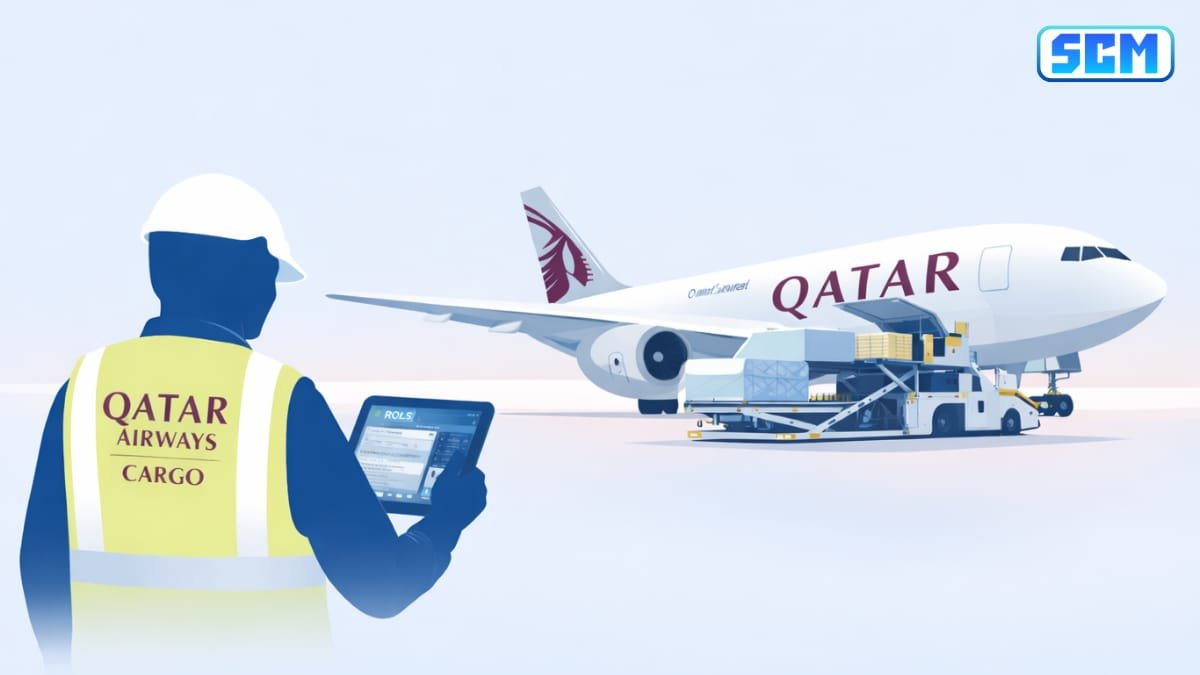
In an industry where aircraft turnaround time, safety, and accuracy define operational success, Qatar Airways Cargo is executing a quiet but highly impactful transformation of ground handling operations. Rather than headline-grabbing aircraft orders or route expansions, the airline is focusing on something far more fundamental: digitising ramp and ground cargo operations.
This shift marks a significant step in redefining how air cargo is handled on the ground—making operations faster, safer, and far more transparent.
A Strategic Move Toward Digital Ramp Operations
Ground handling, particularly ramp operations, has traditionally relied on paper-based processes, manual checks, and fragmented communication between ramp agents, load controllers, and operations teams. These inefficiencies often lead to delays, loading discrepancies, and safety risks.
To address this, Qatar Airways Cargo has launched its Ramp Digitalisation Programme, a technology-led initiative designed to modernise cargo handling at the aircraft level. The programme focuses on replacing manual workflows with real-time, data-driven processes—without disrupting ongoing operations.
ROLS: The Engine Behind the Transformation
At the heart of this initiative is a digital solution known as ROLS (Ramp Offload and Load Supervision). This system fundamentally changes how cargo loading and offloading is managed on the ramp.
Key capabilities include:
- Paperless ramp workflows, eliminating traditional loading instruction reports
- Real-time data transmission between ramp teams and load control
- 100% ULD (Unit Load Device) reconciliation, reducing misloads and discrepancies
- Live loading confirmations, improving coordination and decision-making
By digitising these processes, Qatar Airways Cargo ensures that every container and pallet is accounted for with greater accuracy and speed.
Enhancing Safety, Compliance, and Visibility
Beyond efficiency, the digital ramp programme introduces important safety and compliance improvements:
- Tail tipping prevention checks to enhance aircraft safety
- QR code–based scanning for faster and more accurate data capture
- Service Level Agreement (SLA) monitoring, ensuring handling standards are consistently met
- End-to-end operational visibility, giving managers real-time insight into ramp performance
These features help reduce human error while strengthening compliance with operational and safety standards.
Faster Turnarounds, Smarter Operations
One of the most tangible benefits of this transformation is reduced aircraft turnaround time. With real-time updates and instant verification, decisions that once took minutes—or longer—can now be made immediately.
For a global cargo carrier operating tight schedules across multiple hubs, even small improvements in turnaround efficiency translate into significant network-wide gains.
Part of a Broader Digital Cargo Vision
The ramp digitalisation initiative is not a standalone project. It aligns with Qatar Airways Cargo’s wider digital cargo strategy, which includes:
- E-bookings and paperless documentation
- Automated and smart cargo warehouse solutions
- Future-ready tools such as QR-coded ULDs and handheld aircraft position scanning
Together, these initiatives aim to create a fully connected, end-to-end digital cargo ecosystem, covering every touchpoint from booking to final delivery.
Why This Matters for the Air Cargo Industry
While many airlines talk about digital transformation, Qatar Airways Cargo is demonstrating how targeted, operational-level innovation can deliver real-world impact.
By modernising ground handling—one of the most complex and time-sensitive areas of air cargo—the airline is setting a benchmark that others may soon follow. The approach shows that transformation does not always need to be loud; sometimes, the most meaningful change happens quietly, on the ramp.
Conclusion
Qatar Airways Cargo’s ramp digitalisation programme represents a shift in how air cargo ground handling is designed and executed. Through real-time data, paperless workflows, and enhanced safety controls, the airline is improving reliability, efficiency, and transparency at one of the most critical points in the cargo value chain.
As digital adoption accelerates across global logistics, initiatives like this could well define the future standard for air cargo ground operations.
