


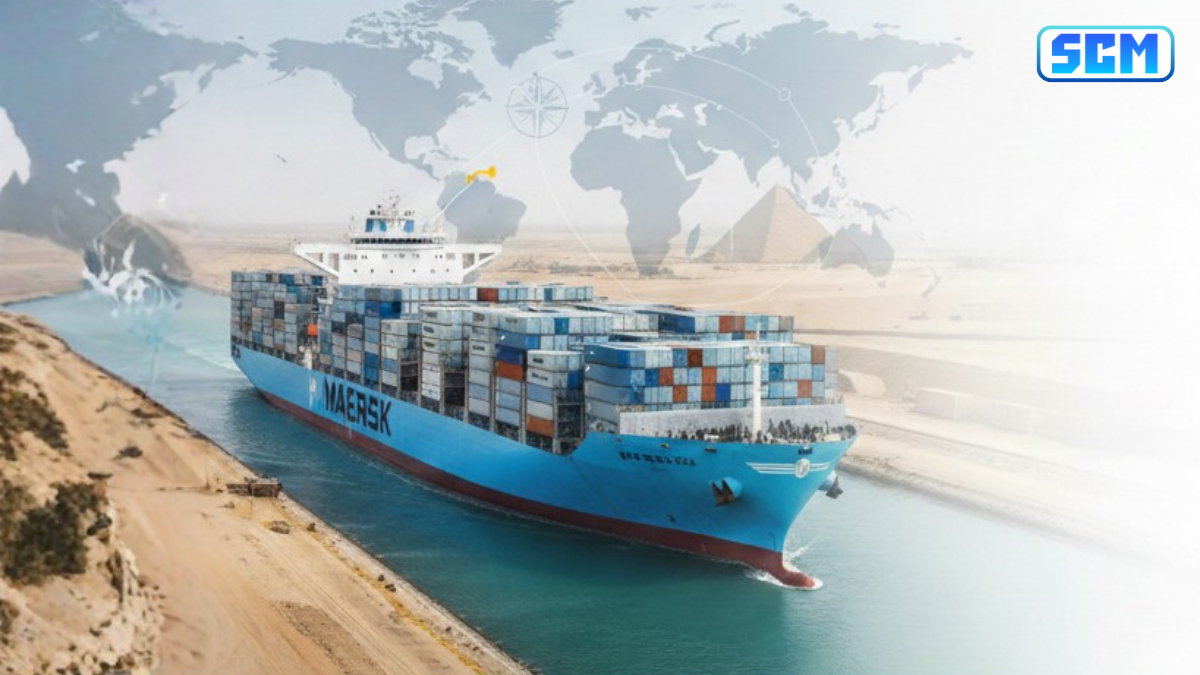
In a significant development for global maritime trade, A.P. Moller-Maersk (Maersk) and Hapag-Lloyd have announced the resumption of select container shipping services through the Red Sea and Suez Canal beginning mid-February 2026 — a cautious but meaningful step in restoring one of the world’s most critical trade arteries after more than two years of disruption.
Background: Why the Red Sea Matters
The Red Sea–Suez Canal corridor is a vital link in global east-west trade, historically handling a significant share of worldwide container traffic. Until late 2023, most major liners routinely used this route for Asia-Europe and Asia-Mediterranean shipping. However, attacks on commercial vessels in the Red Sea and Bab el-Mandeb Strait — largely attributed to Yemen-based Houthi forces — prompted carriers, insurers, and shippers to reroute vessels around Africa’s Cape of Good Hope for safety reasons, adding weeks to voyages, increasing fuel consumption, and pushing up costs.
What’s Changing: Resumption of Services
From mid-February 2026, Maersk and Hapag-Lloyd will reroute one of their shared container services — the IMX / ME11 service — through the Red Sea and Suez Canal under their Gemini Cooperation alliance. This service connects India and the Middle East with the Mediterranean.
Specifics of the Restart
- Westbound transits will begin with the vessel Albert Maersk (voyage 605W), departing from Jebel Ali en route to India.
- Eastbound sailings will operate initially with Astrid Maersk (voyage 605E), departing from Valencia, Spain.
- All voyages through the Red Sea will be conducted with naval assistance and escort as a security measure due to ongoing regional risks.
This action represents the first structural return of a shared Gemini service to the corridor since disruptions began and signals a planned but careful re-engagement with the route.
Security: Naval Protection and Risk Monitoring
Maersk and Hapag-Lloyd have emphasized that crew safety, vessel security, and cargo protection remain top priorities. All transits will be secured by naval escort, reflecting continued concern over maritime security around the Red Sea and Bab el-Mandeb.
The carriers will continue to closely monitor the regional security situation, with the option to adjust or reverse routing decisions if conditions deteriorate.
Trade and Market Impacts
Faster Transit and Cost Benefits
Using the Red Sea corridor shortens voyage distances significantly compared with the long detour around Africa. This translates into reduced transit times, lower fuel consumption, and decreased operational costs for carriers and shippers alike.
Freight Rate Dynamics
With improved routing efficiency and added capacity returning to the corridor, major logistics firms such as DSV expect freight rates to moderate further after the recent inflation driven by diversions and port congestions. However, the shift could also produce temporary port pressures, especially in European hubs as traffic increases.
Cautious Yet Strategic: What’s Next
Although this restart marks an important milestone, the current level of Red Sea traffic remains below pre-crisis levels and the broader return of other services will depend on sustained regional stability and security. Both carriers have indicated potential future routing changes for additional services in the Gemini network if conditions allow.
Additionally, recent carrier movements — such as Maersk’s independent trials of Red Sea transits in late 2025 — laid the groundwork for this decision and reflect broader industry interest in normalizing operations while balancing risk tolerances.
Conclusion
The decision by Maersk and Hapag-Lloyd to restart Red Sea transits via the Suez Canal on the IMX / ME11 service — backed by naval protection and careful security planning — is a significant signal of confidence in the corridor’s stability. While the move is limited in scope, it is expected to yield operational efficiencies, lower freight costs, and a potential long-term return to more robust global trade flows if geopolitical conditions remain favorable.
