


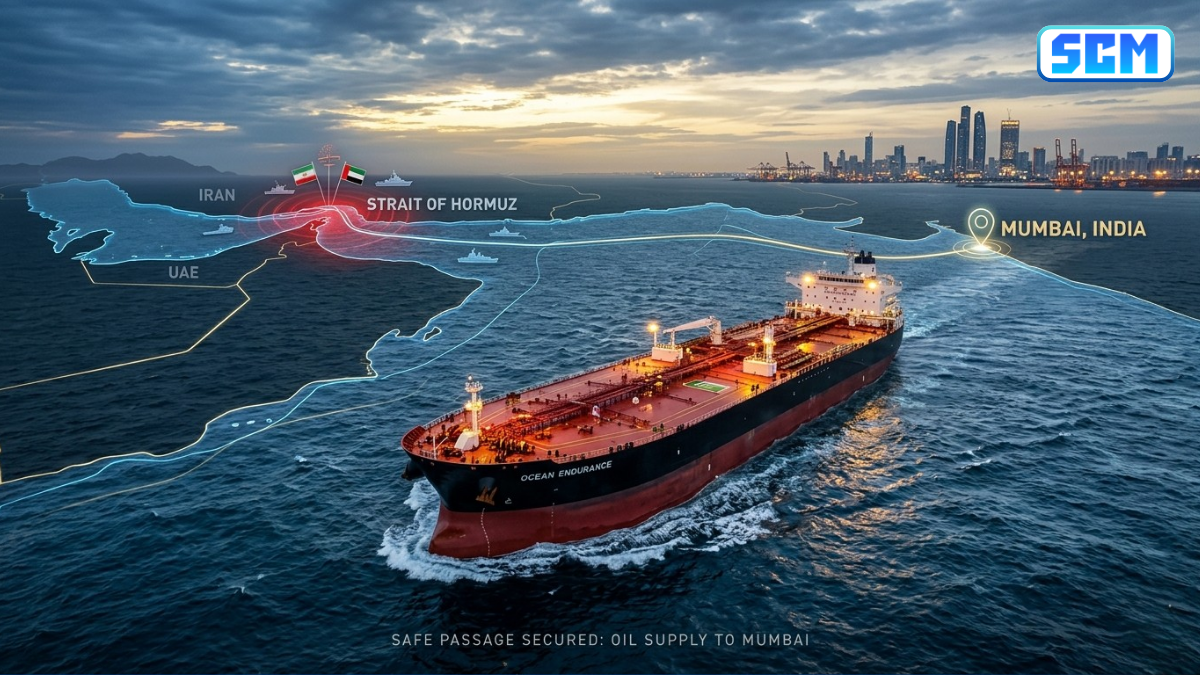
In a significant development for global energy logistics and India’s energy security, the first crude oil tanker has successfully reached Mumbai after navigating the strategically sensitive Strait of Hormuz amid escalating tensions between Iran and the United States. The arrival of the vessel marks a crucial moment for the shipping and energy sectors, demonstrating that vital oil supply routes remain operational despite geopolitical risks in West Asia.
The tanker’s safe passage offers temporary relief to global oil markets and India’s energy planners, who had been concerned about potential supply disruptions due to the ongoing conflict.
The Tanker That Reached Mumbai
The crude oil tanker Shenlong, sailing under a Liberian flag, successfully docked at Mumbai Port carrying over 135,000 metric tonnes of crude oil sourced from Saudi Arabia.
The vessel had loaded the crude from Ras Tanura, Saudi Arabia’s largest oil export terminal, before beginning its journey toward India. It departed in early March and arrived in Mumbai after passing through the highly sensitive Strait of Hormuz.
Key details of the vessel and cargo include:
- Vessel name: Shenlong
- Flag: Liberia
- Cargo: ~135,000 metric tonnes of Saudi crude oil
- Loading port: Ras Tanura, Saudi Arabia
- Arrival: Mumbai Port, India
- Destination: Refineries in Mahul, eastern Mumbai
Port authorities confirmed that the crude cargo began discharging shortly after the vessel berthed at Jawahar Dweep terminal in Mumbai.
Why the Strait of Hormuz Matters
The Strait of Hormuz is one of the most critical maritime chokepoints in the global energy supply chain. Nearly 20% of the world’s crude oil shipments pass through this narrow waterway connecting the Persian Gulf with the Arabian Sea.
For India, the route is particularly important because:
- Over 50% of India’s crude oil imports transit through the Strait of Hormuz.
- Major suppliers like Saudi Arabia, Iraq, Kuwait, and the UAE rely on this route to export oil to Asia.
- Any disruption can immediately affect fuel prices, shipping rates, and refinery operations.
Because of this strategic importance, any military or political tension in the region can cause global energy markets to react instantly.
Impact of the Iran–US Conflict on Shipping
The current crisis stems from escalating hostilities involving the United States, Israel, and Iran, which has transformed the Persian Gulf region into a high-risk zone for commercial shipping.
Since the conflict began:
- Maritime traffic through the Strait of Hormuz has dropped sharply.
- Tanker operators have reduced voyages due to security concerns.
- Shipping insurance premiums have surged.
- Freight rates for crude oil tankers have increased significantly.
According to maritime tracking data, tanker traffic has fallen from around 60 transits per day to only a few daily movements, highlighting the severity of the disruption.
Additionally, several merchant ships in the region have faced threats, missile attacks, and navigation disruptions, raising alarm across the global shipping industry.
The “Shadow Voyage” Through Hormuz
One of the most striking aspects of the Shenlong tanker’s journey was the use of a “shadow voyage” strategy.
During its transit through the Strait of Hormuz, the tanker reportedly switched off its Automatic Identification System (AIS) transponder temporarily.
The AIS system normally broadcasts a ship’s location and identity to maritime tracking networks. However, vessels sometimes deactivate it in conflict zones to avoid detection or reduce targeting risks.
This tactic has become increasingly common among tankers navigating volatile maritime regions such as:
- The Strait of Hormuz
- The Red Sea
- The Gulf of Aden
While controversial from a safety standpoint, it highlights the level of risk shipping companies are willing to take to maintain critical energy supply chains.
India’s Energy Security Concerns
India is the world’s third-largest consumer of crude oil, importing around 85% of its oil requirements. This makes the country extremely sensitive to disruptions in global energy supply routes.
The successful arrival of the tanker has helped ease concerns about potential shortages.
India has also been diversifying its energy imports by increasing purchases from:
- Russia
- The United States
- Latin American suppliers
According to India’s petroleum ministry, a growing share of oil imports now comes from routes that bypass the Strait of Hormuz, helping reduce the risk of supply disruptions during geopolitical crises.
Risks Still Remain for Global Shipping
Despite the successful arrival of the tanker in Mumbai, maritime experts warn that the situation in the Persian Gulf remains volatile.
Several challenges persist:
- Military Escalation: The ongoing confrontation between Iran and Western powers could further militarize the region, increasing risks for commercial vessels.
- Insurance and Freight Costs: War risk insurance premiums for tankers operating in the Gulf have surged dramatically, raising transportation costs for oil shipments.
- Shipping Delays: Many shipping companies are choosing alternative routes or delaying voyages until security conditions improve.
- Navigation Disruptions: Reports of GPS signal jamming and spoofing have also complicated navigation in the region, forcing crews to rely on traditional maritime navigation techniques.
Impact on Global Oil Markets
The conflict has already had ripple effects on global energy markets.
Key developments include:
- Oil prices briefly surged toward $120 per barrel, reflecting fears of supply disruptions.
- Tanker freight rates have reportedly tripled on some routes.
- Oil traders and refiners have started stockpiling supplies.
If the Strait of Hormuz were to be completely blocked, analysts warn that the global economy could face a major energy shock.
Strategic Alternatives to Hormuz
To mitigate risks associated with the Strait of Hormuz, oil producers in the Gulf have developed alternative export routes.
These include:
- Saudi Arabia’s East-West pipeline to the Red Sea
- UAE’s Abu Dhabi-Fujairah pipeline bypassing Hormuz
- Increased use of LNG and crude storage facilities outside the Gulf
However, these alternatives cannot fully replace the massive volumes that normally flow through Hormuz.
What This Means for the Logistics Industry
For the global shipping and logistics sector, the successful arrival of the tanker is a symbolic but important development.
It shows that:
- Commercial shipping routes remain operational, even under extreme geopolitical pressure.
- Shipping companies are adapting operational strategies to navigate conflict zones.
- Energy supply chains are proving resilient despite global instability.
However, the situation also highlights the fragility of global supply chains and the dependence on a few critical maritime chokepoints.
Conclusion
The arrival of the crude tanker Shenlong in Mumbai through the Strait of Hormuz amid the Iran–US conflict represents a critical milestone for India’s energy security and the global oil trade. While it provides temporary reassurance that vital supply routes remain open, the broader geopolitical situation in the Middle East continues to pose significant risks to global shipping and energy markets.
For India and other major oil-importing nations, the event underscores the importance of diversifying energy sources, strengthening strategic reserves, and building resilient supply chains capable of withstanding geopolitical shocks.
