


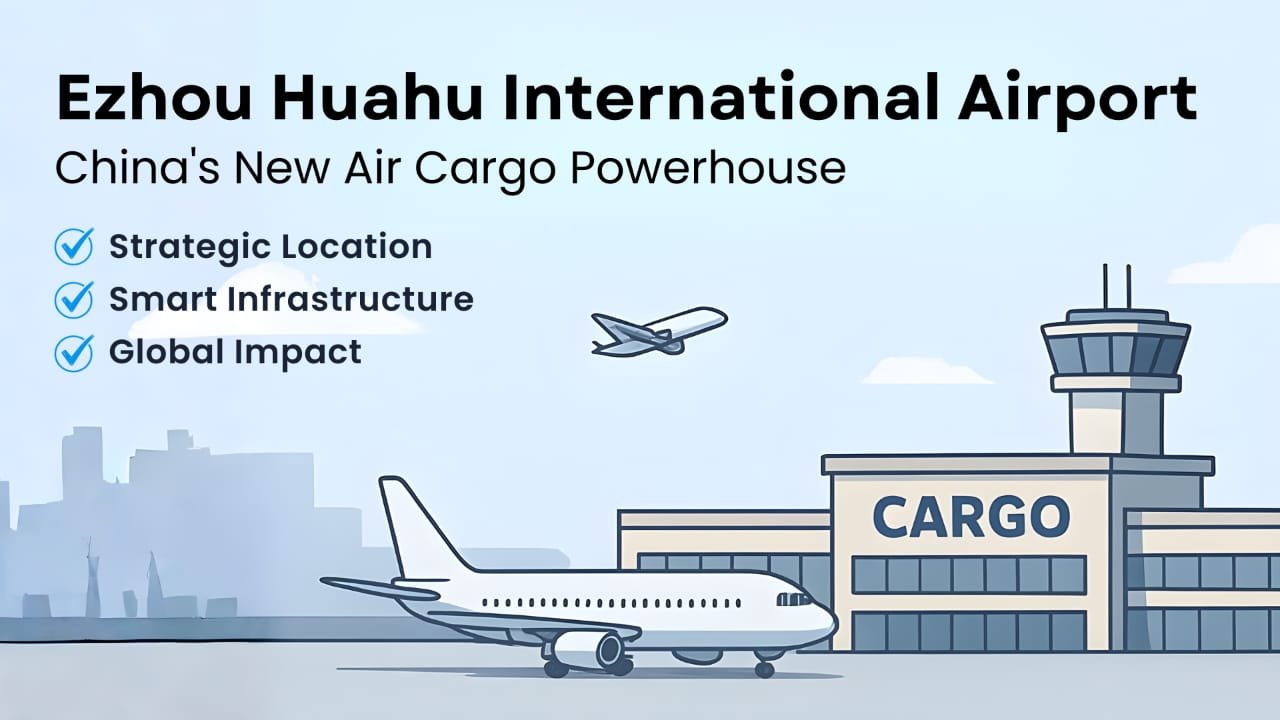
Ezhou Huahu International Airport has more than doubled its international freight throughput this year, reinforcing China’s growing strength in global logistics and air cargo connectivity. The milestone marks a major leap for the airport — and for China’s broader ambitions to position itself as a central node in global supply chains.
Launched in 2022 as Asia’s first professional cargo airport, Ezhou Huahu is jointly operated by SF Express and Hubei Airport Group. In just three years, it has transformed from an ambitious infrastructure project into a critical air logistics hub linking domestic manufacturing bases with global trade routes across Asia, Europe, and North America.
A Strategic Boost to China’s Supply Chain Infrastructure
Located in central China’s Hubei Province, Ezhou offers a unique advantage: proximity to inland industrial regions and multi-modal transport corridors. This geographic positioning enables faster and more cost-efficient cargo movement, reducing the reliance on coastal gateways such as Shanghai and Guangzhou.
With advanced digital operations, automated sorting facilities, and expanded international flight capacity, Ezhou Huahu is projected to handle up to 3 million tonnes of cargo annually by 2030. The airport has become a vital link in China’s strategy to strengthen supply chain resilience and decentralize its export logistics infrastructure.
Shaping Global Freight Patterns
Ezhou’s rise is already influencing freight routing strategies across the Asia-Pacific. The airport’s enhanced throughput offers carriers and logistics companies new routing flexibility — particularly as demand for time-sensitive air freight continues to climb amid e-commerce growth and manufacturing diversification.
Industry observers suggest that the expansion could ease capacity pressures on existing regional hubs and introduce new efficiencies for cross-border logistics, particularly in pharmaceuticals, electronics, and express cargo segments.
A Reflection of China’s Logistics Vision
The success of Ezhou Huahu International Airport reflects a broader trend: China’s push to evolve from a manufacturing center to a global logistics power. The project exemplifies how strategic infrastructure, digital integration, and private-sector partnerships can redefine the regional cargo landscape.
As international trade corridors continue to shift, Ezhou’s momentum underscores one message — China’s logistics ambitions are firmly airborne.
