


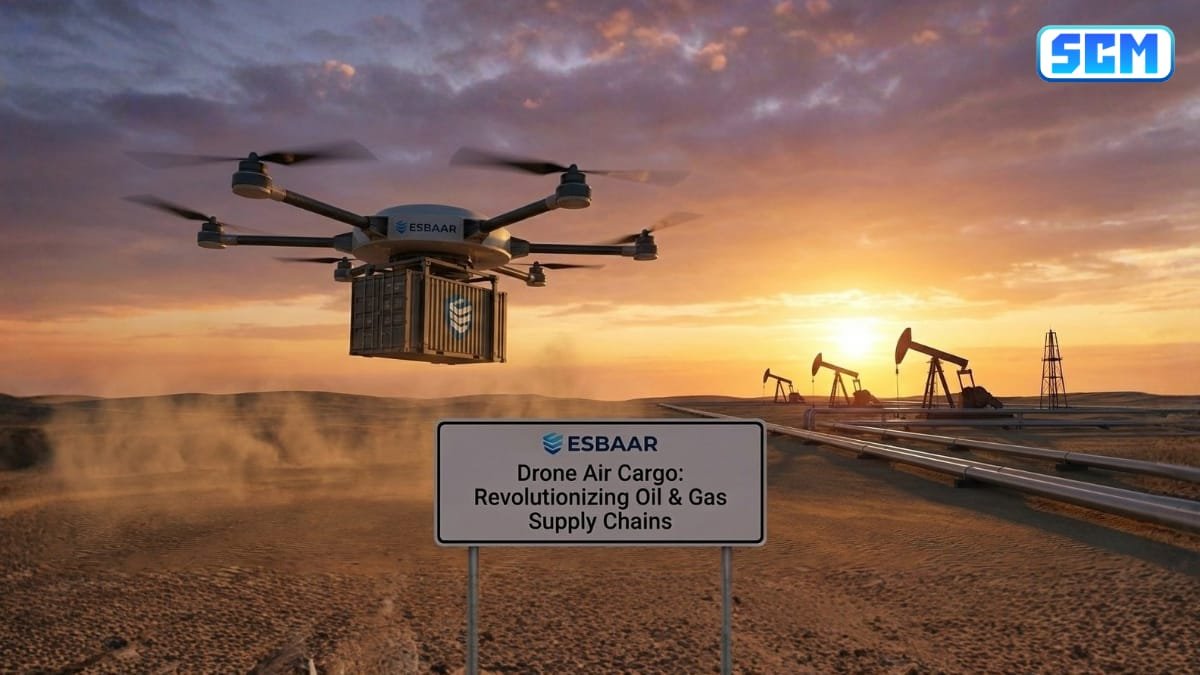
The oil and gas industry operates in some of the most remote, harsh, and logistically challenging environments in the world. From desert oil fields to isolated production sites, moving critical spare parts and equipment quickly can be the difference between smooth operations and costly shutdowns. Recognizing this challenge, ESBAAR, an Oman-based technology and drone solutions company, has launched an advanced drone air cargo service tailored specifically for the oil and gas sector—marking a major milestone for industrial logistics in the Middle East.
A First-of-Its-Kind Initiative in the Region
ESBAAR’s drone air cargo operation is considered the first large-scale, live deployment of drone logistics for the oil and gas industry in the Middle East. Unlike traditional drones used mainly for inspection or surveillance, these drones are designed to carry cargo over long distances, providing a fast and reliable alternative to road transport.
The service has already moved from concept to real-world execution, proving that drone-based cargo is not just a future idea but a practical solution for today’s supply chain challenges.
How the Drone Cargo System Works
ESBAAR’s drone air cargo solution uses long-range, beyond-visual-line-of-sight (BVLOS) drones capable of flying across vast desert areas without the need for constant human control. These drones are:
- Built for industrial-grade performance
- Capable of carrying critical spare parts and equipment
- Designed to operate in extreme weather conditions
- Integrated with AI-based monitoring and control systems
In its first operational mission, the drone successfully transported urgent spare parts across a 137-kilometer route to an oil concession area in just 1 hour and 23 minutes. The same journey would normally take four hours or more by road, highlighting the massive time savings achieved through aerial logistics.
Why Drone Cargo Is a Game-Changer for Oil & Gas
1. Faster Deliveries, Less Downtime
In oil and gas operations, even a small delay can lead to production losses worth thousands or millions of dollars. Drone cargo enables companies to move essential components quickly, reducing downtime and keeping operations running smoothly.
2. Improved Safety
Long road journeys through deserts or remote areas come with safety risks, including driver fatigue and harsh terrain. Drone deliveries reduce the need for ground transport, improving overall safety for logistics teams.
3. Access to Remote Locations
Many oil fields are located far from cities and logistics hubs. Drones can reach areas where road access is limited or inefficient, ensuring uninterrupted supply even in difficult conditions.
4. 24/7 Operations
Unlike traditional logistics, drone cargo can operate day and night, even during restricted movement hours, offering unmatched flexibility and reliability.
Built with Local Innovation
A key highlight of ESBAAR’s initiative is its focus on local technology and manufacturing. The drones used in these operations were developed by SINAN Advanced Industries, showcasing Oman’s growing capabilities in advanced industrial and aerospace technology.
This approach not only strengthens the local supply chain but also supports national goals of technology-driven economic diversification.
Alignment with Oman Vision 2040
The launch of drone air cargo services strongly aligns with Oman Vision 2040, which emphasizes:
- Digital transformation
- Adoption of advanced technologies
- Development of knowledge-based industries
- Enhanced logistics and industrial efficiency
By introducing drone logistics into critical industries, ESBAAR is helping position Oman as a regional leader in smart and sustainable industrial solutions.
Beyond Oil & Gas: Future Applications
While the current focus is on oil and gas, the potential of ESBAAR’s drone cargo system goes far beyond one industry. In the future, similar solutions could be used for:
- Healthcare and medical supply deliveries
- Emergency and disaster response
- Infrastructure maintenance
- Remote industrial operations
As regulations evolve and technology continues to advance, drone cargo could become a core part of next-generation logistics networks.
Challenges and the Road Ahead
Despite its success, drone air cargo still faces challenges such as:
- Regulatory approvals for wider airspace access
- Payload limitations compared to traditional transport
- Need for advanced air traffic integration
However, ESBAAR’s successful deployment shows that these challenges are manageable with the right technology, partnerships, and regulatory support.
Conclusion
ESBAAR’s launch of drone air cargo services marks a transformational shift in industrial logistics for the oil and gas sector. By combining speed, safety, and advanced technology, drone-based deliveries are proving to be a practical and efficient alternative to traditional transport methods.
As industries continue to demand faster, smarter, and more resilient supply chains, ESBAAR’s initiative stands as a powerful example of how innovation can take logistics literally to new heights.
